Note: I originally wrote this post in 2018 for my old blog. I have edited and updated it for posting here.
After hearing other travelers describe the Isle of Skye, you’d be forgiven for coming away believing it’s a magical, mythical place. This Scottish island takes a while to get to and has a sparse population, but its otherworldly beauty is unmatched. I was lucky enough to visit Skye twice while I was living in Scotland, once with other students in the autumn, and then again in the spring with my family.
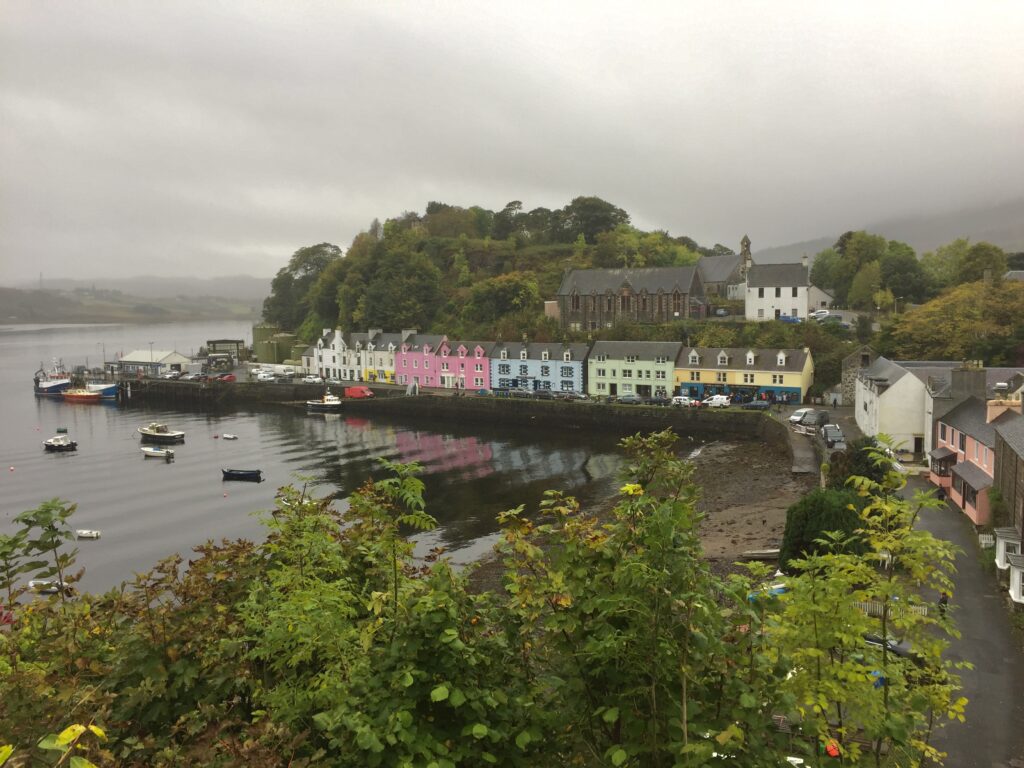
Skye is the largest and northernmost island of the Inner Hebrides, an archipelago scattered along Scotland’s west coast. Skye’s population is just over 10,000 people, and its largest town and unofficial capital is Portree, which is home to about 2,500 people. Broadford, the island’s second-largest settlement, is home to the only airstrip in Skye. In 1995 the Skye Bridge was built, finally connecting Skye to mainland Scotland, but the island can also be reached by ferry.
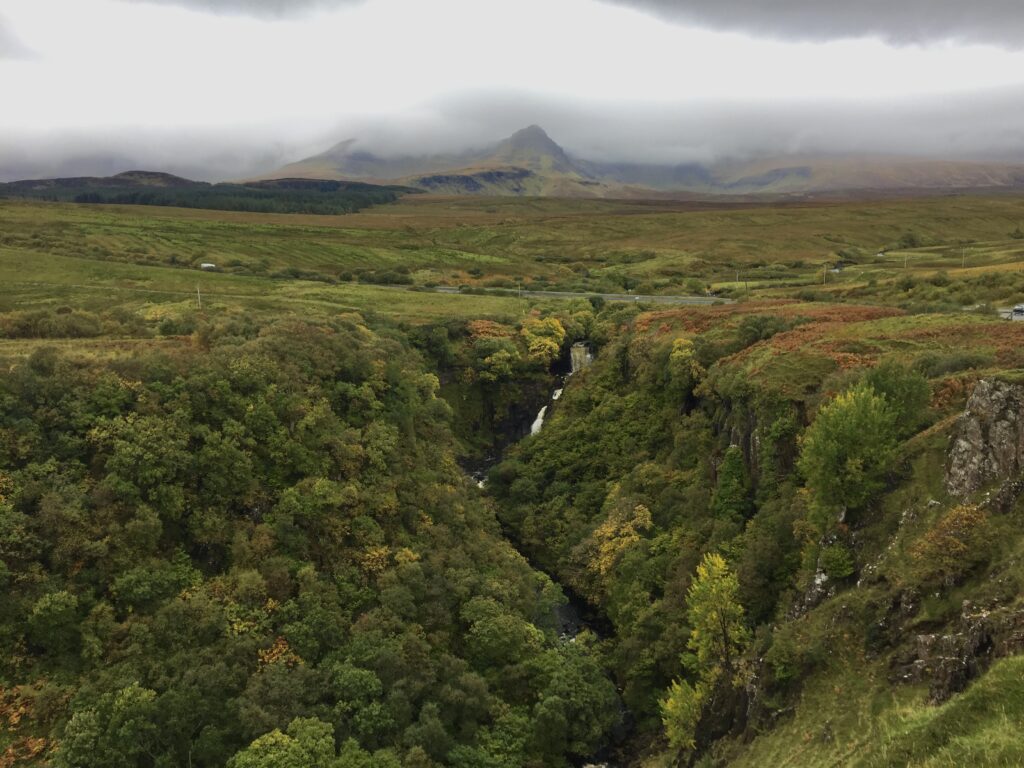
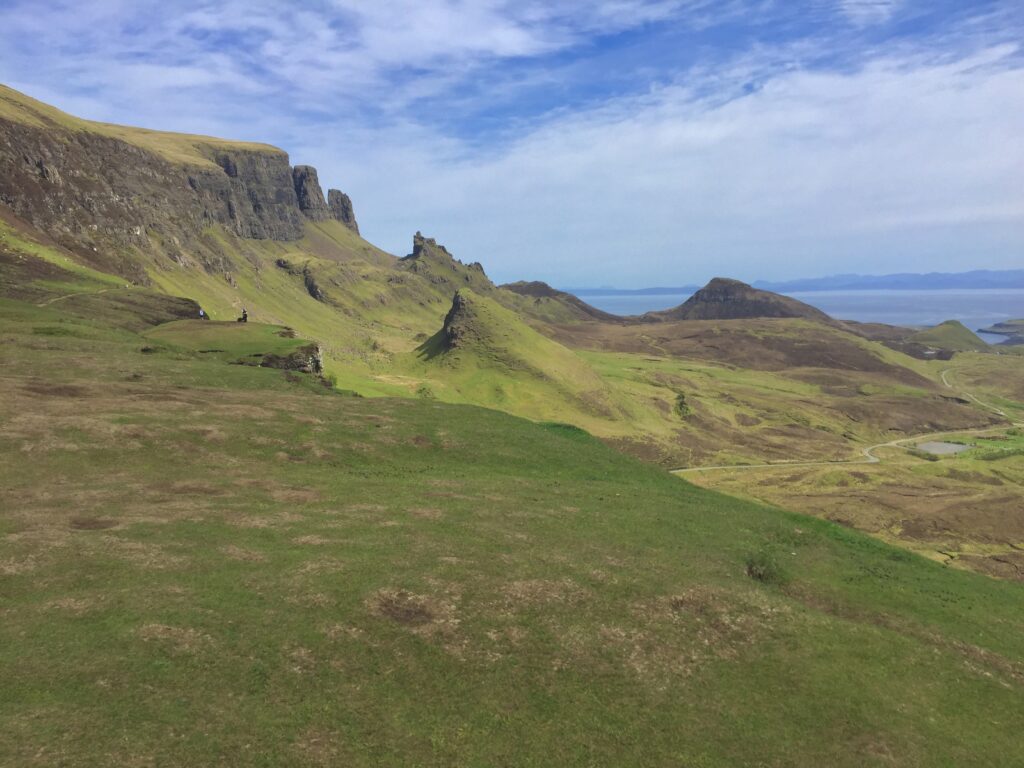
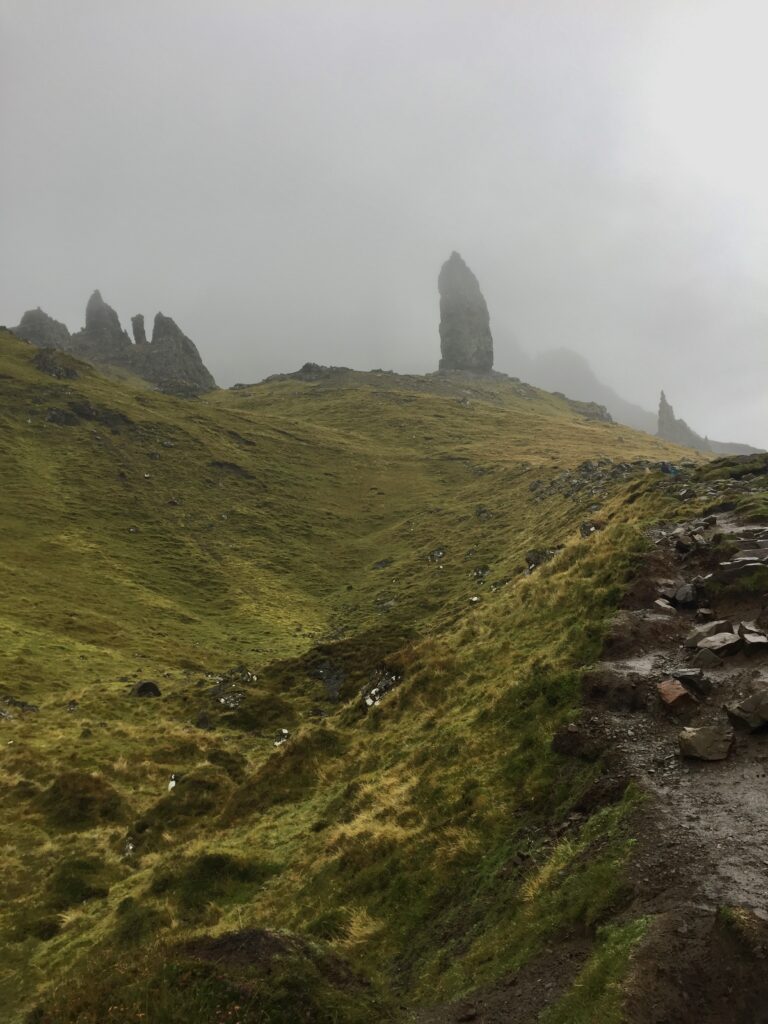
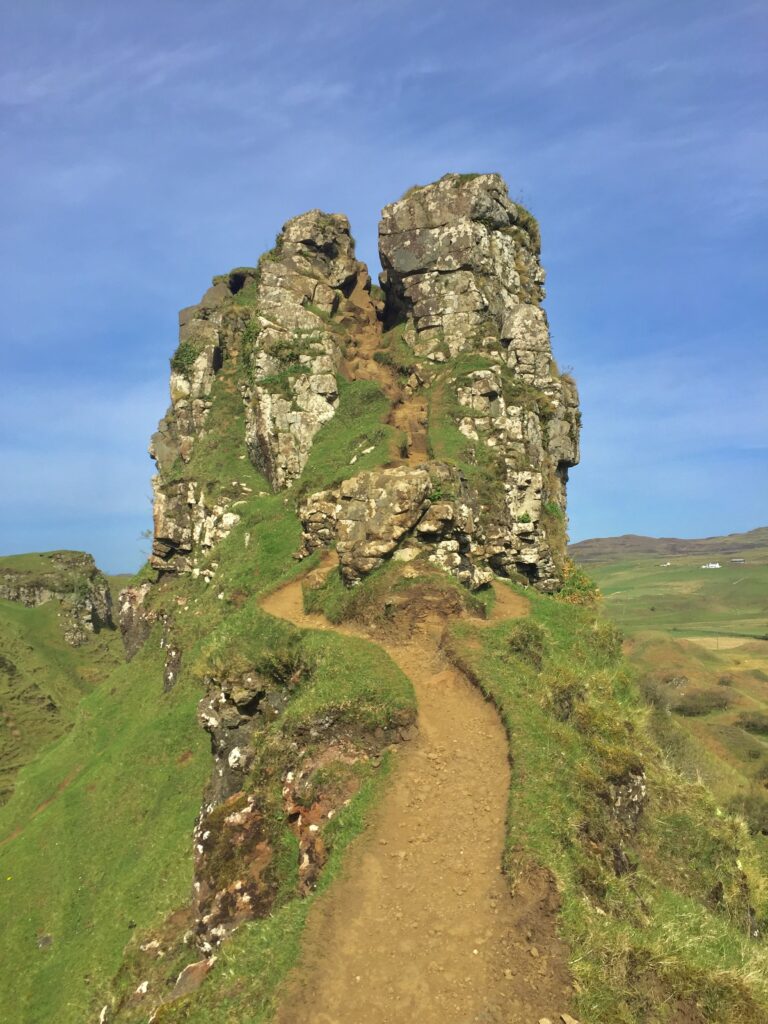
Spring and autumn in Skye were very different. In October the landscape was coated in oranges and deep purples, further saturated by the misty and rainy weather, a sight unlike anything I had ever seen before. In spring the sun shone on fresh greens and earthy browns. Though it was beautiful both times, being immersed in the striking purples and oranges of the autumn made me feel as if I had stepped out of reality and been transported into the world of myth.
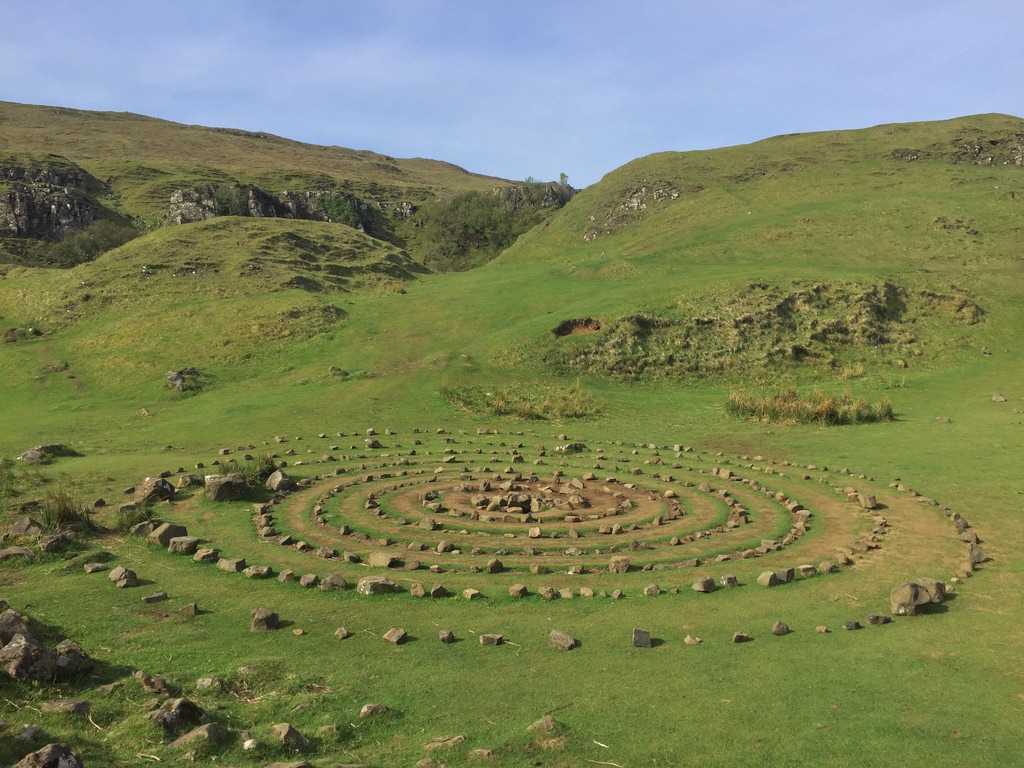
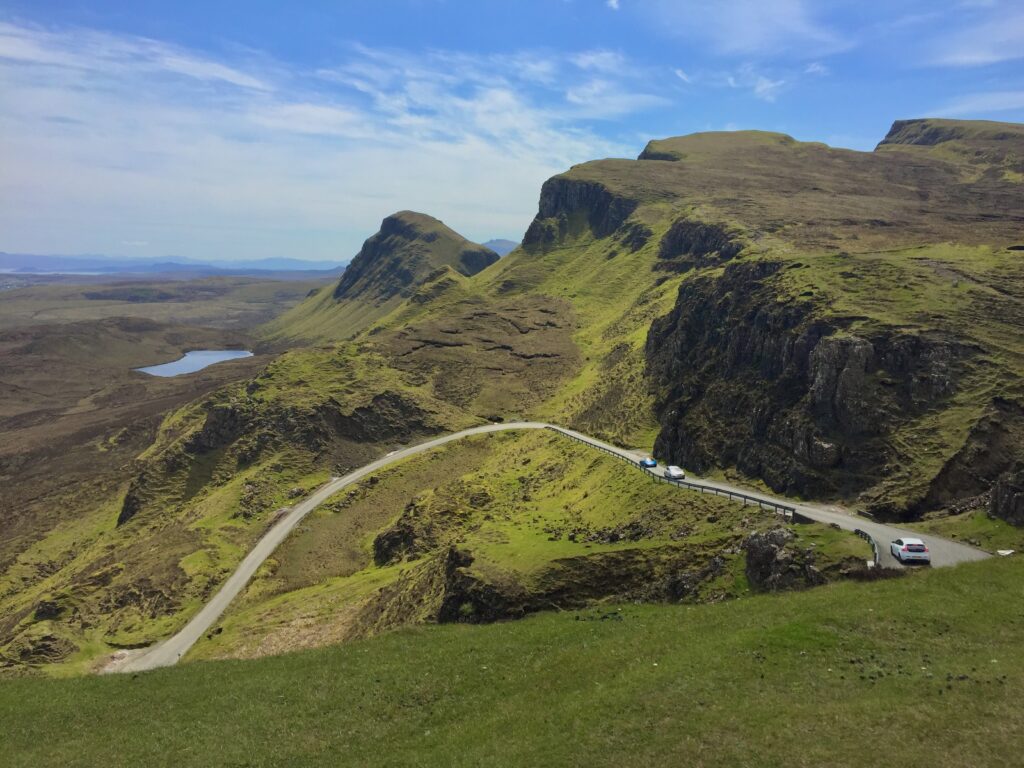
Over both trips to Skye I was able to visit most of its popular sights like the Quiraing, Portree, Sligachan, the Storr, Kilt Rock, Fairy Glen, the Kilmuir Cemetery, and a few waterfalls. When I went with my family we stayed in the Sligachan Hotel right by the Sligachan Old Bridge, a lodge contained within an unworldly landscape. With its cozy rooms and rustic restaurant, staying there felt like an authentic Highland and Island experience. The hotel was constructed in 1830 and is located by the Cuillin mountains, making it an ideal place for climbers to stay. In 1913 the hotel was purchased by the Campbell family, who still own and run it today.
Unlike on my student tour, my family and I got to use the Skye public transportation to get from the hotel to Portree and back, which made me feel more connected with the lives of the island’s residents. The bus we took on the way back from Portree was also a bus many students took home from school. I contemplated what it is like for them to grow up on such a beautiful yet sparsely populated island, one which at any time of the year is also populated by a significant number of tourists. Having myself grown up in a very beautiful small town, the summer population of which is largely made up of tourists or summer residents (or “fudgies” as well call them in northern Michigan), I felt I could relate to the schoolchildren of Skye in some way. Being on the bus with some of them, energized after getting out of school on such a sunny day, brought me back to the spring days of middle school and high school, finally heading home on the school bus.
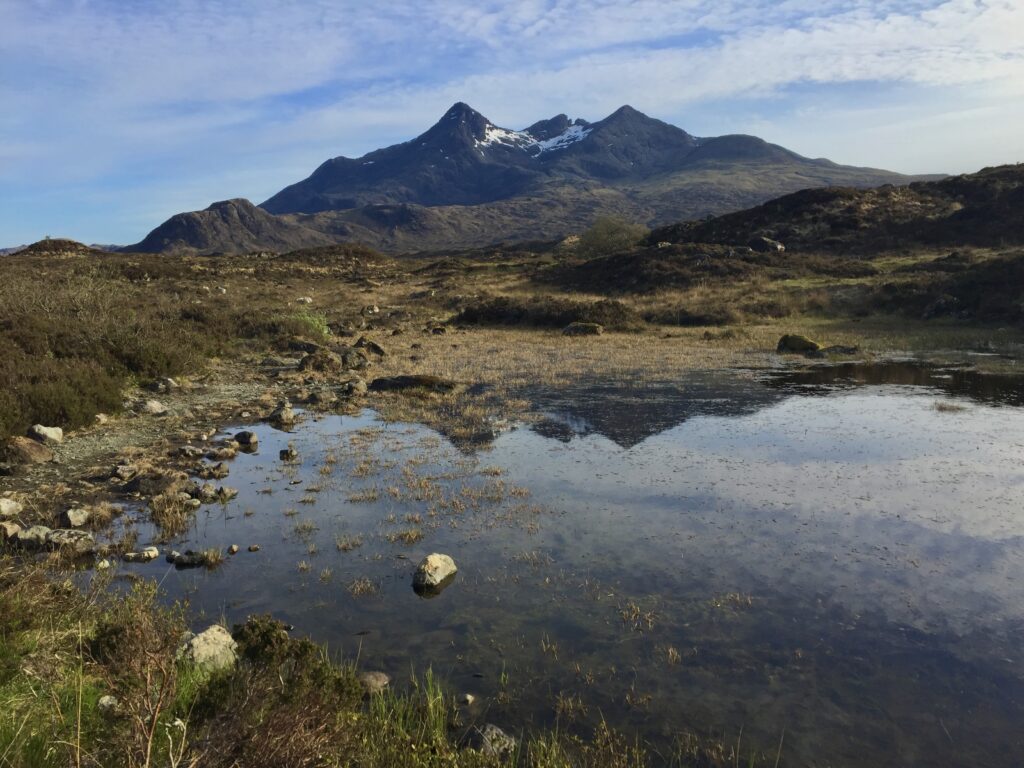
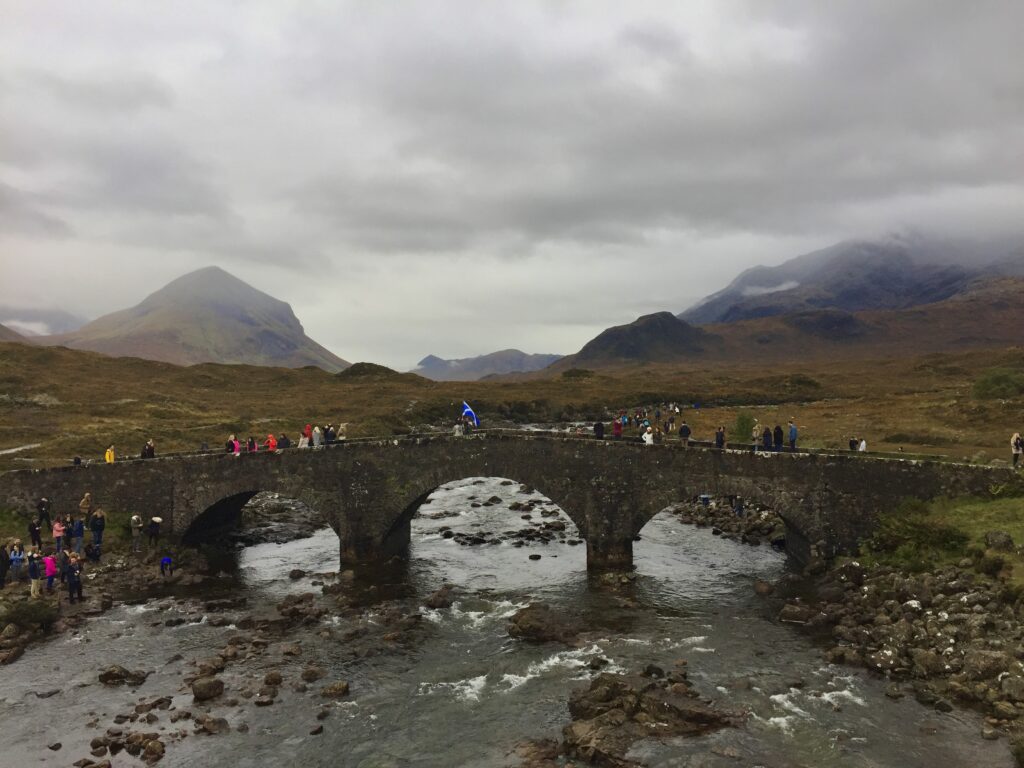
With my family I joined Skye Minibus Tours and got a very intimate tour of the island since it was just us and our guide, George. George taught us so much about Skye’s history. The remains of a Mesolithic hunter-gatherer site on Skye from over 9,000 years ago is one of the oldest archaeological sites in Scotland, so people have been living on the island for a very long time. In the late Iron Age it was probably inhabited by the Picts, a Celtic tribal confederation that resided in eastern and northern Scotland at the time. It was under Norse control between the 9th and 13th centuries, who gave the island its name. Clan MacLeod, one of the most powerful clans on Skye for centuries, claims Viking heritage and has kept some Viking traditions. The other most powerful clan on Skye was Clan MacDonald. Skye was basically ruled by these clans for much of its history.
An important historical place that George took us to was Kilmuir Cemetery, a beautiful cemetery on a hill overlooking the sea. We saw the graves of Lee Alexander McQueen, otherwise known as the fashion designer Alexander McQueen, and Flora MacDonald, an important figure in Scottish history. Flora MacDonald helped Bonnie Prince Charlie in his escape after his defeat in the Battle of Culloden. He was the main figure of the Jacobite rising of 1745 aiming to regain the throne for House Stuart, of which Bonnie Prince Charlie was the heir. After his defeat he took refuge on Skye, but authorities on the island were after him so Flora MacDonald helped him escape.
It is also this history that caused Virginia Woolf to choose Skye as the setting of her novel To the Lighthouse. Woolf was criticized for not depicting Skye accurately — she had never visited Skye and based her descriptions of the island on Cornwall much further south in England, where she spent her summers in her youth. However, she chose Skye as the setting of her novel because of its importance in Scotland’s history and to criticize the British Empire. After the uprising, the British imperialist government started forcing many Scottish highlanders and islanders out of their homes in what is now called the Highland Clearances. Even Flora MacDonald herself left in 1774 and settled in North Carolina, though she returned to Skye just a few years later in 1779. In the novel Woolf mentions the emigrations and paints a picture of an isolated, sparsely populated island that has lost much of its native population and is now the location of a summer home for a wealthy English family.
Of course, things are much different on Skye now and the islanders celebrate their culture and language. Skye was predominantly Gaelic-speaking even into the 20th century, and today there are some areas on the island where almost half of the inhabitants speak Gaelic. Though in the early 19th century its population was about 20,000 people, and fell to only 9,000 people by the end of the 20th century, its population has been growing and is now just over 10,000 people.
Skye is, of course, a very popular tourist destination. George told us that Skye is one of the top ten most popular islands for tourists in the world, which certainly felt true while we were there. It wasn’t necessarily crowded, since as popular as Skye is, the island receives a quarter million tourists each year at most. However, many of the roads have one lane which congests traffic quite a bit, especially when there are lots of tour buses and rental cars on the road. Though this may deter those who wish to avoid crowds and would rather experience places less tread upon, I personally think Skye should not be missed. I haven’t talked to one person who didn’t think it was one of the most beautiful places they had ever visited. I’ve been lucky enough to visit twice, and hope to go back once more one day.