Note: I originally wrote this post in 2018 for my old blog. I have edited and updated it for posting here.
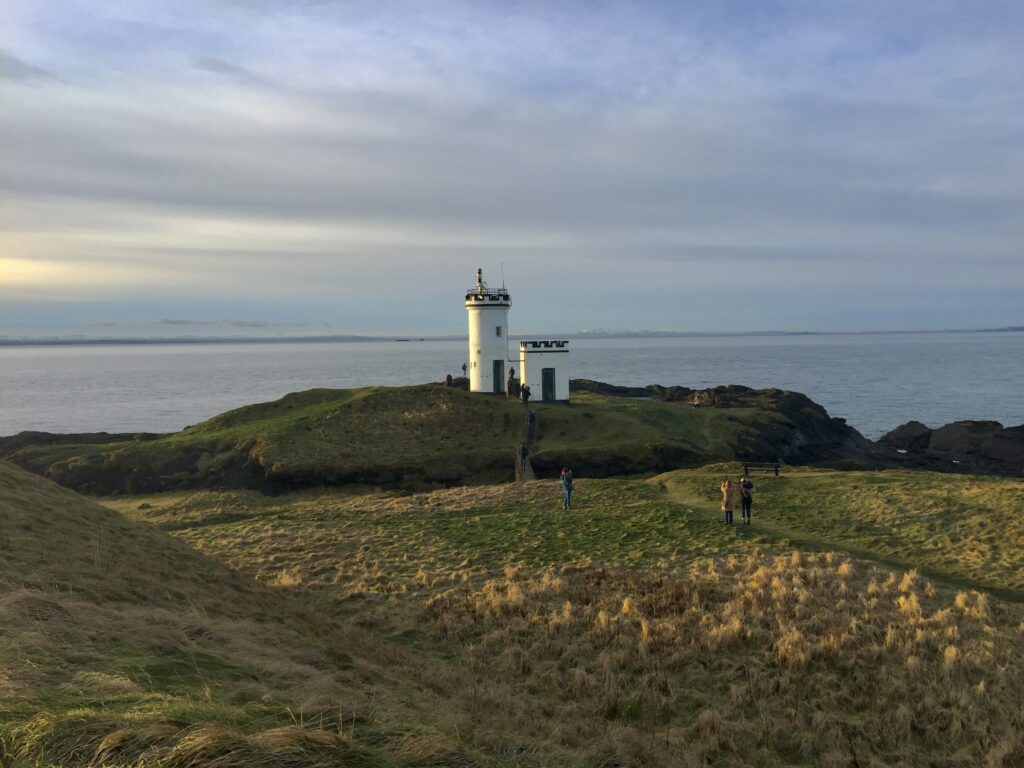
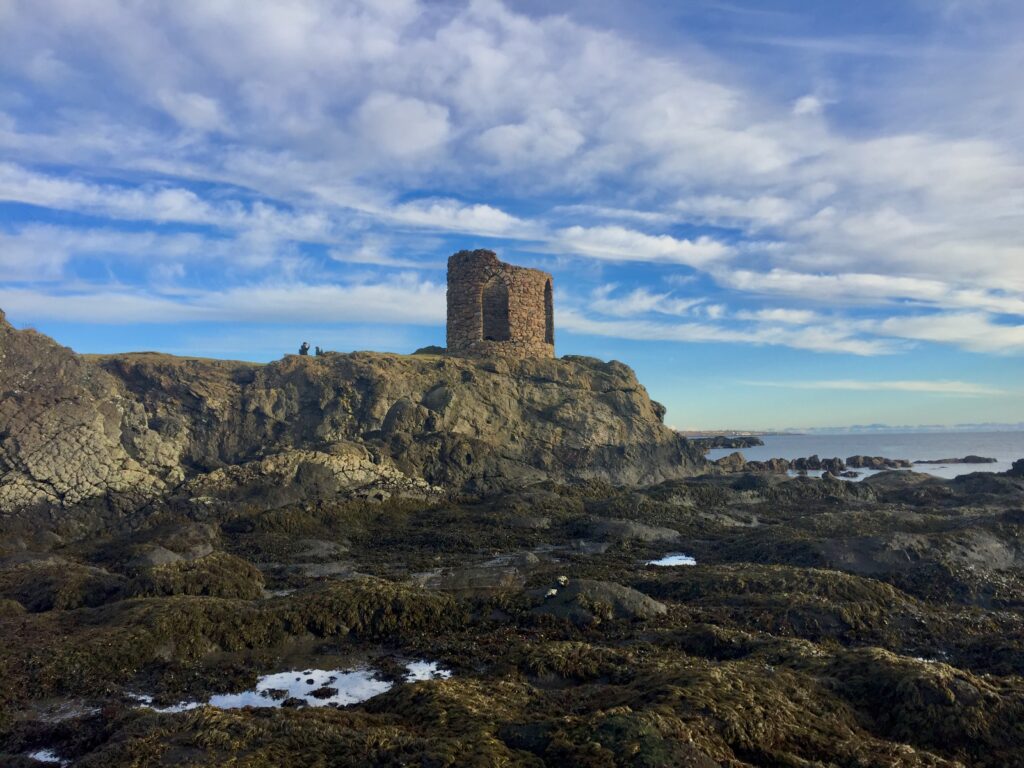
On a cold but sunny day in January I took a day trip to the famous Scottish town of St. Andrews, which included a stop in the small coastal town of Elie and Earlsferry. This town is home to the Elie Ness Lighthouse and the nearby Lady Tower. The small and solitary lighthouse overlooks Ruby Bay and stands a short walk away from the town. Construction of the Elie Ness Lighthouse began in 1907 when it became clear that Master Mariners could not see the lights of the Isle of May or Inchkeith, meaning that a lighthouse was needed on Elie Ness overlooking Ruby Bay. Construction was completed in 1908 and the lighthouse is still in use today. A short walk from the lighthouse is the Lady Tower, a small stone tower that was built in 1760 for the use of Lady Janet Anstruther. She used it for changing for her daily swim, before which a bell would be rung to inform the locals to stay away during her bathing time.
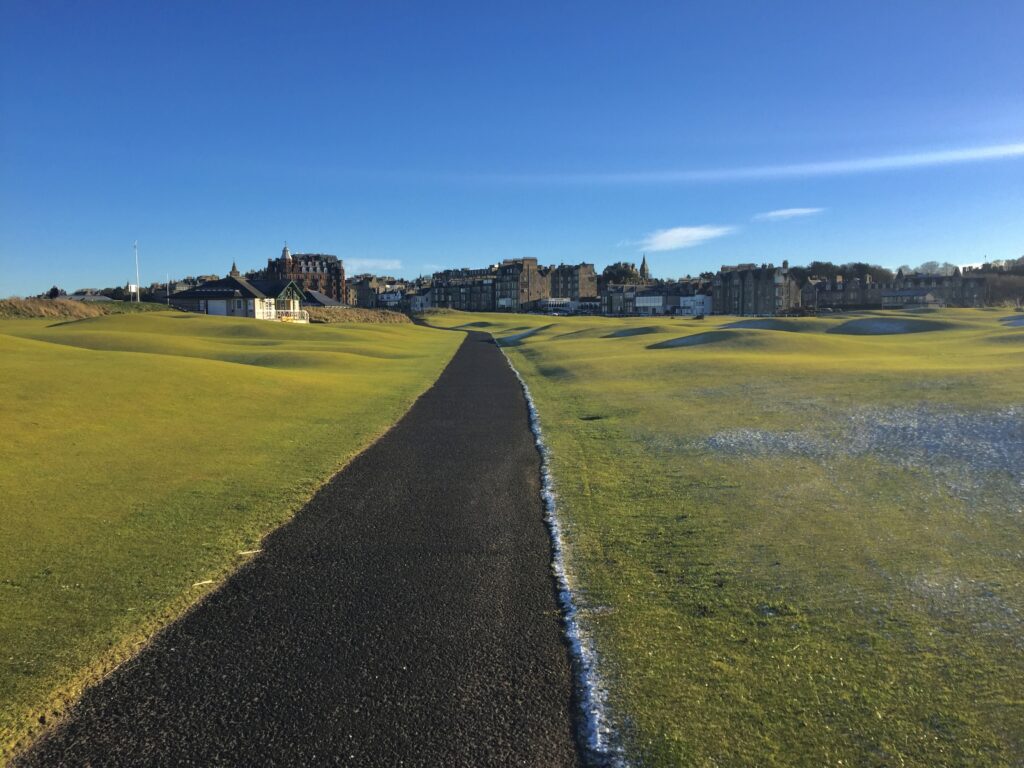
After the short stop in Elie and Earlsferry we headed up the coast to St. Andrews, famous for its golf course and a worldwide reputation as the “home of golf.” The Royal and Ancient Golf Club, which is based in St. Andrews and was founded in 1754, had worldwide legislative authority over golf, except in the US and Mexico. Additionally, St. Andrews is where the Open Championship, the oldest of the four major golf championships, is most frequently held. The town is also known for St. Andrews University, which is the oldest university in Scotland and the third oldest in the English-speaking world. It is also often considered the third best university in the United Kingdom, behind Oxford and Cambridge.
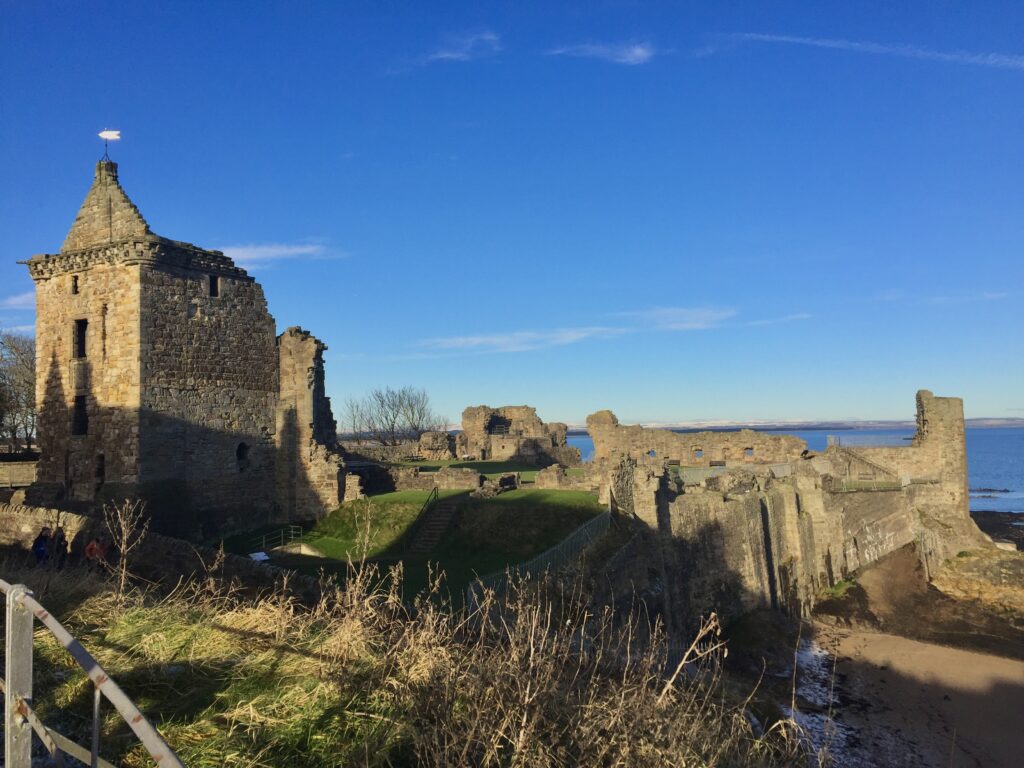
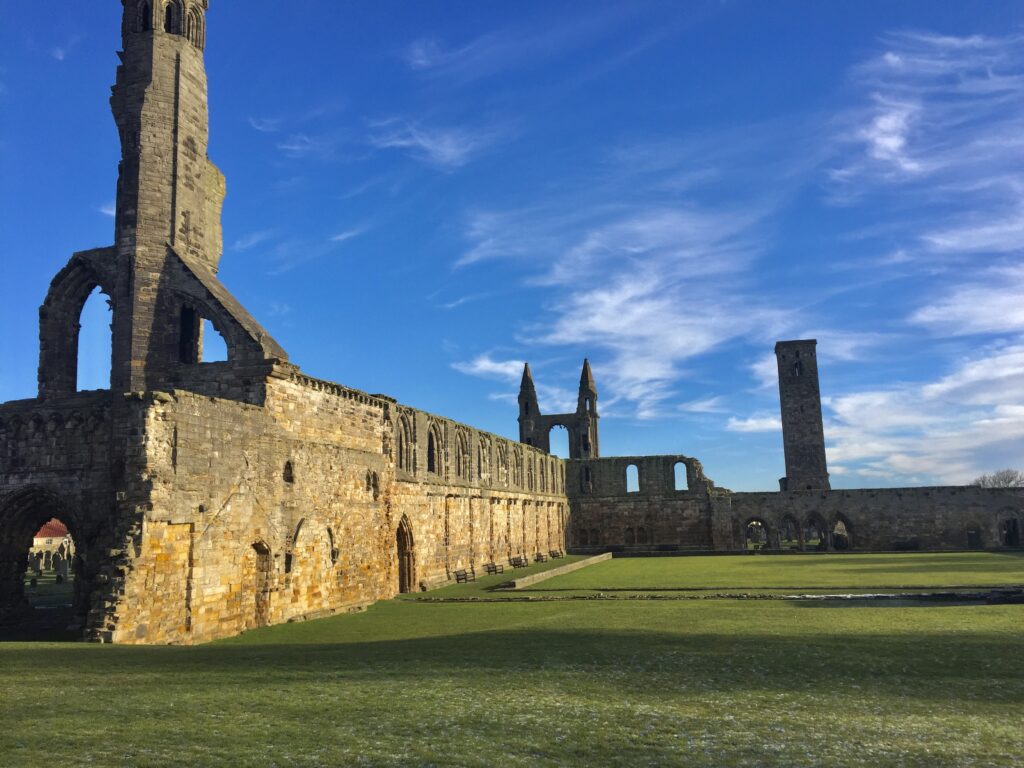
The name of St. Andrews comes from Saint Andrew the Apostle, the most highly revered saint in Scotland, evidence of which can be seen on Scotland’s national flag, bearing Saint Andrew’s cross. The town of St. Andrews originates in the mid-8th century when the Pictish king Oengus established a monastery at the town’s present location. The monastery is traditionally associated with housing some of St. Andrew’s bones. In 877, king Causantín mac Cináeda built a church there and in 906 the town became the seat of the bishop of Alba. The present town’s boundaries and layout were established in 1140 followed shortly by the construction of the cathedral in 1160 and the castle in around 1200. In medieval Scotland, St. Andrews and its cathedral in particular became the ecclesiastical capital of Scotland and one of the most important centers of pilgrimage in Europe. The town fell into decay in 1559 after the Scottish Reformation and various wars, a decline which continued until the 18th century when the town started to become famous for its golf links.
Today, with a population of 16,800 as of 2012, St. Andrews is still a town as opposed to an urban center. St. Andrews and Elie and Earlsferry are both located within Fife, a council area and historic county of Scotland which lies across the Firth of Forth from Edinburgh. Both the castle and cathedral in St. Andrews are in ruins, but that has done nothing to spoil their beauty and both make a visit to St. Andrews feel magical. St. Andrews’ location on the coast also means that visitors can enjoy spending time on the beach and get high-quality fish n’ chips from local restaurants.