Note: I originally wrote this post in 2018 for my old blog. I have edited and updated it for posting here.
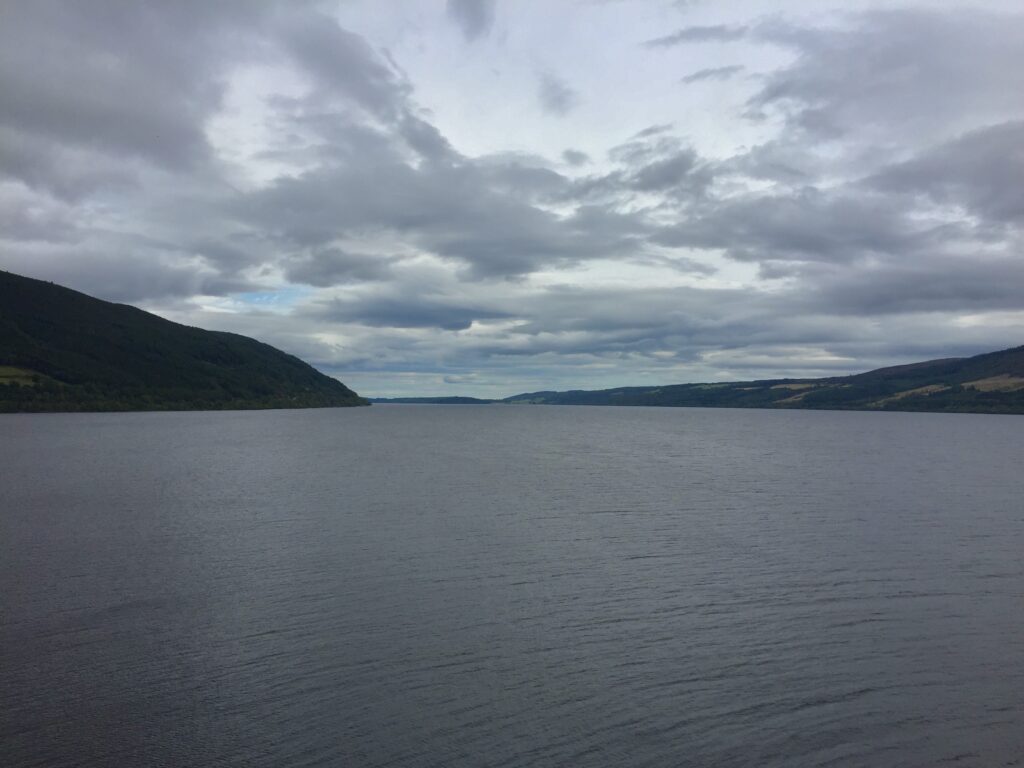
Loch Ness is the famed home of the mythical Loch Ness Monster, known affectionately in Scotland as “Nessie.” Yet even without this claim to fame, Loch Ness is a remarkable body of water. By surface area, it is the second largest loch in Scotland, behind Loch Lomond, and the second deepest, behind Loch Morar. This combination of depth and surface area makes Loch Ness the largest loch by volume in the British Isles — it contains more freshwater than all the lakes in England and Wales combined. It is also probably the darkest body of water I’ve ever seen. It doesn’t appear so in my old iPhone 6 photos, but when I visited the water appeared inky black, appropriately eerie for the home of a giant sea monster. This murkiness and low visibility is the result of high peat content in the surrounding soil. Such dark waters do a good job of hiding Nessie, if she exists.
The first recorded sighting of the Loch Ness monster was in 565 AD. It is said that she grabbed and ate a local farmer, and was then forced back into the water by St. Columba. Rumors about strange occurrences at Loch Ness spread throughout the years, and it seems likely that Scottish myths about water creatures such as kelpies contributed to the belief in a large creature living in Loch Ness. But it wasn’t until 1933 that Nessie gained worldwide fame. When construction began on the road that runs along the Loch’s north shore, the construction supposedly disrupted her enough that she rose from the depths of the loch and revealed herself to the workers. Several independent sightings were reported around this time, one of the most famous reports being that of London surgeon R.K. Wilson, who took a photograph that was published in the newspapers.
In the 1960s, the Loch Ness Investigation Bureau conducted an observational survey over ten years, recording an average of 20 sightings of Nessie per year, and later mini-submarines were used to explore the Loch. Today, there is no conclusive proof that the Loch Ness Monster exists. It has also been said that the mystery can be explained by the presence of circus elephants in the area in the early 1930s, which makes sense to me. Look at R.K. Wilson’s photograph. It really just looks like an elephant’s trunk, and the water surrounding it looks like small ripples, not waves.

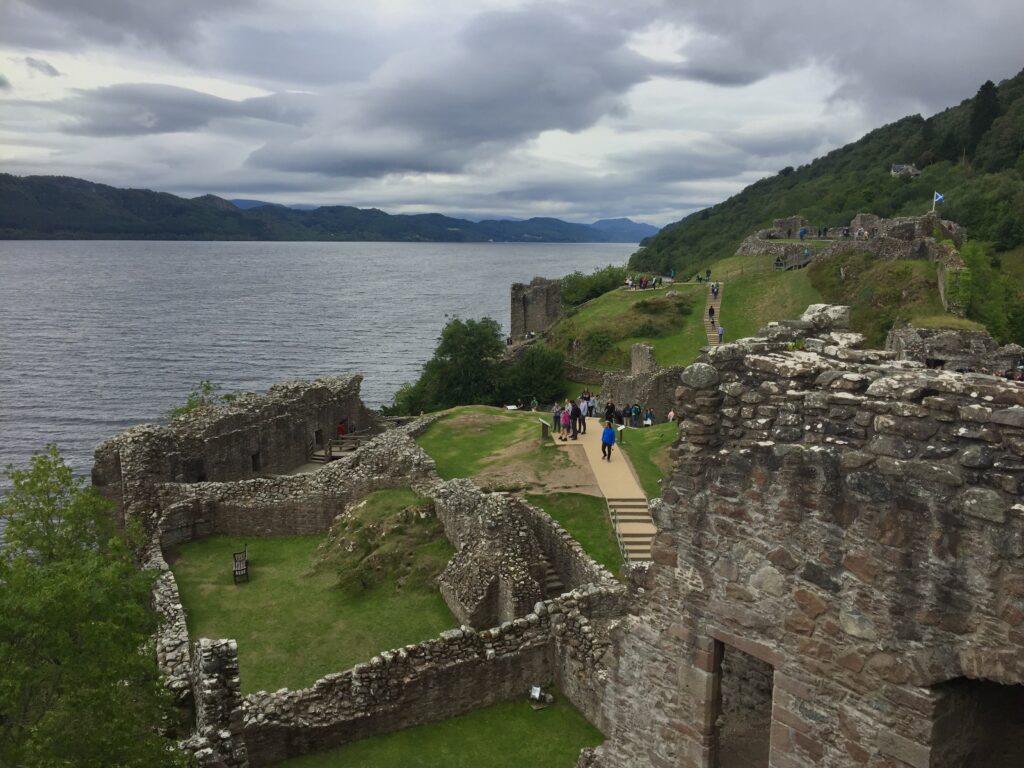
After marveling at the loch from the shore, the best way to experience Loch Ness is to take a cruise on the loch. On my trip I also wandered through the ruins of Urquhart Castle, which sits on the shore of the loch. It was founded in the 13th century, and in the 14th century it played a role in the Wars of Scottish Independence. For a while it was held as a royal castle, then was given to Clan Grant, and throughout this time the castle kept being raided by the MacDonalds. By the 17th century the castle was largely abandoned, and was partially destroyed in 1692 to prevent Jacobite forces from using the castle, so it fell into ruin. Nowadays it is one of the most visited castles in Scotland, and is also one of the largest in the area.
Many people are disappointed when they travel to Loch Ness because it’s just another Loch, and they’re not technically wrong. If you want to see a more beautiful loch, go to Loch Lomond, which is much closer to Edinburgh. However, I thought Loch Ness was worth the visit because I got to see the site of such a famous legend, and indeed, especially because of the cool and cloudy weather the day I visited and the inky black water, being by the loch felt eerie and foreboding. Loch Ness is not exciting, and is indeed just another loch, but that doesn’t make it any less compelling a place to visit. Taking a cruise on the loch and visiting Urquhart Castle while learning about this famous myth make a trip to Loch Ness worthwhile. Just don’t expect to catch a glimpse of Nessie.