Note: I originally wrote this post in 2017 for my old blog. I have edited and updated it for posting here.
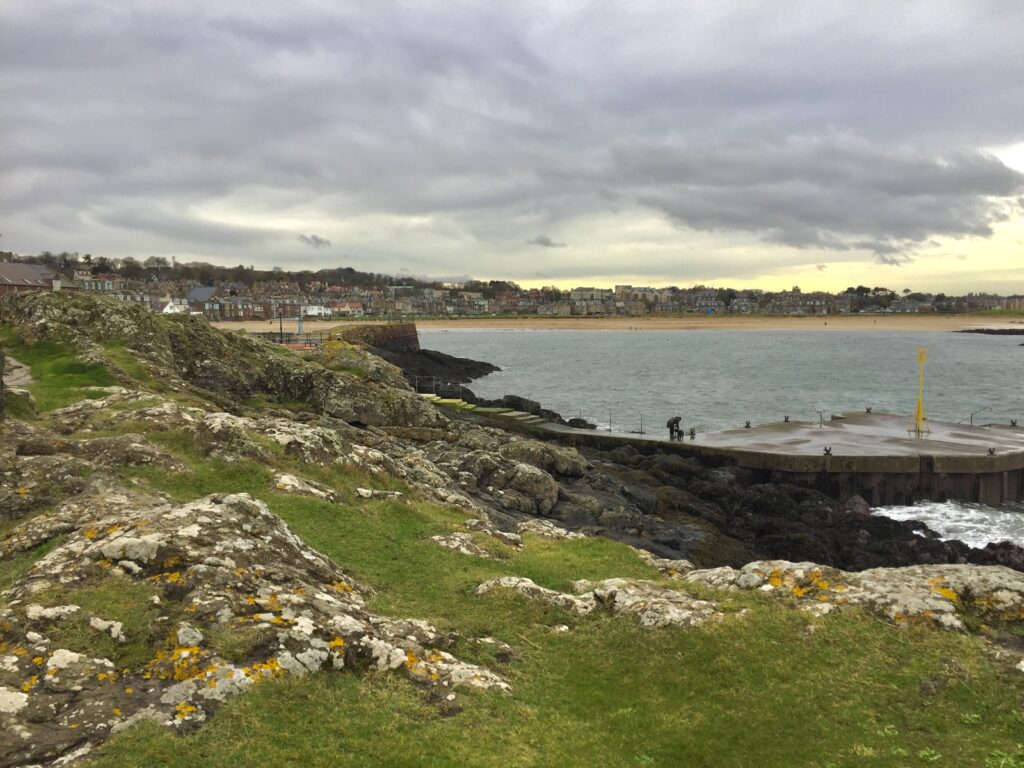
Is there anything more lovely than seaside towns? I am inclined to say no, and North Berwick is no exception. North Berwick is a seaside town in Scotland situated on the Firth of Forth about 30 kilometers from Edinburgh. It has a population of about 8,000 townspeople and is, as one would expect of a coastal town, a popular vacation destination with two sandy beaches and a golf course, as well as the Scottish Seabird Centre. It is also one of the many seaside spots found along John Muir Way, a 130-mile route along the coast of southern Scotland named after the famous Scottish-American conservationist.
North Berwick is an old village — its harbor was built in the twelfth century and ferries have been accommodating travelers and pilgrims to and from the village for even longer. Around 1150, Duncan of clan MacDuff founded a nunnery in this town and later his family built a castle, which is unfortunately no longer with us. In the years from 1590 to 1592 the town was gripped by the North Berwick Witch Trials, in which, like every other witch trial, many innocent people, mostly women, were killed. According to legend, Satan himself attended a ritual there in 1590, but most people seem to believe it was actually the fifth Earl of Bothwell in disguise.

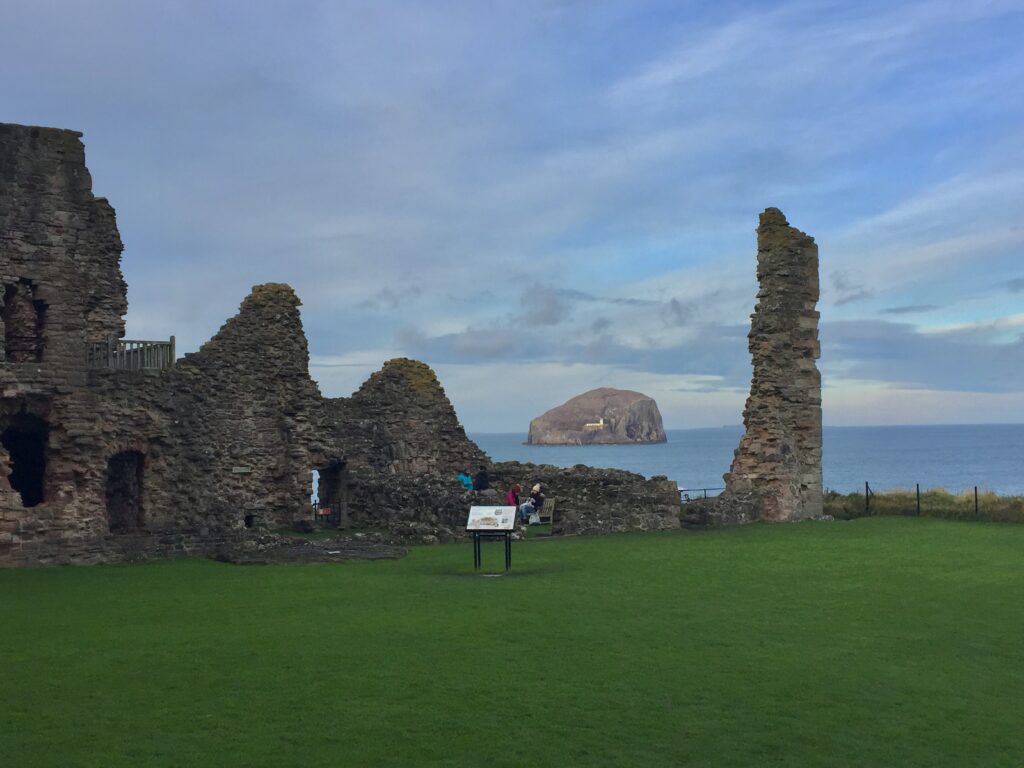
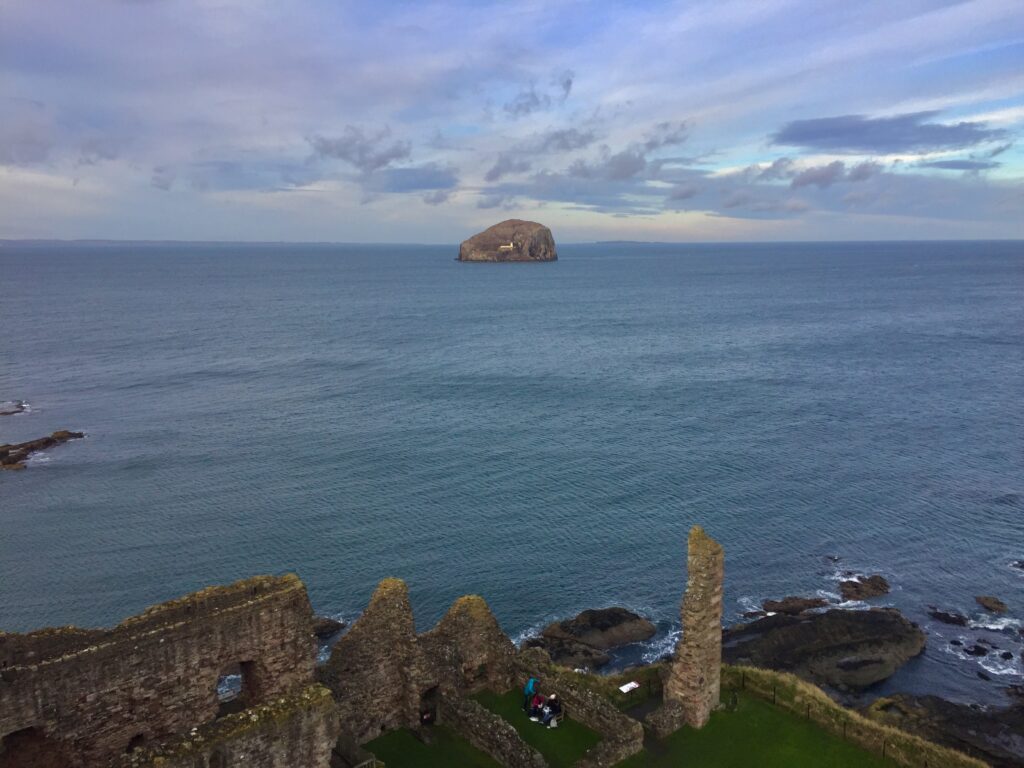
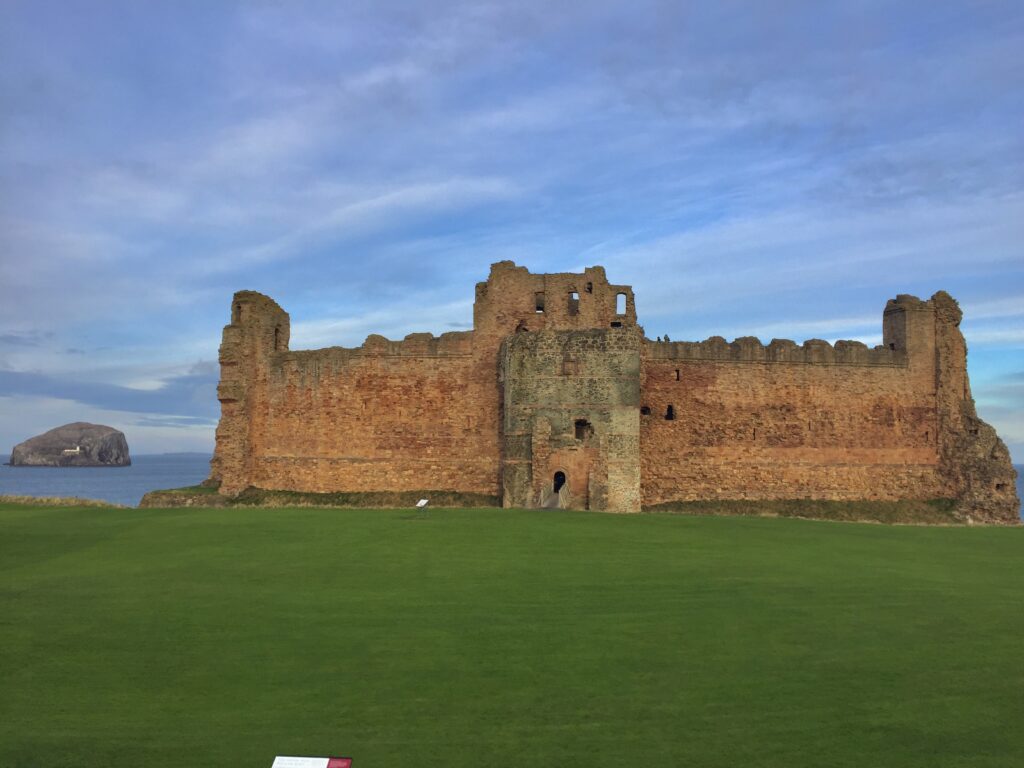
Three miles east of North Berwick sits Tantallon Castle, which was built in the 14th century. It has been besieged a number of times and experienced considerable damage during Oliver Cromwell’s invasion of Scotland, and today it is a ruin under the care of Historic Scotland. The castle looks out to the Firth of Forth facing Bass Rock, a small inhospitable island (more precisely, a very large rock) and nature reserve sitting about two kilometers offshore. Today it is uninhabited and the only building on it is a lighthouse, constructed in 1902, but formerly the island was the site of a castle and before that an ancient chapel of which the ruins remain. And centuries ago, the island had been settled by an early Christian hermit. Today Bass Rock is open to visitors, but ferries do not run that often and must be booked in advance. The tickets are expensive, but it is a popular trip for professional photographers and scientists because the island is home to a large colony of gannets, a type of seabird. If you’re a bird enthusiast but can’t make it to the island, you can still watch the birds from the Scottish Seabird Centre: cameras on the island stream footage back to the centre for interested visitors.
I visited North Berwick in late November on a day trip from Edinburgh, where I was studying at the time. Late autumn is not exactly peak season, and as is typical of Scotland, the weather was cold and windy, but the town was beautiful and still very green. Tantallon Castle is only a short bus ride away, and though I didn’t get to visit Bass Rock, you can get an excellent view of this peculiar island from the castle ruins. This giant boulder floating in the middle of the sea with one lonely building seems like it should belong to the realm of fairy tale or myth, a mysterious rock home to a mythical creature or hermit that occasionally appears out of nowhere, and then disappears. Instead, it is always there to greet visitors on the shore.