Note: I originally wrote this post in 2017 for my old blog. I have edited and updated it for posting here.
In the spring of 2017 when I was living in Austria, I took a day trip to the tiny country of San Marino while spending a weekend in Bologna. San Marino is one of two microstates completely surrounded by Italy, the other being the Vatican City. It’s miniscule — the fifth smallest country in the world by land area, to be exact — but this small and obscure country hides a long and rich history.
San Marino was founded in 301 CE and is the oldest existing sovereign state in the world. It was founded by Saint Marinus, a stonemason from what is now Croatia. He left his home and settled in the Italian city of Rimini to help reconstruct the city’s walls, which had been destroyed by Liburnian pirates. Marinus was a Christian and gave sermons back in the early days of the religion. After the Diocletianic Persecution in which the Romans persecuted Christians, he escaped to Monte Titano nearby and built a small church there. He founded the city-state of San Marino on September 3, 301, though the Papacy did not recognize its independence until 1631. San Marino’s governing documents, the Constitution of San Marino, are also believed to be the oldest in the world that are still in effect. They were written in the 16th century in Latin and consist of six books.
San Marino has remained mostly neutral over the years and its diplomacy as a sovereign nation is done mainly with Italy, as it has given Italy the power and responsibility to defend it. One fun fact about its relations with the US is that, after establishing relations in 1861, San Marino made Abraham Lincoln an honorary citizen. Though he never visited the country, he was an admirer of their government. San Marino remained neutral during both World Wars, though they were governed by a fascist party from 1923-1943 and a communist-socialist coalition until 1957.
Today, San Marino covers an area of about 62 square kilometers including Monte Titano and the surrounding area. It is not a member of the EU but is a member of the Eurozone, and has joined the Council of Europe and the United Nations. Its capital “city”, which is where I spent my day, is the City of San Marino with a population of only 4,118 people. The country’s largest “city” is Dogana, with about 7,000 people. The official language of San Marino is Italian and the population is 34,042 as of 2025. It is also one of the richest countries in the world based on GDP per capital, and is the only country in the world with more cars than people for some reason.
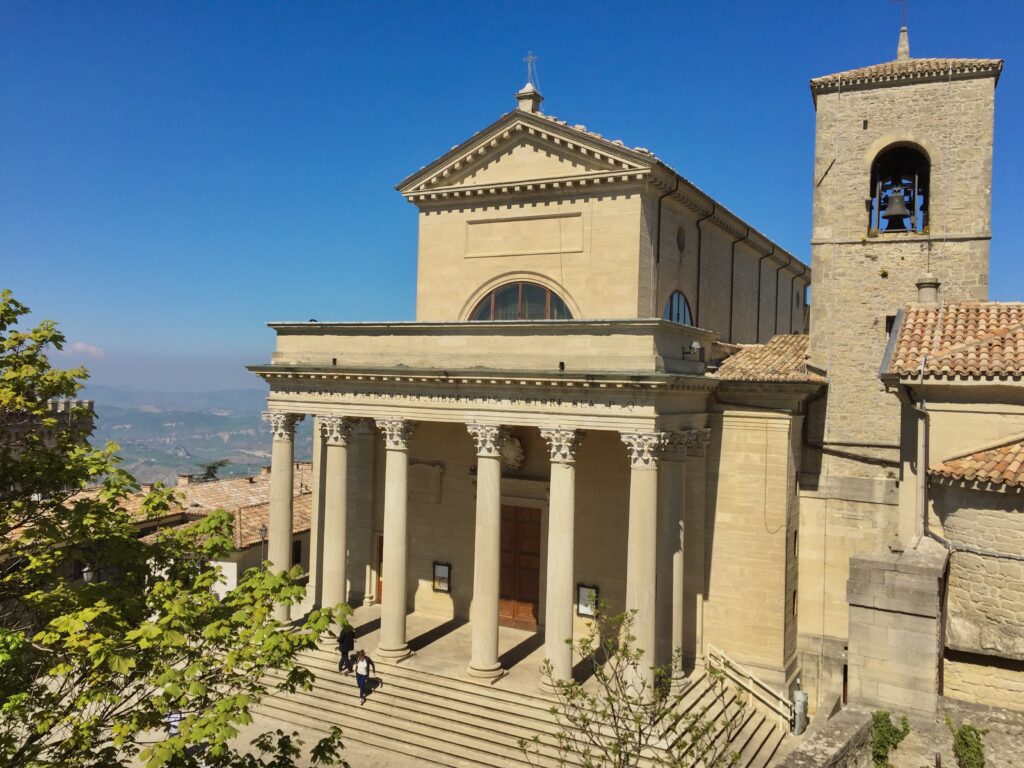
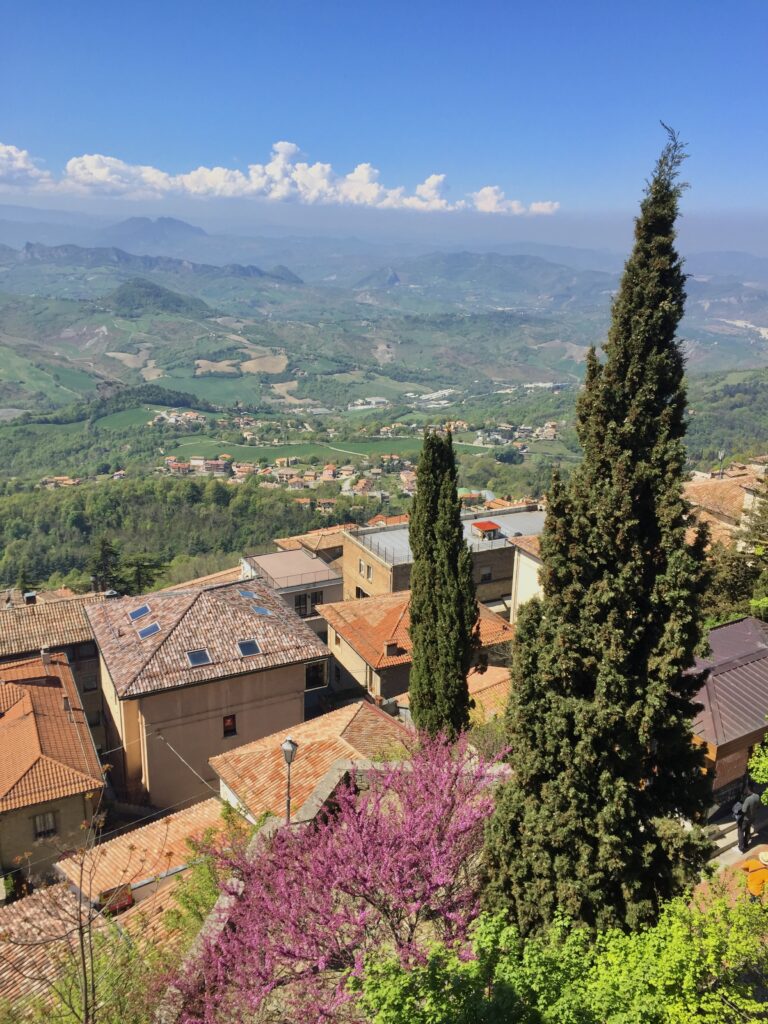
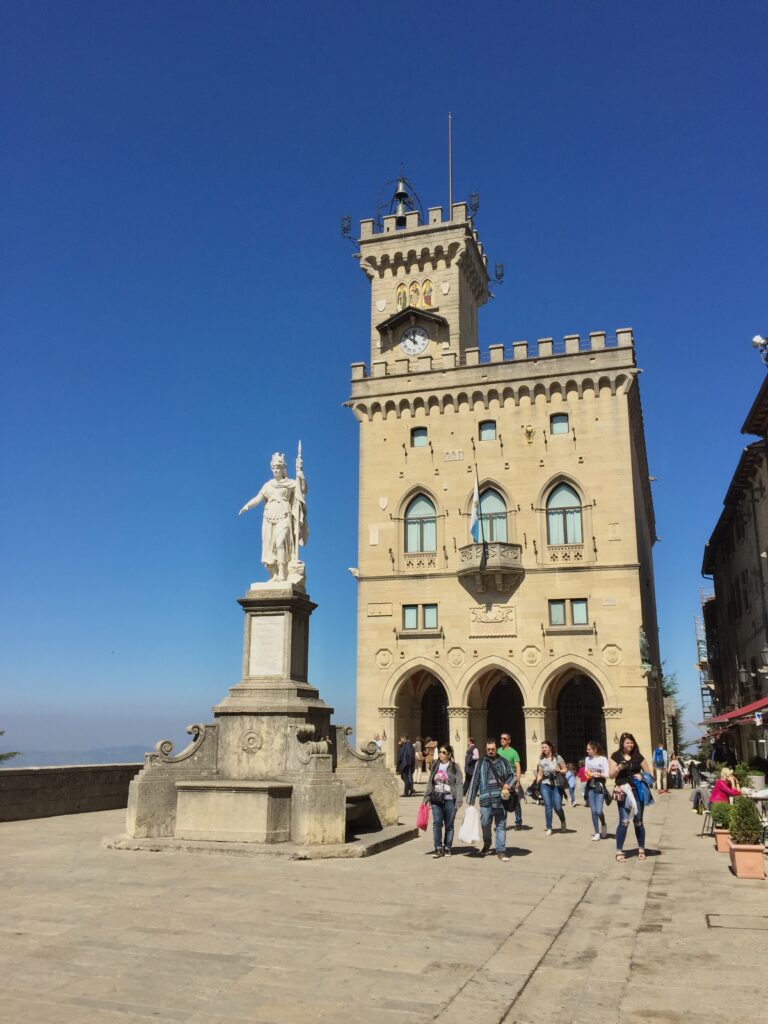
Before I visited San Marino I had read many opinions online from people who were disappointed by their visit, stating that it wasn’t worth the trip. This was not my experience in the least. The town was lovely and the views from Monte Titano were breathtaking, though I was lucky enough to have perfect sunny spring weather during my visit. I would definitely recommend a visit to the City of San Marino on the mountain, but my guess is the rest of the country surrounding the mountain is not all that different from nearby Italy. For those interested in visiting, there is a bus to San Marino from the main train station in Rimini. It was a very easy day trip from nearby Bologna.