Note: I originally wrote this post in 2017 for my old blog. I have edited and updated it for posting here.
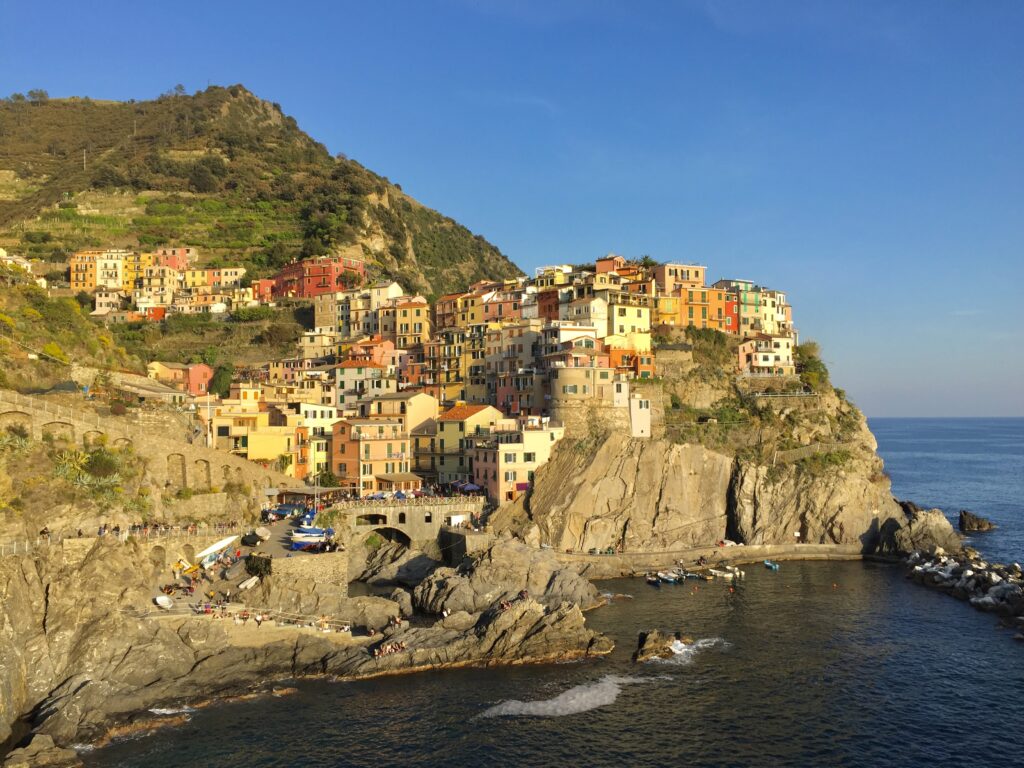
Sometime when I was in high school I came across a picture of Manarola and thought it was the most beautiful place I had ever seen. When I got my first laptop shortly after graduating, I found a photo of Manarola online and made it my first background. It wasn’t until a few years later that I found out the village is part of what is called the Cinque Terre, which translates to “five Earths” in Italian. The Cinque Terre is a National Park and UNESCO World Heritage Site in Italy’s Liguria region that consists of five coastal villages and their surroundings, hence the name. From north to south, the villages are Monterosso al Mare, Vernazza, Corniglia, Manarola, and Riomaggiore.
A Guide to the Five Villages
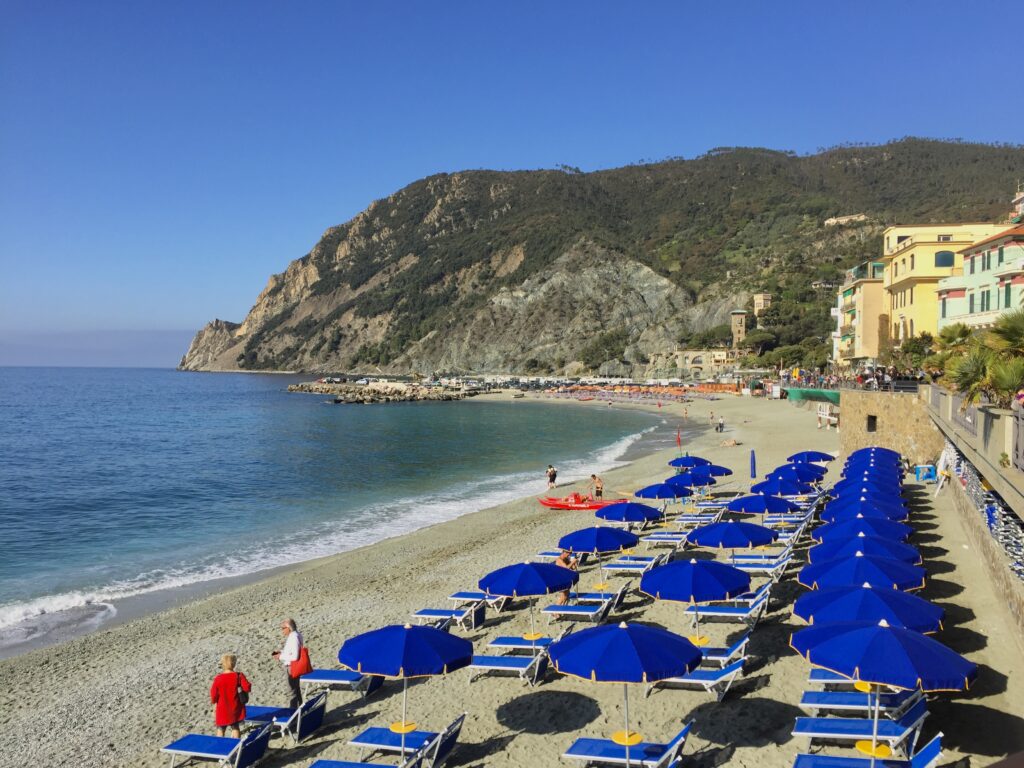
Monterosso al Mare
The northernmost village and second largest with 1,400 inhabitants. This is the only village with a sizable beach and the one where most travelers stay because there are hotels and resorts.
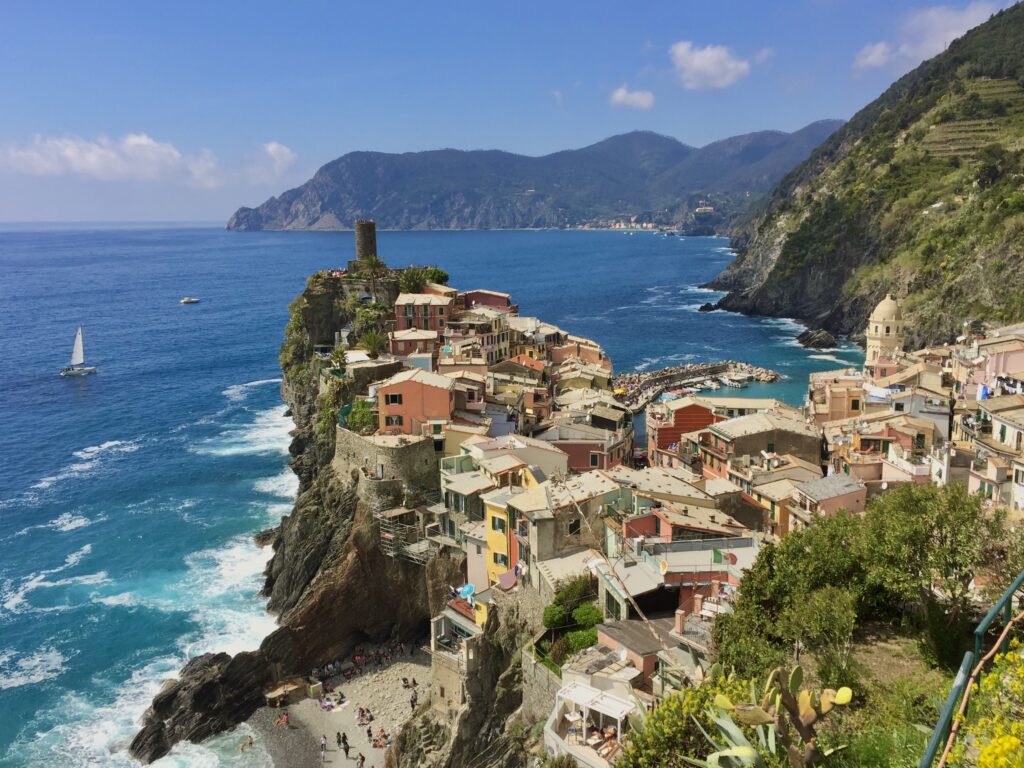
Vernazza
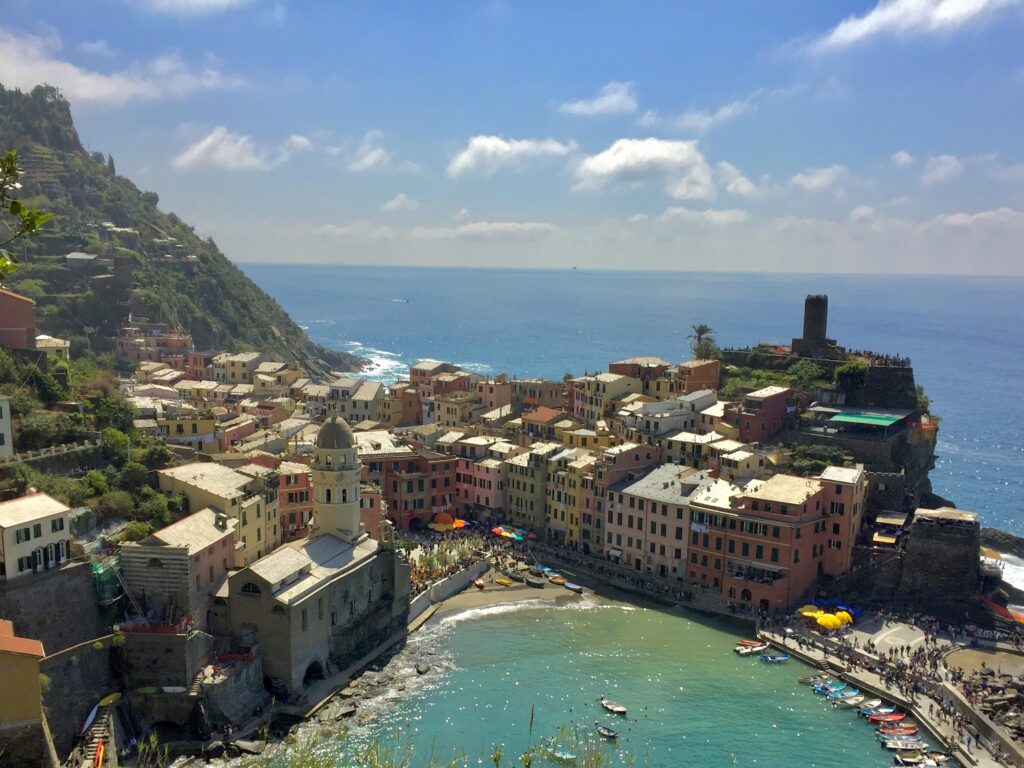
The second village from the north with 764 inhabitants. Vernazza is often onsidered the most beautiful and picturesque, and is probably the one you’ve seen the most photos of. This also tends to makes it the most crowded of the villages.
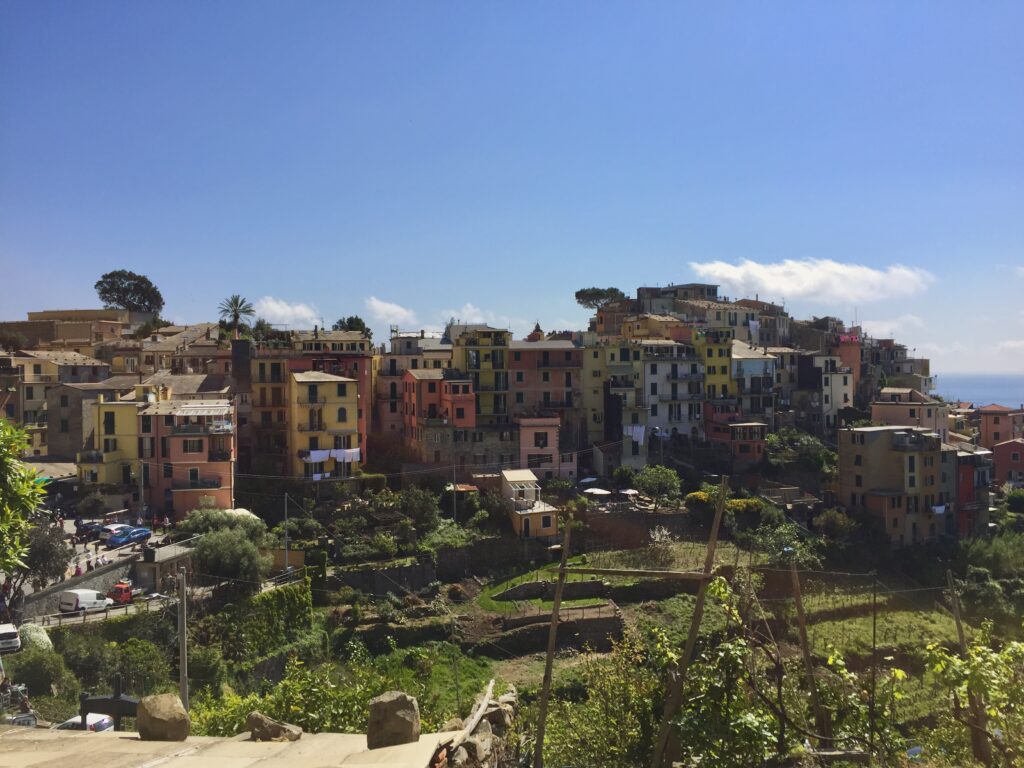
Corniglia
The middle of the five villages and the smallest with only around 200 inhabitants. It is also the least convenient to access and is the only one that the ferry does not stop at. It was constructed on top of the cliffside rather than into it, so it is much higher up than the other four villages.
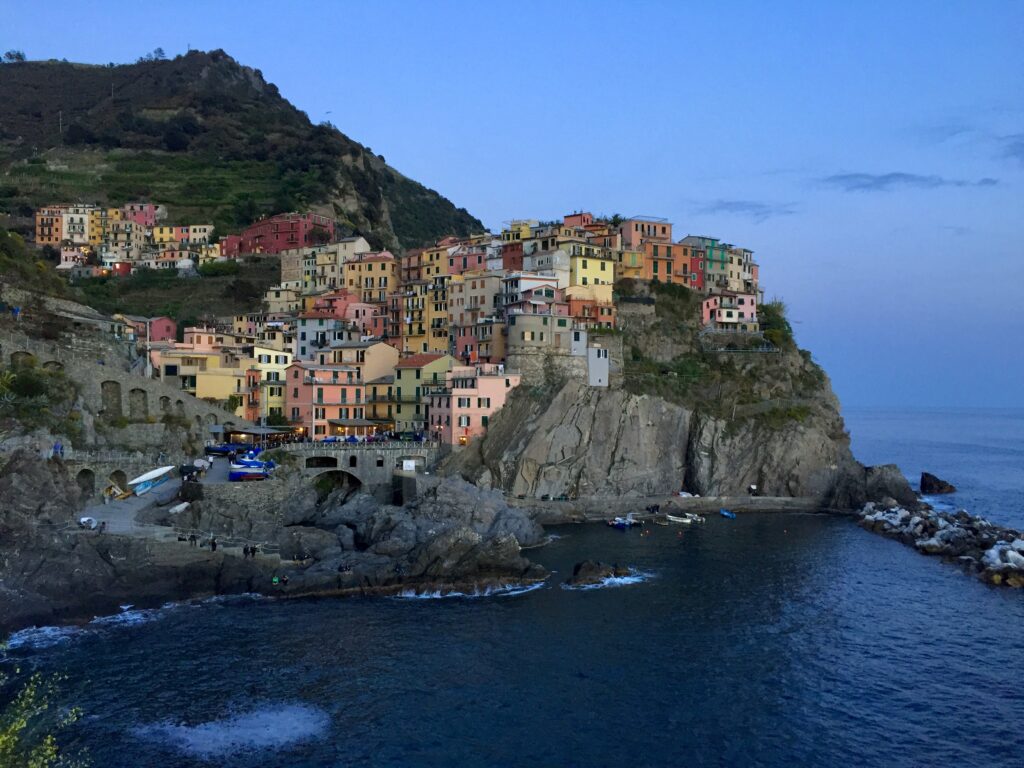
Manarola
The second village from the south with about 350 inhabitants. True to my younger self, I found this one to be the most captivating.
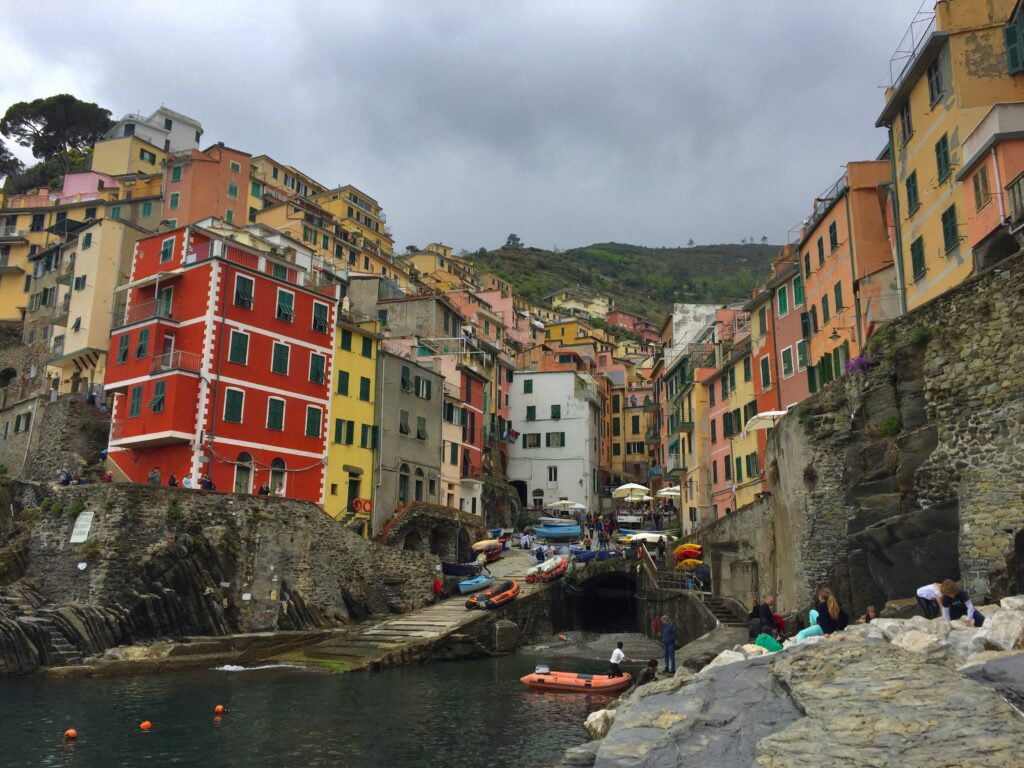
Riomaggiore
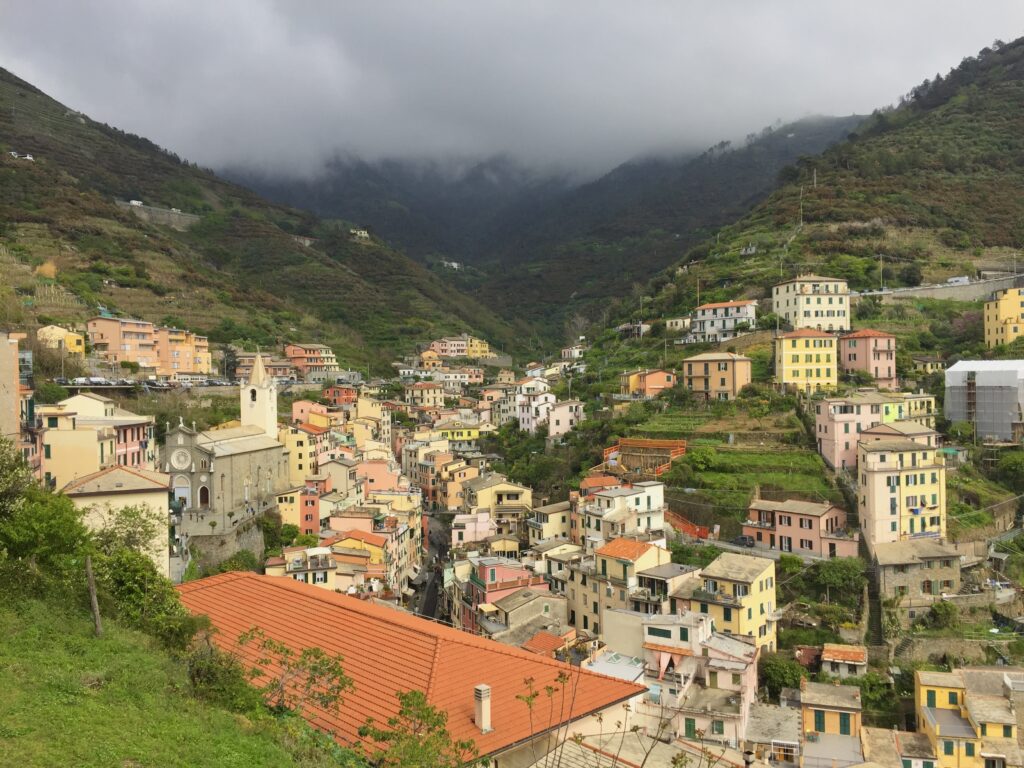
The southernmost and largest village with 1,426 inhabitants. This is the village I stayed in, and it was lively but not too crowded.
History of the Cinque Terre
The first documentation of the Cinque Terre appeared in the 11th century, with Monterosso and Vernazza developing first and the other three later. They were under the rule of the Republic of Genoa, and for the most part have a quiet history. In the Divine Comedy, Dante even compared these cliffside villages to the rugged cliff of Purgatory. Attacks by the Turks during the 16th century caused the villagers to reinforce the forts and construct defense towers, but other than that the villages led quiet lives of isolation for most of their history. The villagers lived mainly off of their vineyards and olive cultivation, and Monterosso had a fishing industry.
In the 19th century, a railroad was built connecting the villages to La Spezia, a major city nearby, bringing the Cinque Terre out of isolation. Until then, the only way to access the villages from outside was by boat, and the only connection between the villages was by boat and very steep mountain paths. Even nowadays, it is very difficult to access any of the villages by car. The construction of railroads allowed the villagers to escape their isolated environment, leading to a period of decline and poverty as many people left. They remained virtually unknown outside of Italy until the 1970s, when tourism to the villages developed and brought wealth.

My Experience Visiting the Cinque Terre
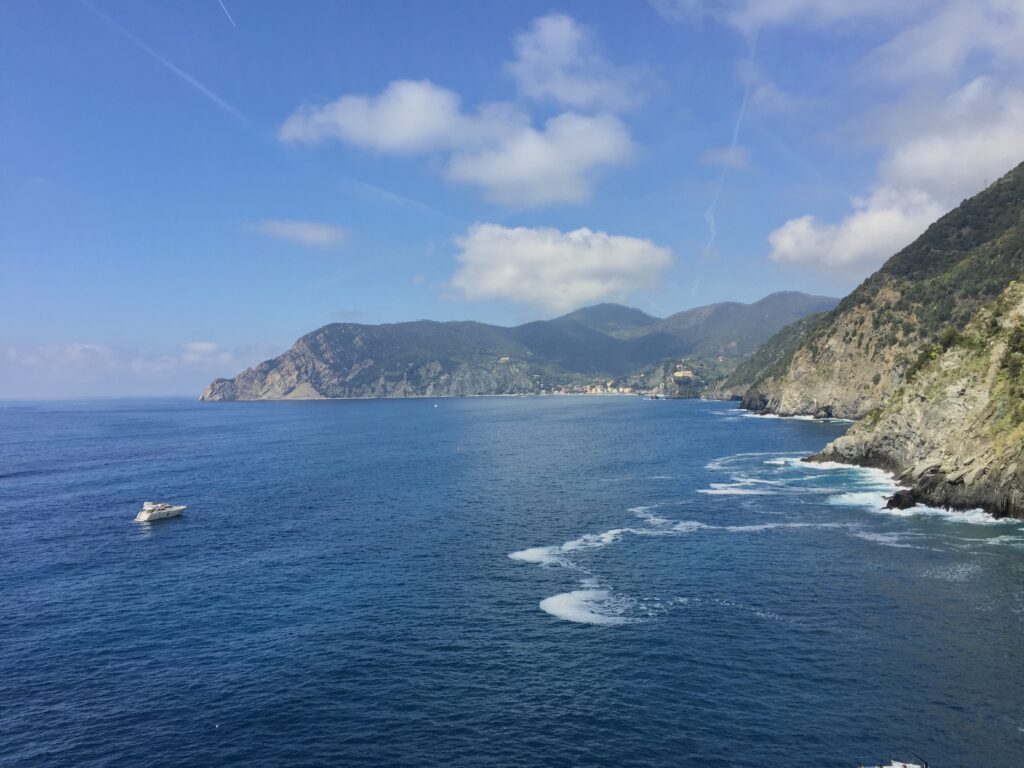
Nowadays the Cinque Terre encompass an extremely popular tourist spot, and it was very crowded when I visited during Holy Week, a holiday period in Europe when most people have time off. What attracts people to the villages are the colorful buildings and the unique way they are terraced into the rocky cliffside that overlooks the Mediterranean Sea, creating a breathtaking scene that demonstrates how humans adapt to nature. However, the villages are still very small as you can see from the most current population data, so the influx of tourists can make them very crowded. If I were to visit again I would go during the off season.
Still, walking through the streets of these beautiful tiny villages and being by the sea makes the experience worth it. Though there is a train that stops in all five villages, there are trails between each of them, and I loved spending an entire day walking through each village. I started by taking the train to Monterosso al Mare and then walked south to Riomaggiore, and the other way would be great for people who want to end their day at the beach.
One of the most popular paths is the Via dell’Amore, the seaside path between Manarola and Riomaggiore. When I visited it was closed due to repairs after being damaged in a storm, but it has since reopened. This was disappointing, but if you’re adventurous enough, there is still a steep mountain path you can take from one village to the other. I took this path one evening and it felt magical going up the mountain in Riomaggiore, only meeting a few other hikers, and then descending into Manarola. I’d highly recommend taking at least one of these paths to see how villagers used to travel from one village to another.
I spent three nights in Riomaggiore, which I think was enough to really explore that village and go through the rest. A walk through all five villages could technically be done as a day trip from nearby La Spezia, but I think if you really want to explore the Cinque Terre, you should stay for three to five nights. You could easily spend a week there if you want to spend more time relaxing.