I know, I know. Japan is the it-girl of travel destinations right now and summer is when most people have holidays or time off work. After all, it’s not like Japan is in Southeast Asia, so how bad can the summer really be?
As someone who has lived in Japan for seven years and had to endure seven of these excruciating summers, please trust me when I say this: unless your travel plans specifically demand it, please please do not travel to Japan during the summer. If you do, I can promise you will not enjoy your trip.
How bad is it really?
During my first full summer living in Japan, I took advantage of the Obon holidays in August to spend a week traveling around Mie and Wakayama prefectures. I remember one day while I was in Shingu, I stepped outside in the morning to head to the station and literally six minutes later, before I even reached the station, I was already drowning in sweat. So it’s pretty bad! To be fair, I wasn’t wearing the optimal clothing or adapting my travels to the climate. Still, I have almost completely given up on traveling in Japan in the summer, save for a few destinations that are bearable or a few activities that can only be done in the summer (see below).
I have already written one article emphasizing how hellish the summers are here and another about how dystopian it is that we are still dressing the same for work despite the climbing temperatures. But to summarize (summerize?):
- Nowadays, summers in Japan last from about mid-June to the end of September, and August is the most miserable month
- Japanese summers are not only hot but also very HUMID
- This is how summers have always been in Japan, and our pernicious fossil fuel burning habit is only exacerbating the problem. In the second article I call it a “steady descent into the ninth circle of hell.”
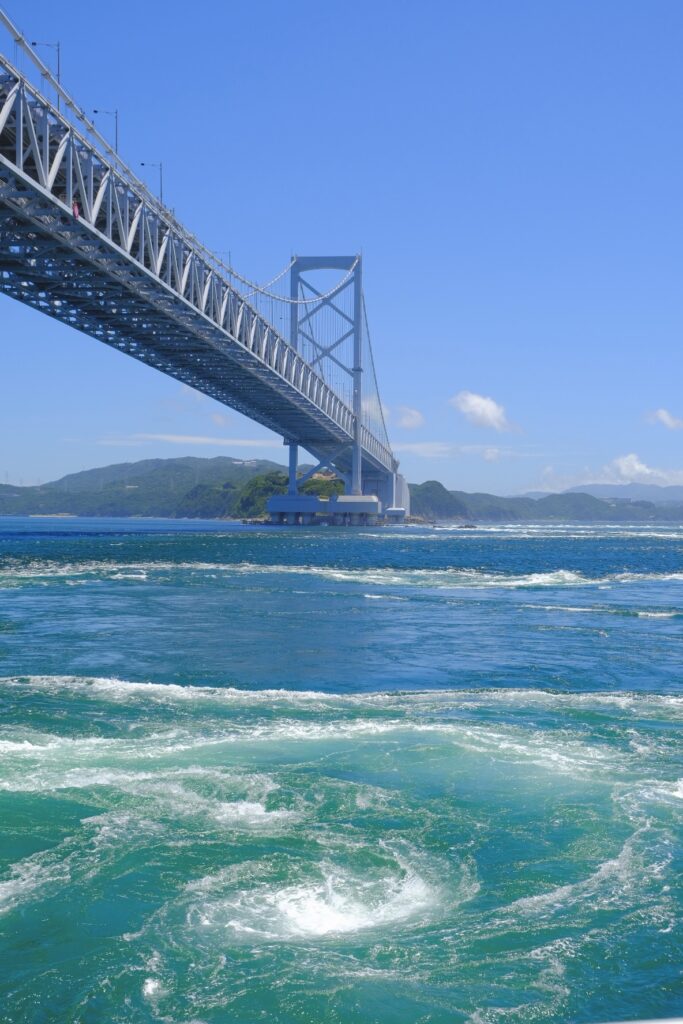
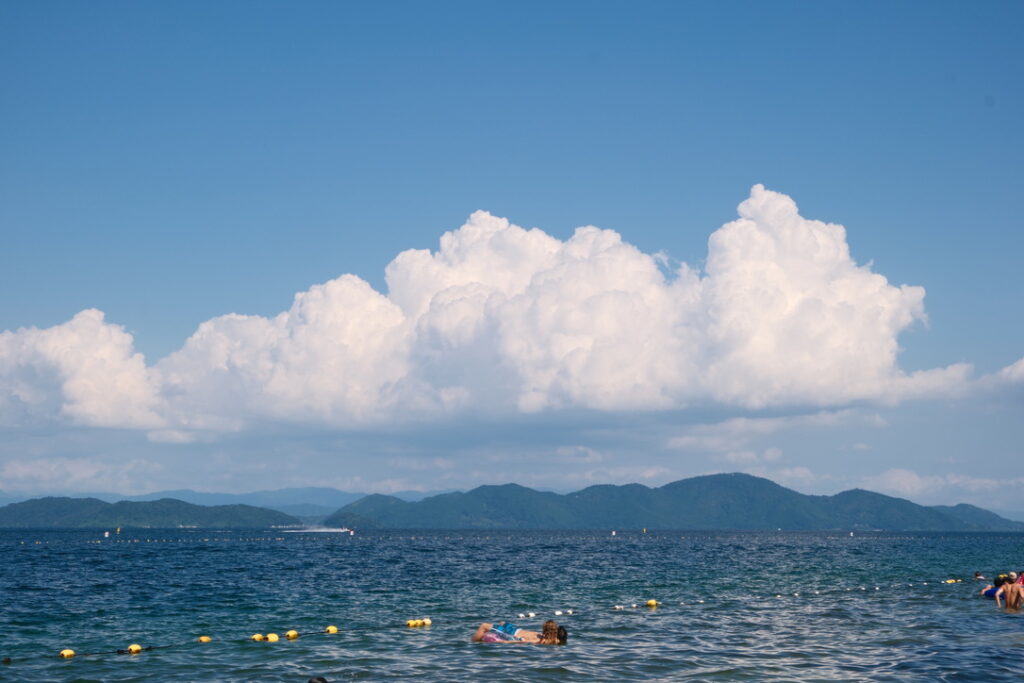
It’s really unfortunate because aesthetically, Japan is beautiful in the summer. You can see really floofy clouds all the time, and the summer colors are exquisite. It’s even tempting to go outside and take photos, but I know that if I do I’ll immediately regret stepping into the sweltering misery that awaits. The photos here are obviously evidence that I have succumbed to the temptation a few times.
It’s also worth noting that most Japanese cities don’t have a lot of shade and greenery. I remember being in awe of all the huge trees that shaded the streets when I traveled to Chengdu. Though many city streets in Japan are lined with trees, they are usually smaller trees that seem as if they were only planted there for decoration. And though many cities have parks, they don’t always have an abundance of shady trees.

Who should travel to Japan in summer?
So what are the three exceptions I mentioned? Here is who I believe is suited, and what activities are appropriate, for summer travel in Japan.
- People who are visiting expressly to climb Mt. Fuji or to attend specific summer festivals
- People who will be spending their time in the mountains of Nagano in places like Kamikochi and Karuizawa, or in Hokkaido (unlikely if this is your first trip to Japan)
- People who come from places that are hot and VERY humid
So basically, if your main objective in visiting Japan is to climb Fuji-san or to attend summer festivals, you obviously have no other choice but to come in the summer. If you happen to be visiting the one area in Japan that is bearable during the summer (besides the top of Mt. Fuji), then coming to Japan in the summer is reasonable. And if you come from a very hot and humid place like Southeast Asia, then Japanese summers might not be entirely unbearable for you.
I’ve seen people claim that they’ll be fine because they’re also used to hot summers. But if you come from a place that is merely hot — for example, if you’re one of those people who claims the heat in Arizona isn’t that bad because it’s a dry heat — then you will be miserable in the Japanese humidity. Even some of my friends from the Caribbean find Japanese summers unreasonably stifling.
I also still see articles from reputable travel sources like Lonely Planet recommending places like Sendai to escape the summer heat. But even in Tohoku, you cannot escape. Northern Honshu is not as much of a furnace as Tokyo or Kyoto in the summer, but it is still hot and humid. Throughout the entire country, there is very little escape from the sauna-like conditions, particularly in July and August, save for the places mentioned above. If you plan to visit the typical spots and want to enjoy your trip to Japan, do yourself a favor and visit at a different time of year.
What if I really have to travel to Japan in summer?
If it is your dream to travel to Japan or you want to visit friends and family here, and you really have no choice but to travel in the summer because that’s the only season you have time off, here’s how you can survive and have a reasonably pleasant trip.
The most important thing is to wear the right clothing! And I don’t mean as little clothing as possible. I remember last summer seeing two women who were wearing athletic tank tops and bike shorts, and they were clearly miserable. I found their ignorance almost devastating because I, like them, also did not know how to dress for hot and humid weather before I came here and had to adjust. So so many tourists I see, particularly of the white American and northern European variety, seem to have no idea how to dress for such hot and humid weather and also do not seem to be protecting their skin enough.
The best kind of clothing to wear in Japan in summer is light and loose linen or cotton garments that cover much of the skin. Flowy pants, skirts or dresses and loose shirts that at least cover the back and shoulders are ideal, and will keep you much cooler than baring all your skin for the sun to heat up.
Parasols and brimmed hats are also helpful. To be honest, I used to judge Japanese women for using parasols. I assumed they were just trying to keep their skin light. While that may be true for some, since I moved here I’ve realized how useful a parasol can be. When you have to walk outside with the sun beating down on you, carrying a parasol is equivalent to carrying around your own personal spot of shade, and makes walking outside much more bearable. Nowadays I even see more men carrying them.
It goes without saying that if your skin is not suited to so much sun exposure, you should wear sufficient sun protection. Luckily, Japan has some of the best sunscreens that are widely available at convenience stores, so you don’t need to pack much and can pick some up while you’re here. Be sure to stay hydrated as well — if you aren’t already in the habit of carrying around a water bottle, you should definitely do so on your trip to Japan. And definitely don’t make the silly mistake I used to by walking fast in order to get out of the heat as quickly as possible. When you are outside, try to walk slowly and in the shade as much as you can, and you will be less likely to end up a sweaty mess. But also, accept that you will eventually end up a sweaty mess.
Finally, you should reconsider visiting the typical places and instead consider heading to Hokkaido or the mountains of Nagano. I would highly advise against visiting the sauna that is the rest of Japan, but if you do, try to focus on indoor activities as much as you can, especially during midday. A few summers ago I wanted to see my friends in Tokyo, so I went for a week and spent the entire time at museums and cafes. In order to avoid the delirium that will eventually get to you after being out in the heat and humidity, that’s what you’ll have to do.