Note: This article was inspired by a previous article I wrote for Tokyo Weekender.
Every spring as the temperature slowly warms and flowers start to bloom again, my energy levels rise and my mood improves immensely. Suddenly, instead of curling up in my bed with a book, I’m dying to get outside and enjoy the flowers, a reminder that I am a simple-minded organism that should be living in touch with the seasons. So I go find some flowers to enjoy, and in Japan, some of the best places to enjoy seasonal flowers are temples.
I am lucky enough to live in the Kansai region close to the old capitals of Kyoto and Nara, which have long been centers of faith and tradition. Many of the most famous temples in the country stand within the cities of Kyoto and Nara, but there are also plenty scattered throughout the countryside of both prefectures. Many temples are even hidden in the mountains, which were revered as sacred spaces bridging the natural and the divine. Among these countryside temples, a few are known for how they come alive when their signature flowers bloom. These are my favorites throughout spring, summer, and even early autumn.
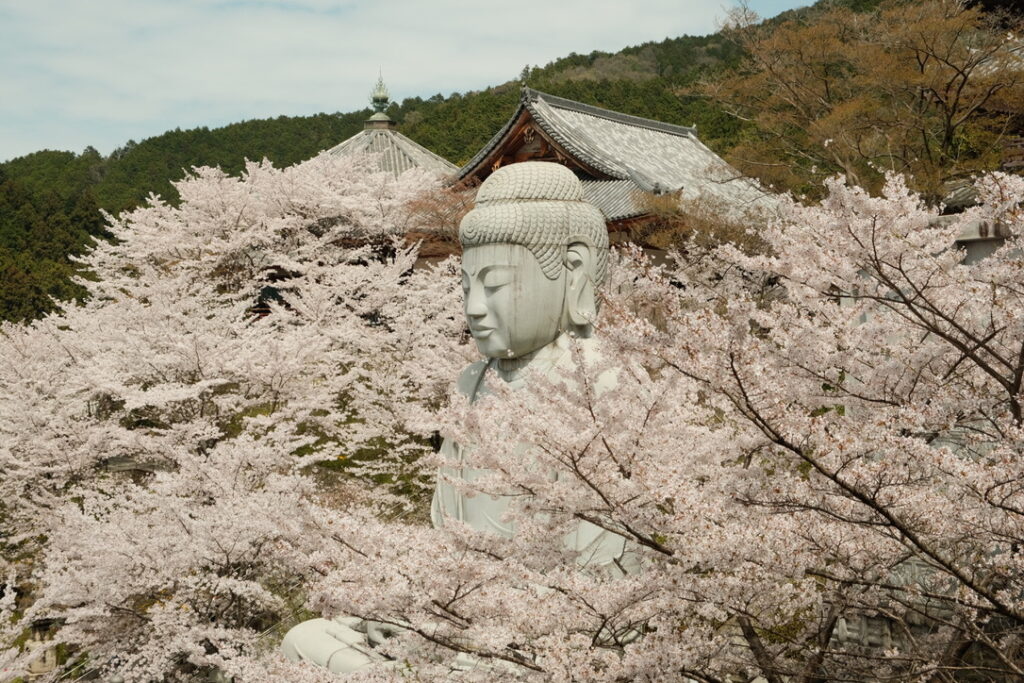
Tsubosaka-dera, where the Buddha floats amidst cherry blossoms
About Tsubosaka-dera
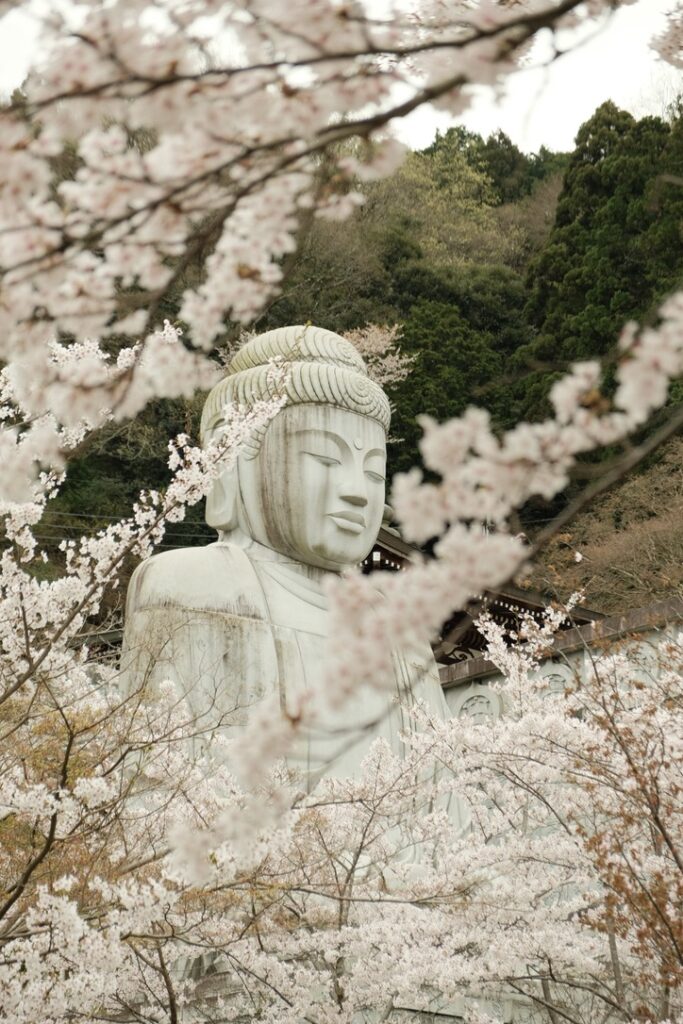
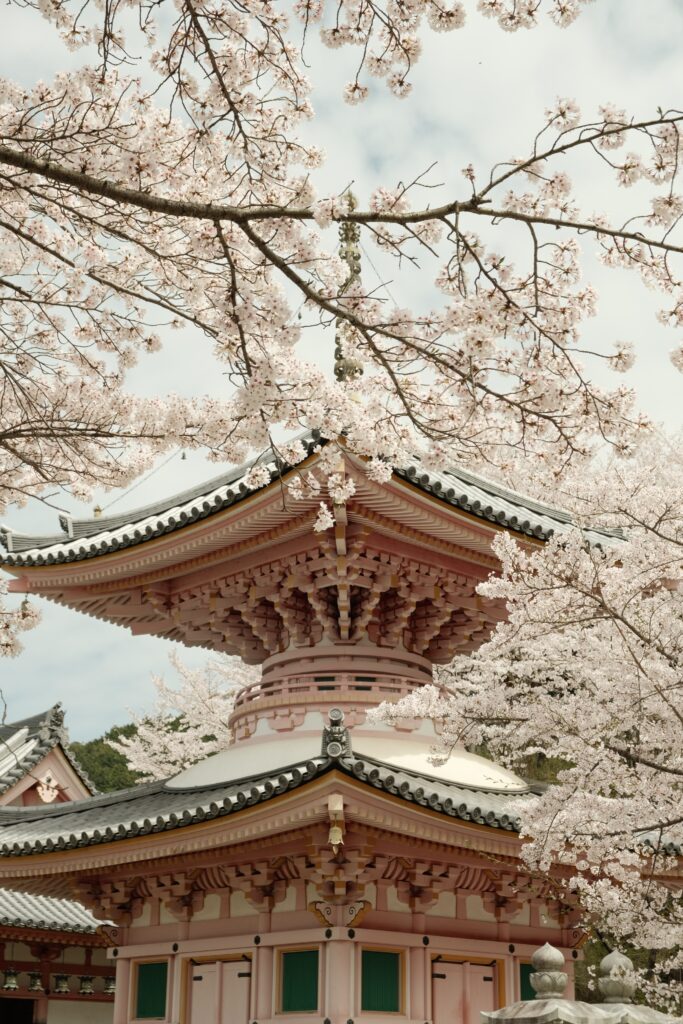
Tsubosakadera sits tucked in the mountains of Nara prefecture, not far from the famous Mount Yoshino. It’s much less celebrated as a sakura spot than its neighbor, but if you visit during this season, you’ll get a spectacular view of the temple’s large seated Buddha statue floating in a cloud of sakura. The temple’s pale pink pagoda, long faded from the typical vibrant orange, matches the surrounding sakura.
The name “Tsubosaka-dera” translates to “jar on a hillside temple.” According to legend, the monk Benki founded the temple in 703. He brought his treasured glass jar with him on his pilgrimage, and once while practicing asceticism on the mountain, a vision of Kannon, the goddess of mercy, appeared inside the jar. He then placed the jar in a hermitage on top of the mountain. A few centuries later, Sei Shonagon mentioned Tsubosaka-dera in The Pillow Book, including it in her list of temples with miraculous powers, since the temple lore states that its water has the power to cure eye ailments.
When to go
The most spectacular (and most popular) time to go is during the cherry blossom season in early April. This is the only time you can get photos of the Buddha floating above a cloud of sakura, but I’m sure the temple is beautiful in the later spring months with green leaves as well. It’s also supposed to have some nice foliage in autumn and looks beautiful covered in snow in the winter too.
How to get there
This temple is not easy to get to, especially during peak sakura season. If you’re going by public transportation, take the Kintetsu line to Tsubosakayama station, then you’ll have to walk for just under an hour up to the temple. There is a bus from the station that takes you some of the way up, but you’ll still have to walk about 35 minutes. The bus is extremely crowded and always delayed during peak season because of traffic up to the temple (more on that below), so you may as well enjoy the walk, unless you’re headed there outside of the peak season. The walk takes you through a traditional town and up the mountain, so it’s a lovely hike.
If you drive, during peak season you’ll be stuck in a long line of cars up to the temple merely to get a parking spot, so I would strongly recommend against taking a car unless you have to. But I imagine it’s a short drive up during the rest of the year.
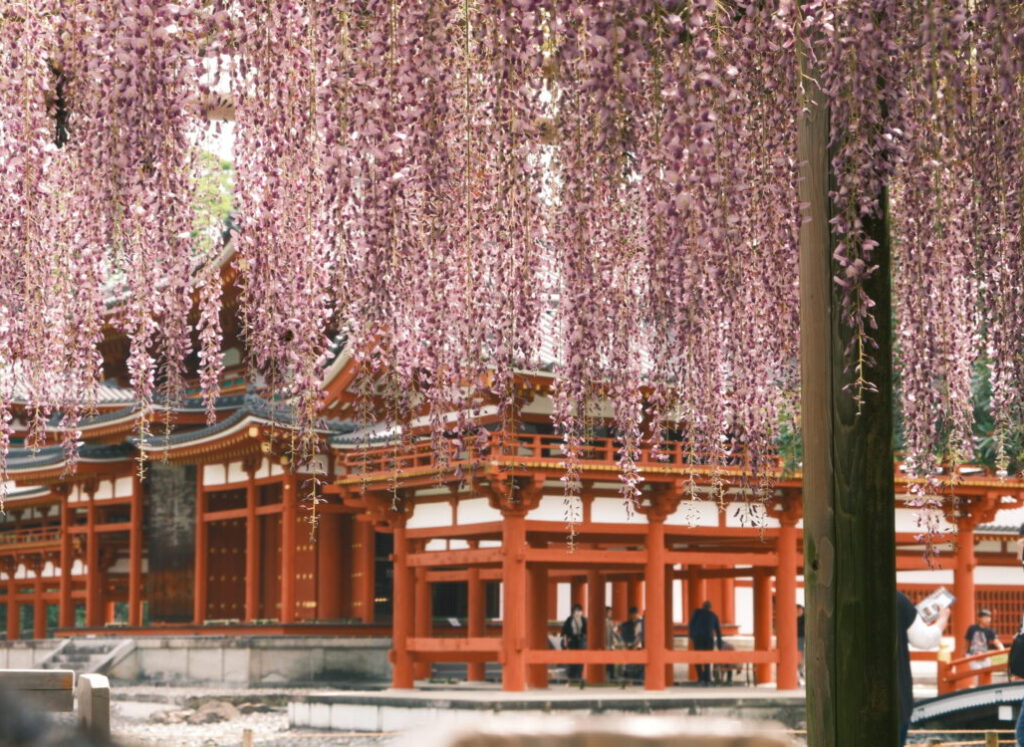
Byodo-in, where you can peek at the temple through the wisteria
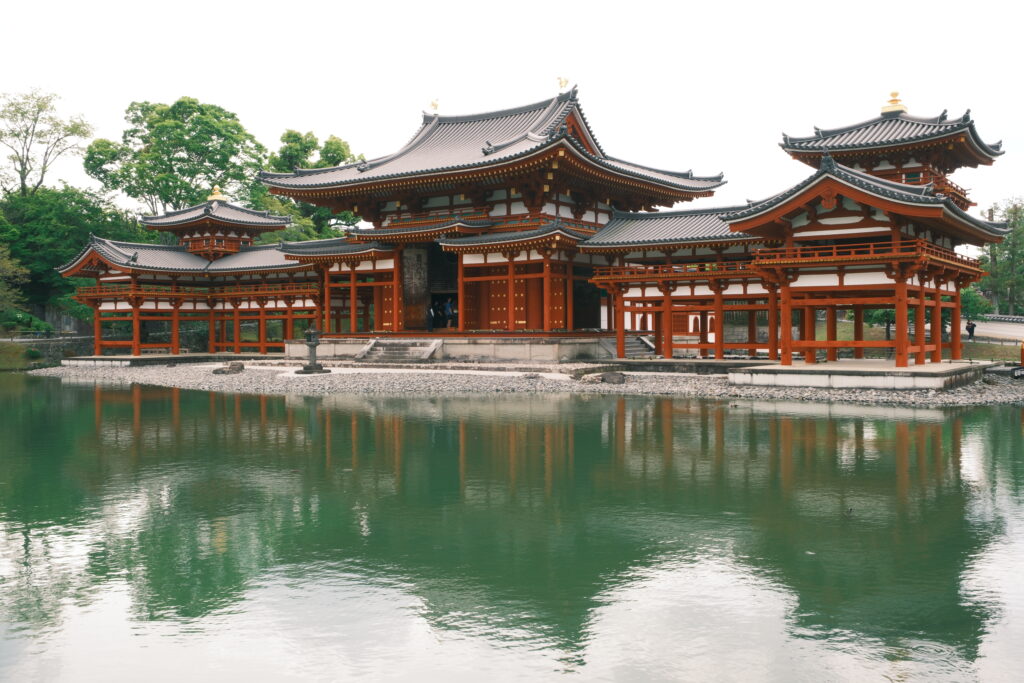
About Byodo-in
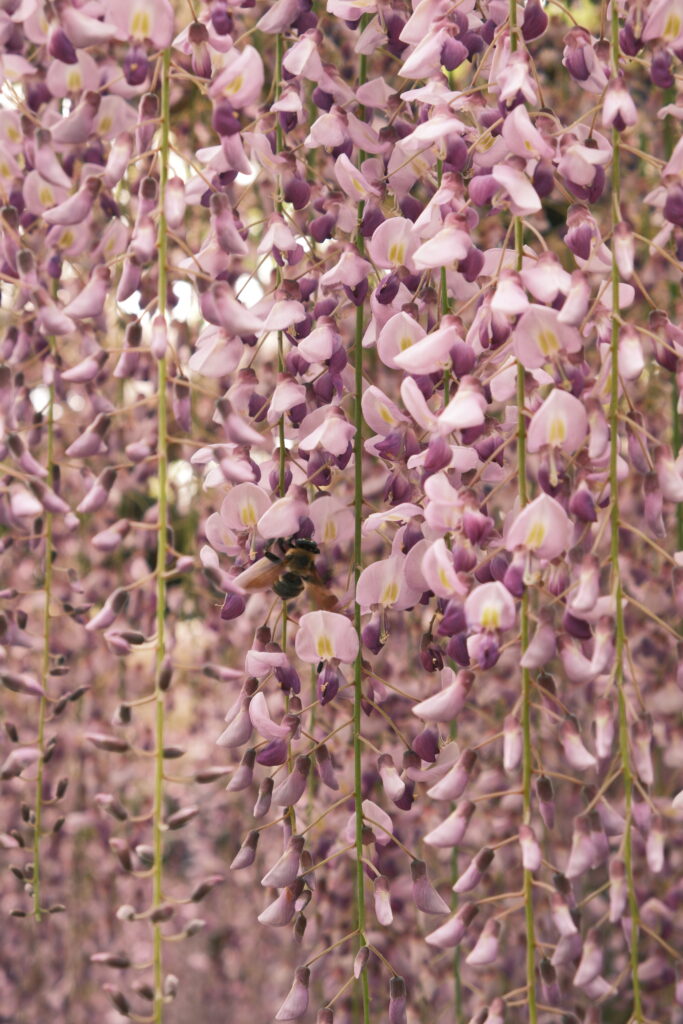
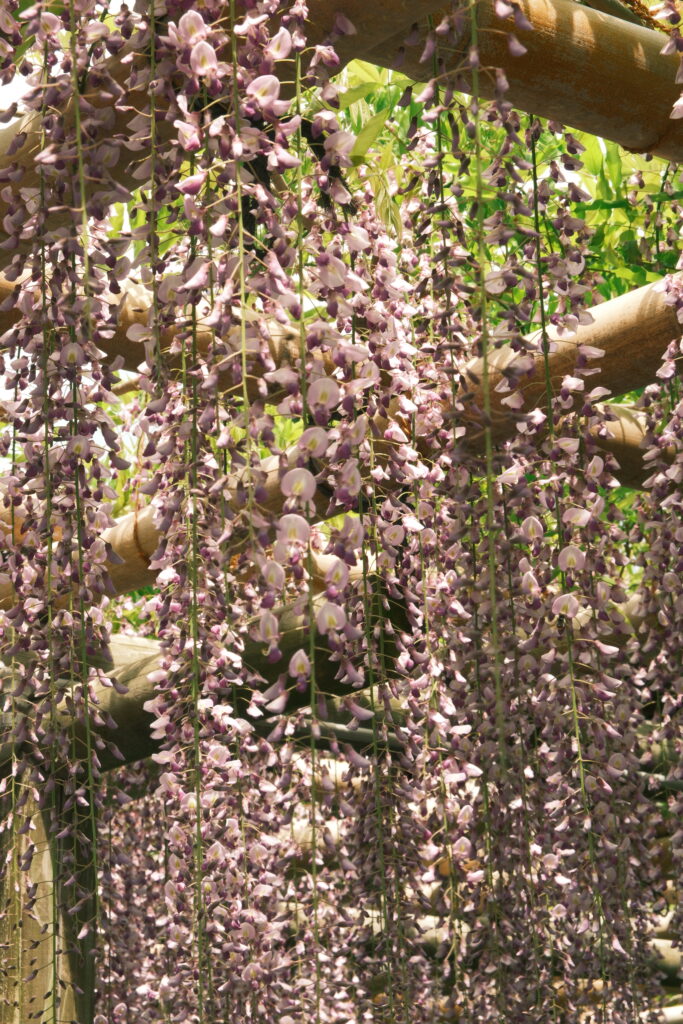
As part of the Historical Monuments of Ancient Kyoto UNESCO site and with its image featured on the 10-yen coin, Byodo-in in the town of Uji hardly needs seasonal flowers to make it a worthwhile visit. Still, the already breathtaking temple and its grounds become enveloped in a heavenly aura when the wisteria bloom every May. During that time bright white and magenta azalea bushes are also scattered throughout the grounds, adding a radiant contrast to the muted light purple of the wisteria. Maple trees that change to a vibrant red in the autumn surround the garden, so the end of November is another spectacular time to visit the temple.
First built in 998, Byodo-in was originally a countryside villa for a high ranking courtier before it was purchased by Fujiwara no Michinaga, a member of the powerful Fujiwara plan. In 1052, a year many believed marked the start of the end of the world, his son Fujiwara no Yorimichi converted the villa into a Buddhist temple in order to achieve the Buddhist Pure Land.
When to go
Byodo-in’s historical significance and beautiful grounds make it beautiful and worth a visit in every season, but the wisteria in May and the colorful leaves at the end of November make for the most spectacular views.
How to get there
Byodo-in is very easily accessible. Take the Keihan Uji line to Uji station, then walk about ten minutes to the temple.
Gansenji, a secluded temple surrounded by hydrangeas
About Gansenji
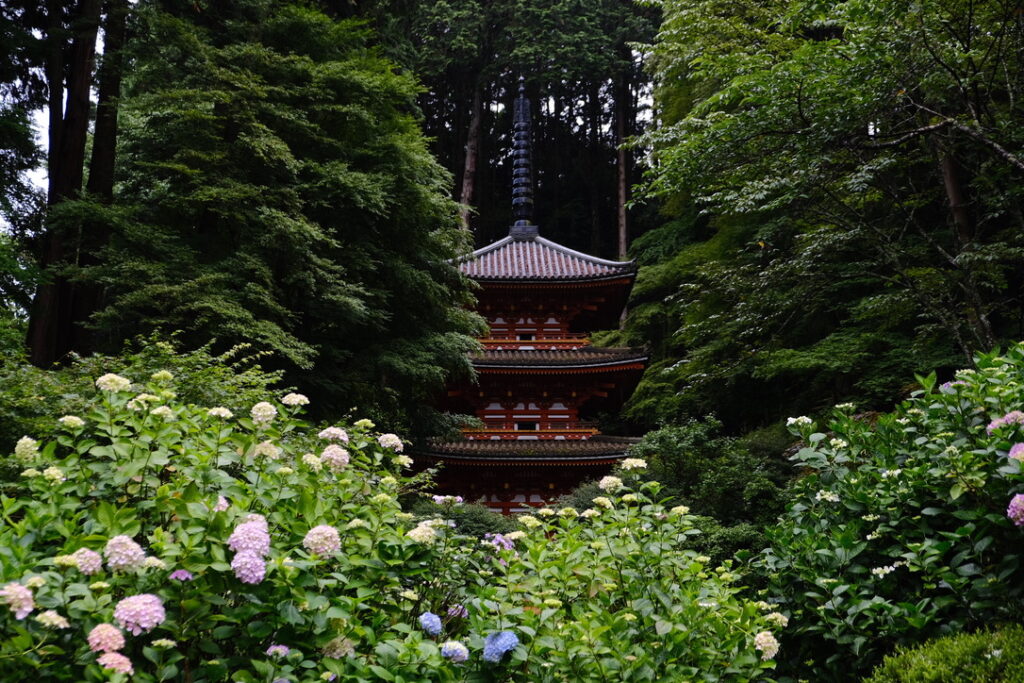
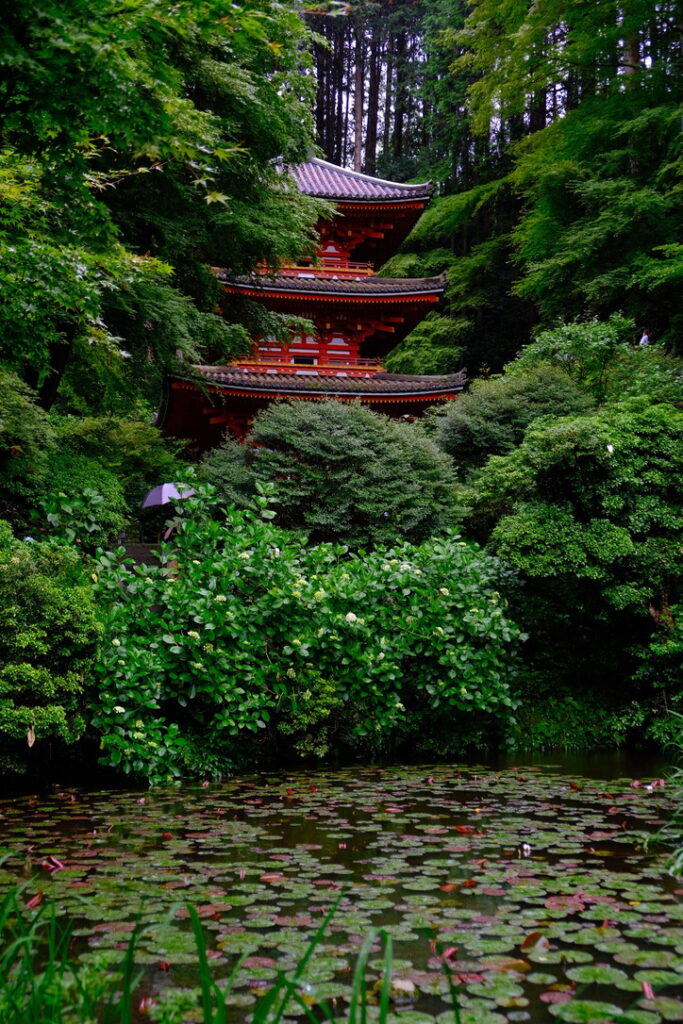
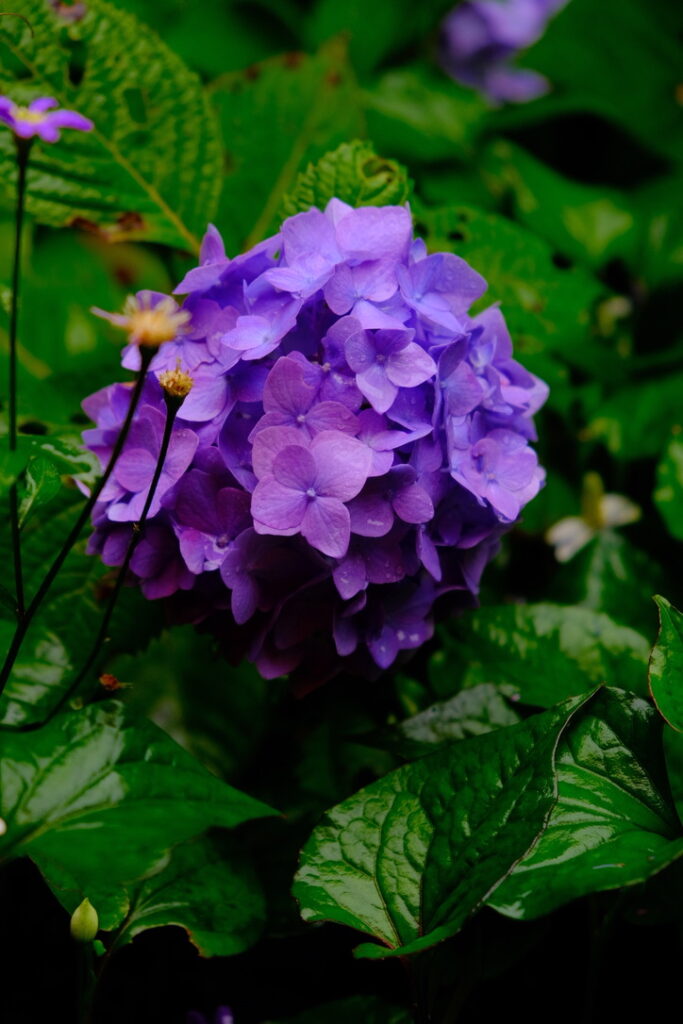
On a mountain deep in the forests that straddle the border of Kyoto and Nara prefecture, a secluded pagoda rises from the greenery. This three-story wooden pagoda is part of Gansenji, a Buddhist temple that is well-known as a hydrangea-viewing spot yet is isolated enough to still lie a bit off the beaten path. Mystically serene in every season, Gansenji becomes positively ethereal in June when the hydrangeas bloom, filling the temple grounds with white, pink, blue and purple clouds tucked among the lush green of the surrounding forest. While June is the rainy season and you’re likely to get wet, this only adds to the temple’s mystical atmosphere. You can also see lotus flowers starting to fill the pond during this time of year.
According to the temple’s documents, it was founded in 729 after Emperor Shomu had a dream and asked the celebrated Buddhist priest Gyoki to build it. The temple served as a secluded retreat for monks from larger temples in Kyoto and Nara.
When to go
Gansenji is known for its beautiful array of hydrangeas in June, but the temple is also a great spot for viewing both cherry blossoms in late March/early April and autumn foliage in late November/early December. I personally think the lush green forest surroundings make it worth visiting all spring if you can’t make it for the hydrangeas.
How to get there
The best way to get to Gansenji by public transport is to head to JR Kamo station and from there take the community bus right up to the temple. The ride lasts about 15 minutes and the bus runs every hour from 8:44 until 15:44, always on the 44 minute mark. The last bus leaves the temple at 16:21.
If you’re taking the Kintetsu line from Kintetsu Nara station, there are a few buses that can take you to the stop called Gansenji-guchi, which is about a 25 minute walk from the temple. However, these buses run very infrequently, so it is probably better to take a taxi from the station.
When I went we drove to the temple. They only have a small parking lot, so on nice days during hydrangea season the parking traffic is probably chaotic, but on a rainy day in the afternoon we had no issues.
Hasedera, a sprawling temple complex for any season
About Hasedera
The sprawling temple complex of Hasedera lies nestled in the mountains near the ancient town of Sakurai in Nara Prefecture. Founded in 686, Hasedera is the center of the Bunzan school of Shingon Buddhism, and the temple complex consists of 30 buildings dotted around the hillside.
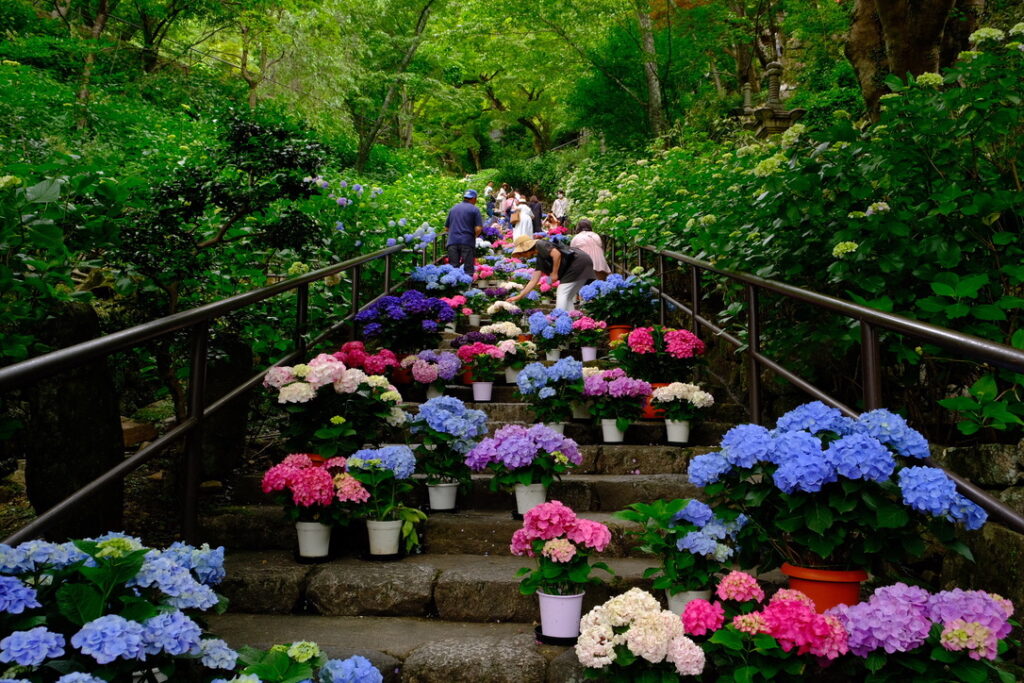
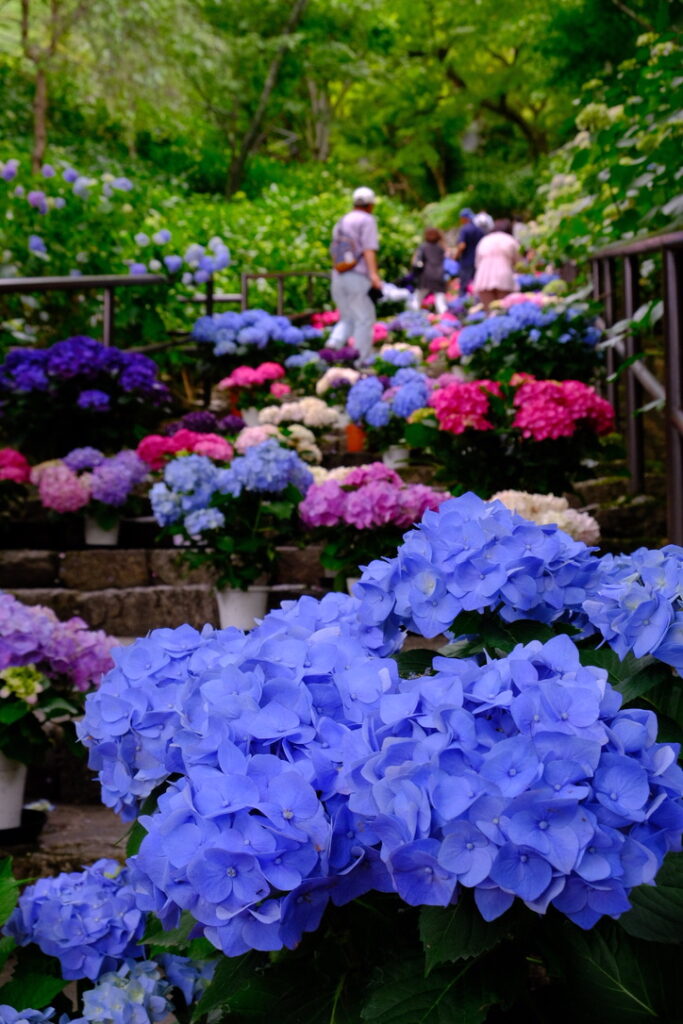
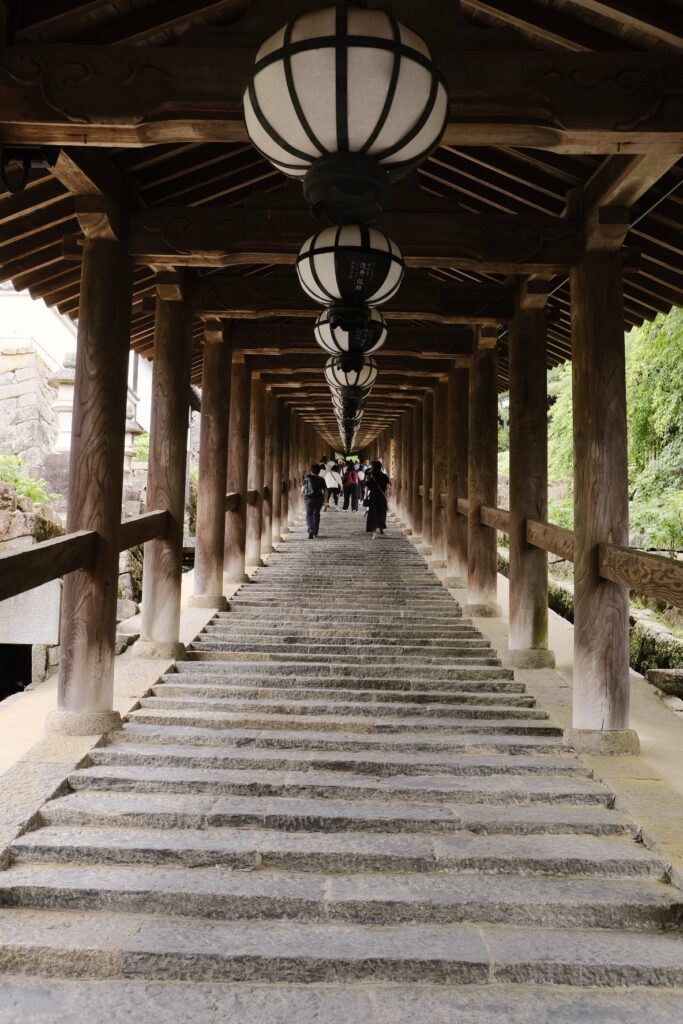
The temple’s famous covered wooden staircase of 399 steps leads up to the main hall. In the early spring it is lined with peonies, and in the early summer it leads to an outdoor staircase decorated with hydrangeas. At the top of the staircase, the main hall has a spectacular view of the temple complex and its surroundings, particularly during the cherry blossom season and when the leaves change color in the autumn.
When to go
There are several great times to go to Hasedera. Cherry blossom season in late March and early April, peony season in early May, hydrangea season in June, and the autumn colors in late November are all beautiful.
How to get there
This temple is popular enough that it is easy to get to. Take the Kintetsu line to Hasedera station, then walk about 25 minutes up to the temple.
Mimuroto-ji, the flower temple
About Mimuroto-ji
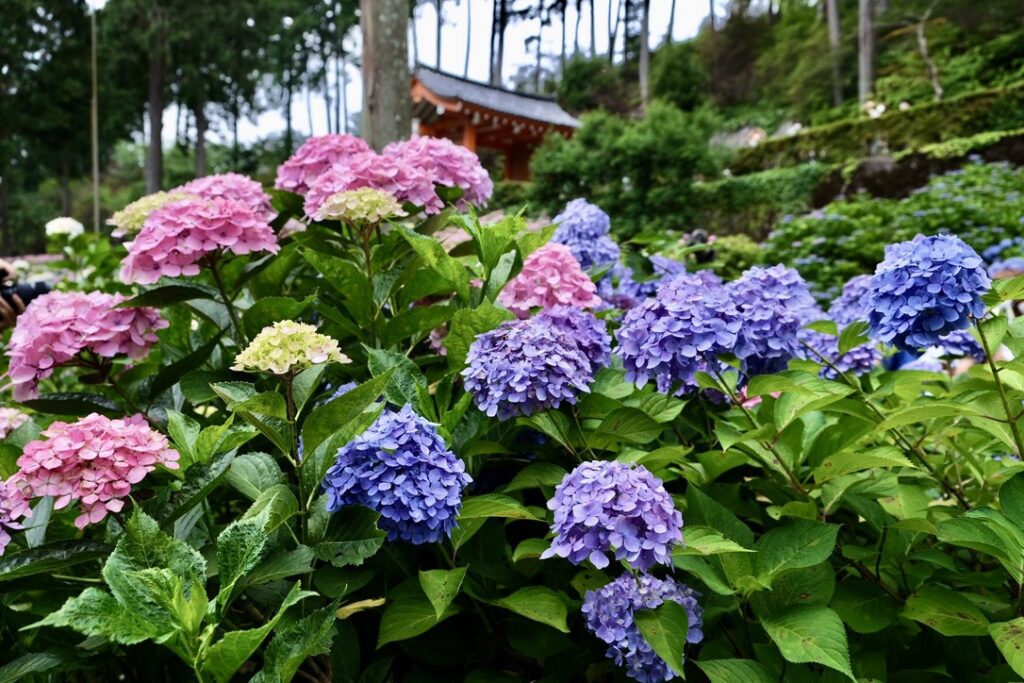
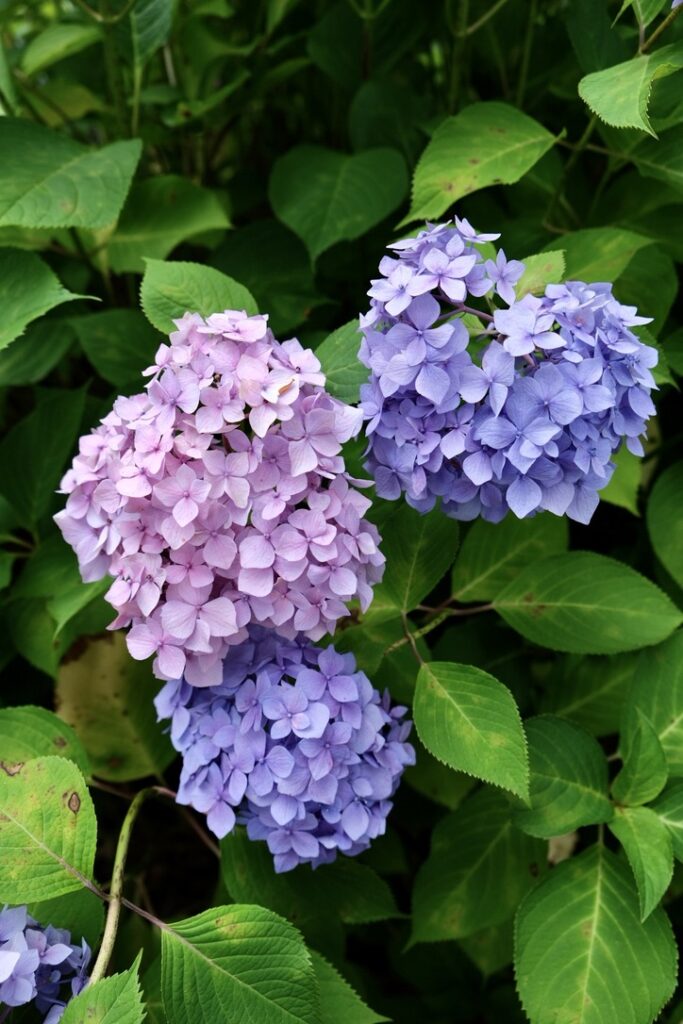
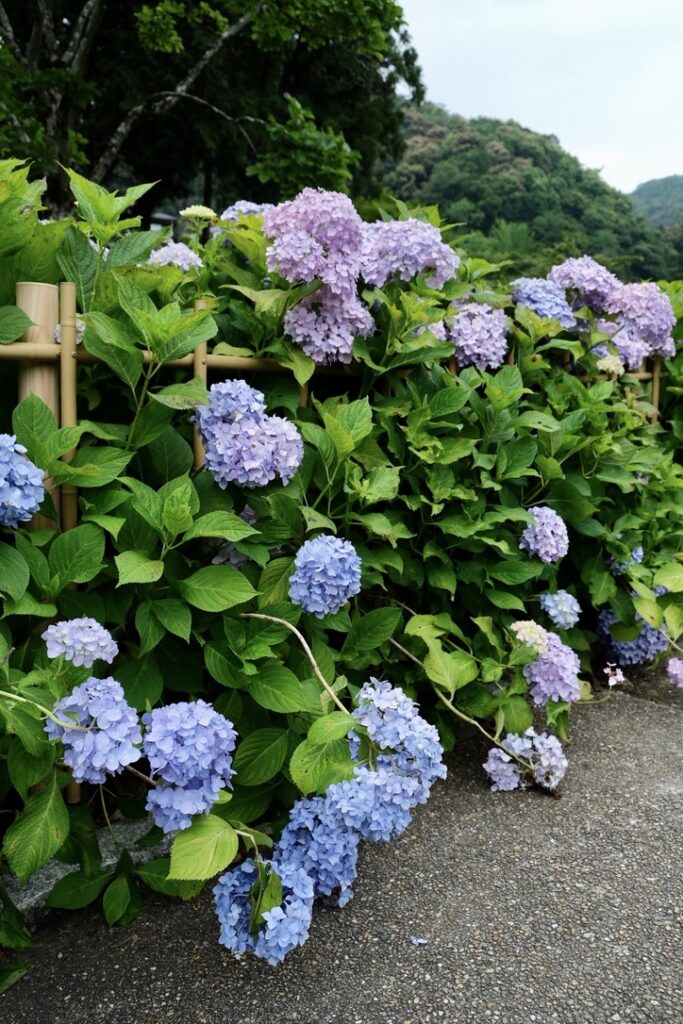
Mimuroto-ji is known for flowers. No, not just one specific flower that covers the temple grounds in one season. The temple’s nickname is “the flower temple” because of the abundance and variety of seasonal flowers that bloom on the grounds throughout the year. I visited in June for the hydrangeas, which bloom all throughout a vast garden, but you can also see cherry blossoms in late March, azaleas in May, and lotuses in July and August. It is also gorgeous in late November for the autumn colors. If you miss one of these seasons, the next isn’t far behind.
The temple was originally a palace where the nobility could escape Kyoto and enjoy some quiet time in the countryside. In 770 the emperor turned it into a temple when he and one of his servants had visions that led them to a golden statue of the Thousand Armed Kannon, which is still housed in the temple. In front of the main building are lucky statues of an ox and a rabbit. For good luck you can touch the stone in the ox’s mouth and touch the ball in front of the rabbit.
When to go
Mimuroto-ji has seasonal displays at several different times of the year. You can see cherry blossoms in late March and early April, azaleas in May, hydrangeas in June, lotuses in July and August, and autumn leaves in late November and early December. Take your pick.
How to get there
This temple is relatively easy to get to but it takes some walking. First take the Keihan Uji line to Mimurodo station. Then from the station it’s about a 25 minute walk to the temple.
Shoju-in, the windchime temple
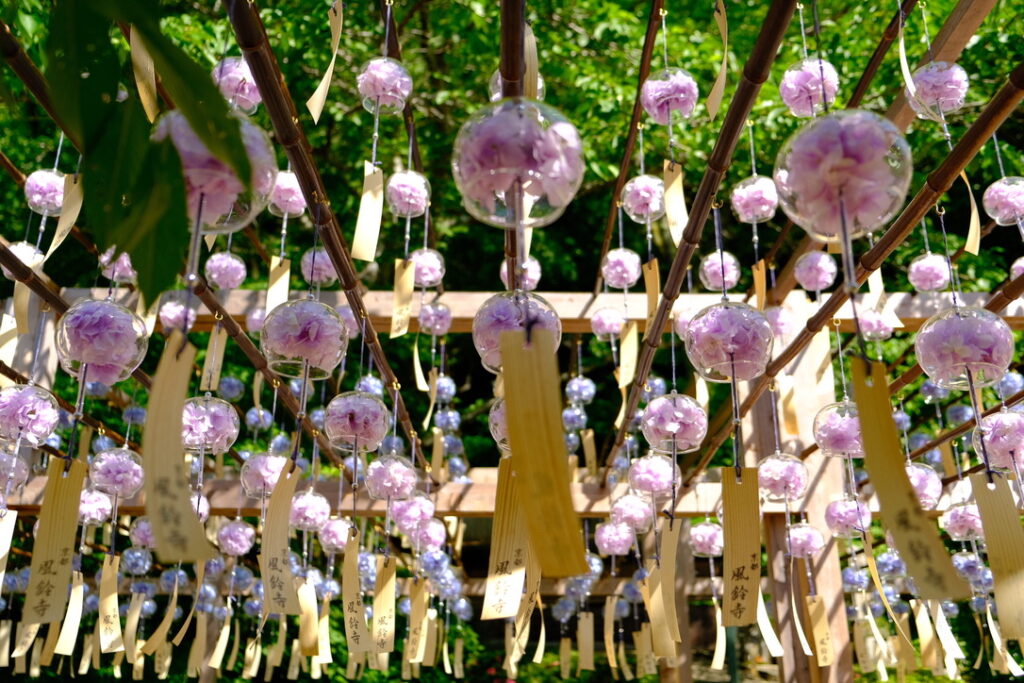
About Shoju-in
The original name of this temple is Shoju-in, but it is often called by its nickname Furin-ji, meaning “windchime temple.” In the summer more than 2,000 decorated windchimes adorn this remote temple in southern Kyoto, and their musical clinking brightens the atmosphere during the annual windchime festival from June until September. Shoju-in isn’t really a flower temple in the literal sense, but many of the windchimes are decorated with hydrangeas and the windchimes create an appropriately summery atmosphere.
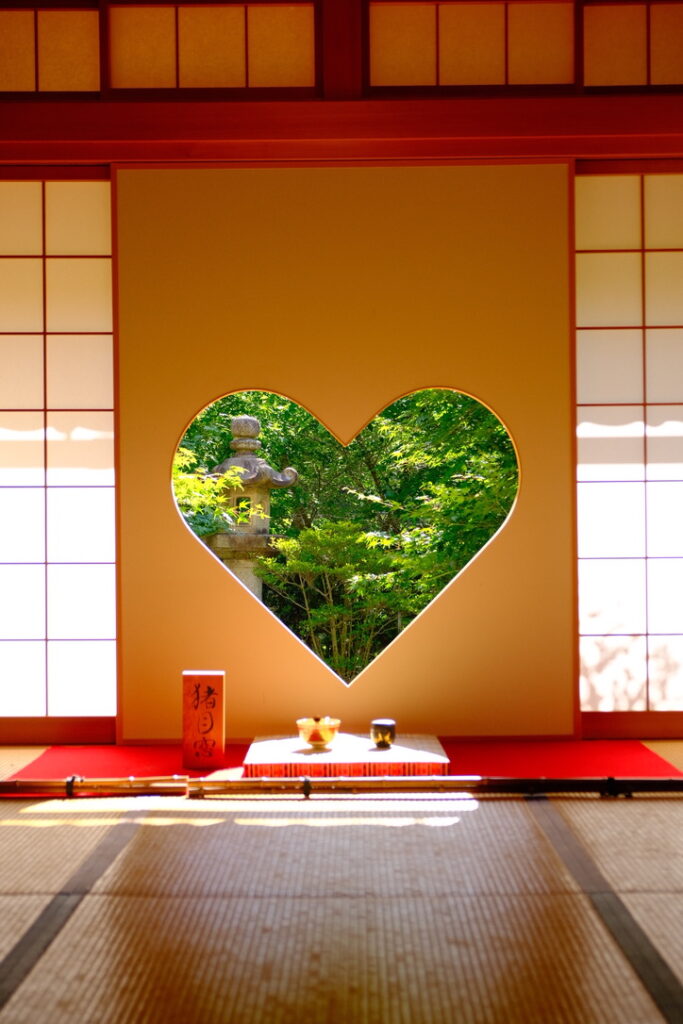
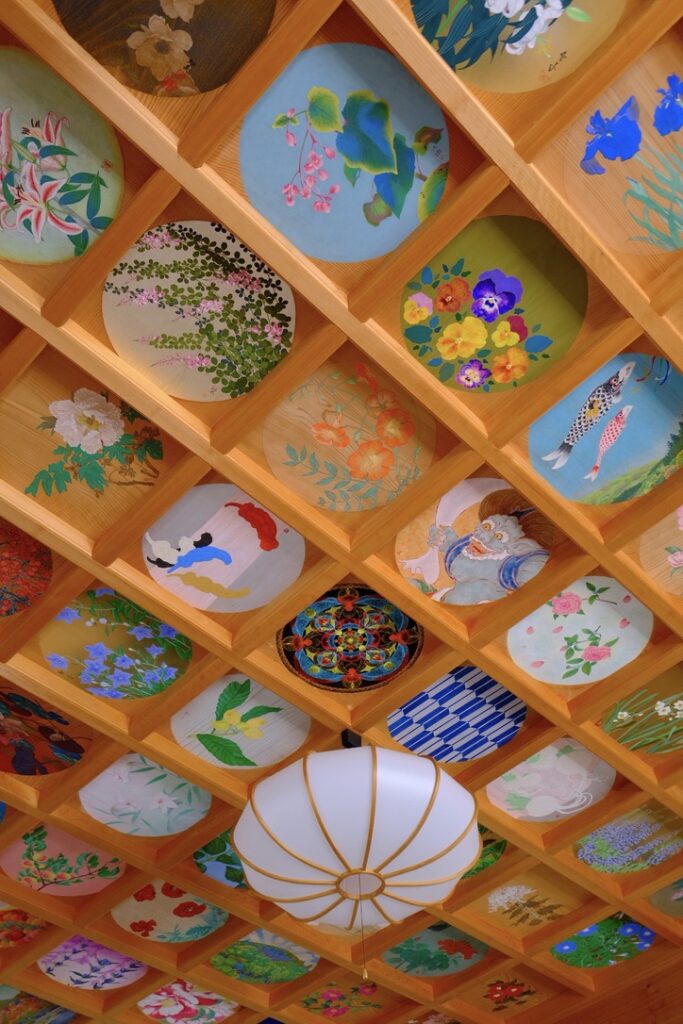
The soft music of the windchimes only flows through Furin-ji in the summer, but the temple has other appeals, the most famous of which is the heart-shaped window in the main hall that peeks into the garden. This symbol has actually been used for 1400 years as an Inome, or boar’s eye, and is meant to bring good fortune and ward off evil spirits. The main hall also has a comfortable tatami floor and the ceiling is decorated with 160 colorful paintings of flowers and other Japanese art, so you can relax and lie down for a bit to gaze at the splendid scenes overhead.
When to go
You can see the heart-shaped window and the main hall’s ceiling all year, and the surrounding scenery has beautiful foliage in the late autumn. But the best time to go is during the windchime festival held from June to September.
How to get there
This temple is remote and difficult to get there with public transportation unless you plan carefully. There is one specific bus that goes to the temple on Saturdays and holidays from April until September. I’d recommend it because it has a video playing about the Uji tea farms and the bus is decorated with Uji scenery and the Ikome heart from the temple.
In 2026 the bus departs from Keihan Uji station at 9:29 and 13:29, and also stops at JR Uji station at 9:34 and 13:34. The bus ride takes about 40 minutes until stopping at the bus stop Okuyamada Shojuinguchi, and then you have to walk for about 15 minutes from the bus stop to the temple. Throughout the entire journey you get to view the beautiful Uji scenery. The bus also departs from the temple towards the train stations twice at 12:12 and 16:12, giving you about 2 hours there, which is a good amount of time.
Butsuryu-ji, the spider lily temple
About Butsuryu-ji
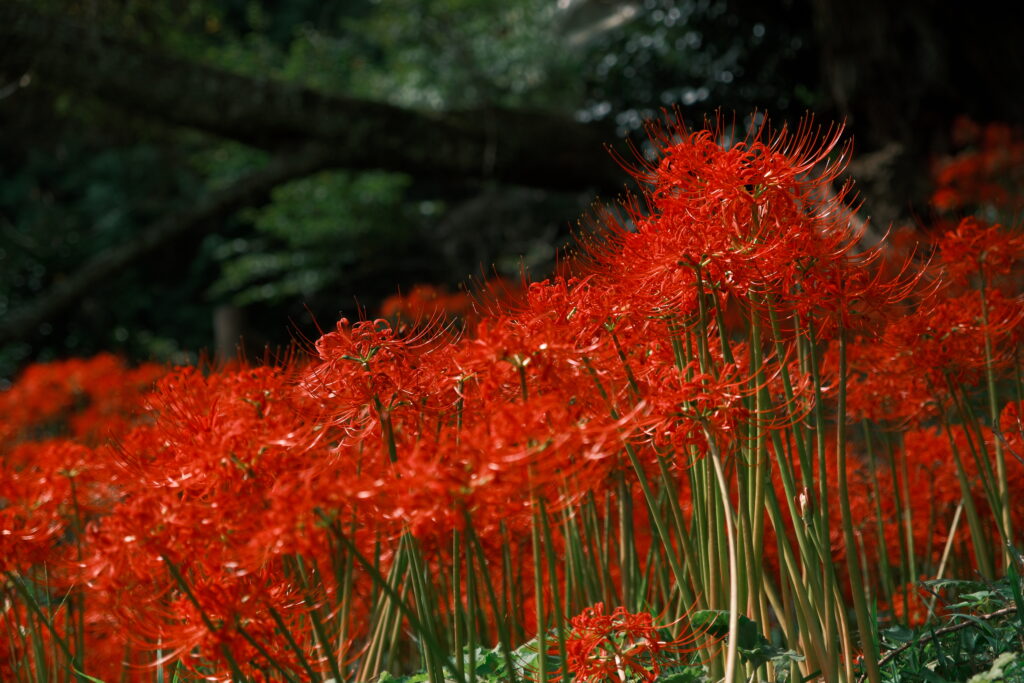
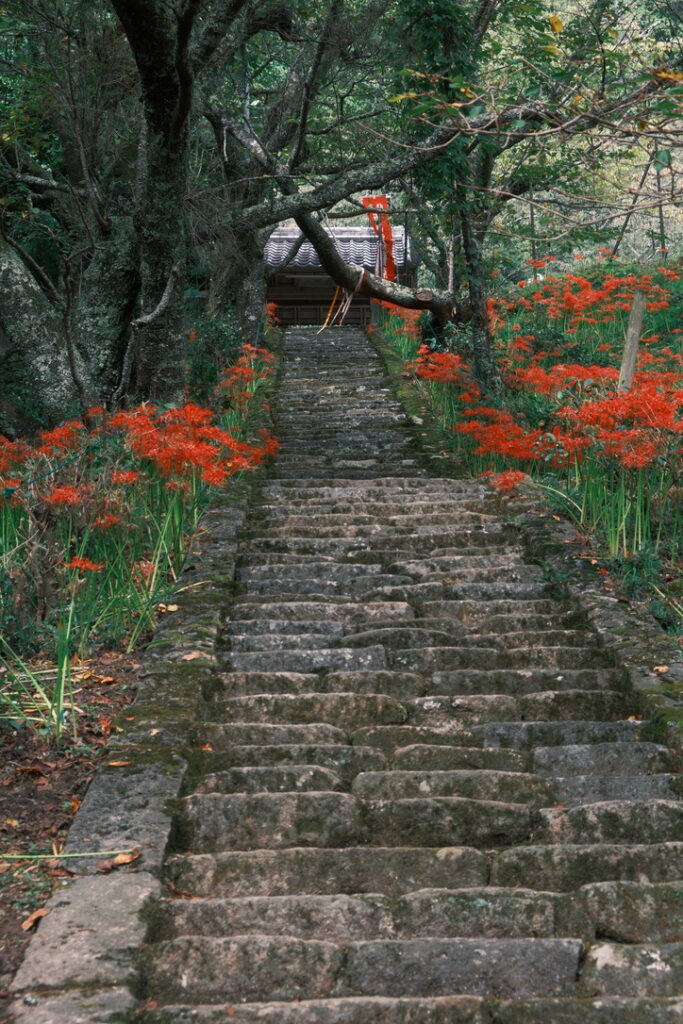
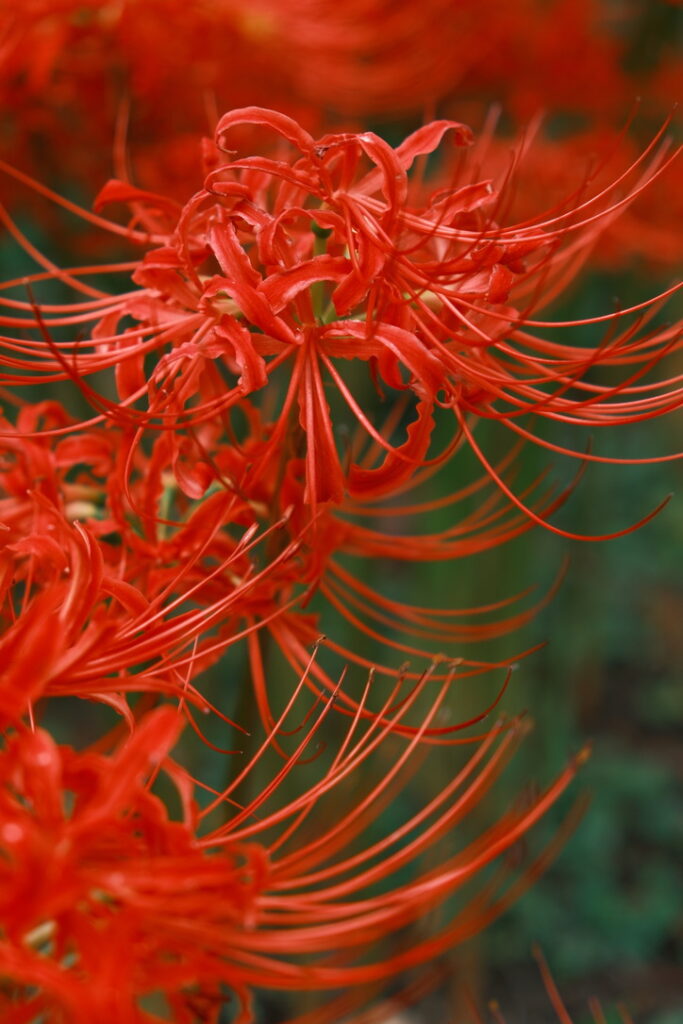
The grounds of Butsuryuji, a temple tucked in the mountains of Nara, bloom in a carpet of vibrant red spider lilies every year in the early autumn. This temple is definitely off the beaten path – it lies at the end of a narrow road in the mountains and is thus a bit tedious to get to, but seeing the spider lilies blanketing the ground in a sea of red is well worth the journey. Butsuryuji is also known locally for its famous resident, Sennen-Zakura, a huge 900-year-old cherry tree that greets visitors along the entrance path, so if you can’t make it for the spider lilies or if you prefer sakura, you can visit during the cherry blossom season instead.
The monk Kenne, who was a disciple of Kobo Daishi, the founder of Shingon Buddhism, founded the temple in 850. Carved into the mountainside behind the main temple buildings you can find an ancient-looking stone chamber, generally accepted to be Kenne’s grave.
When to go
Late September and early October is the best time to see spider lilies. My photos were taken on October 5th. Alternatively, cherry blossom season at the beginning of April would also be an excellent time to visit.
How to get there
First you take the Kintetsu Line to Haibara station in Uda, Nara prefecture. From there it’s best to take a taxi for the 10-minute drive up to the temple. There is a bus from the station that can take you partway there, but even if you take the bus you’ll still find yourself walking for 40 minutes up to the temple. You can rent a car and drive there too, but parking is limited. If you’re keen on hiking, a hike up to the temple from the station is also an option.
Hannya-ji, the cosmos temple
About Hannya-ji
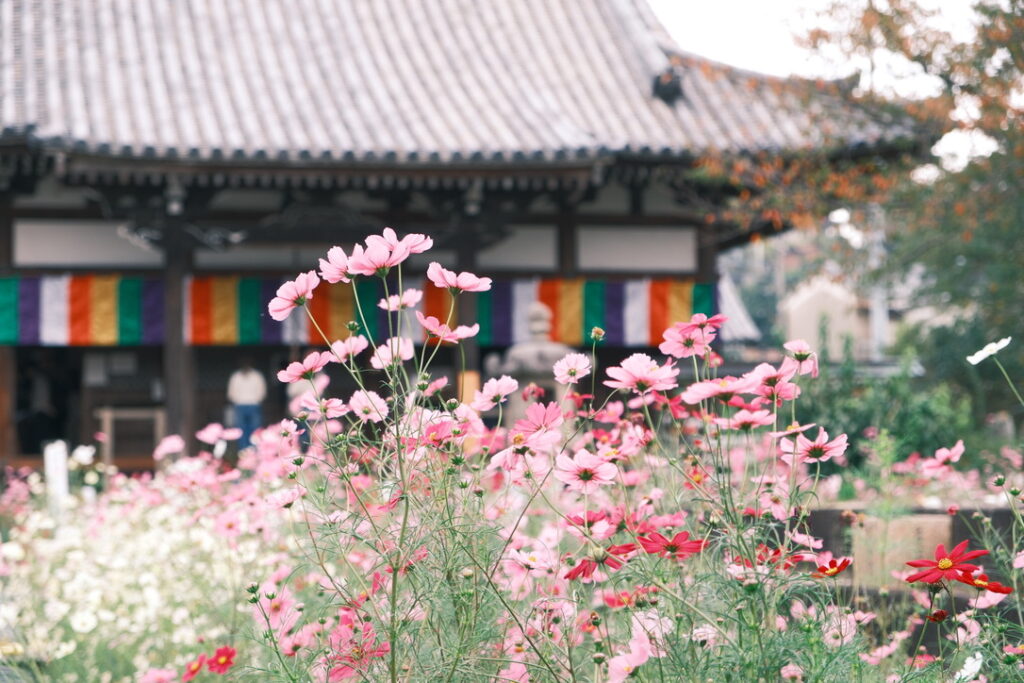
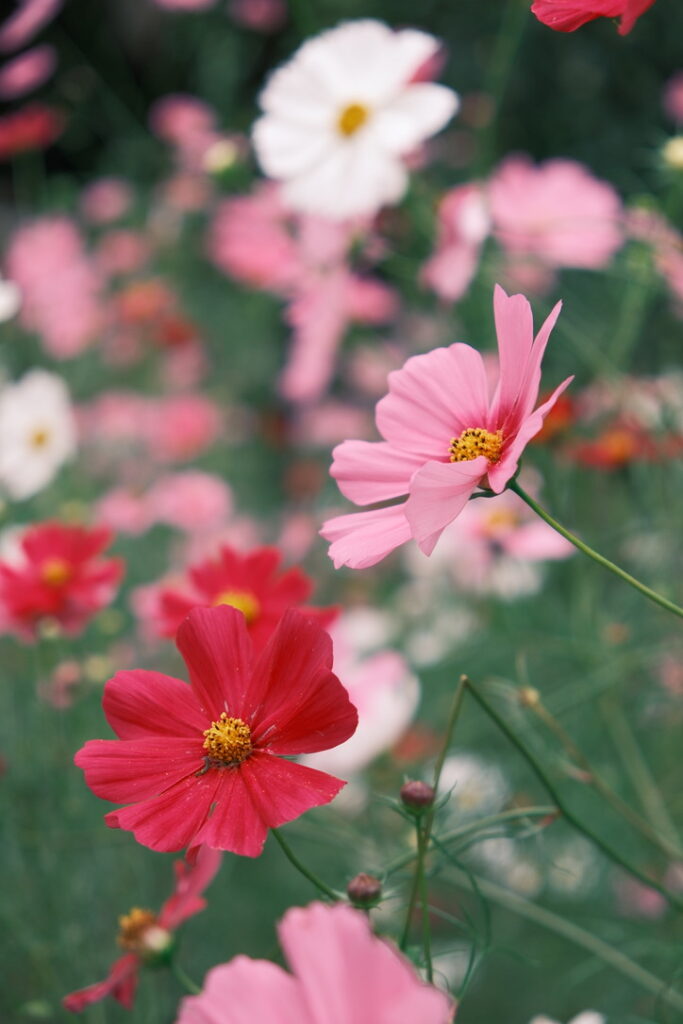
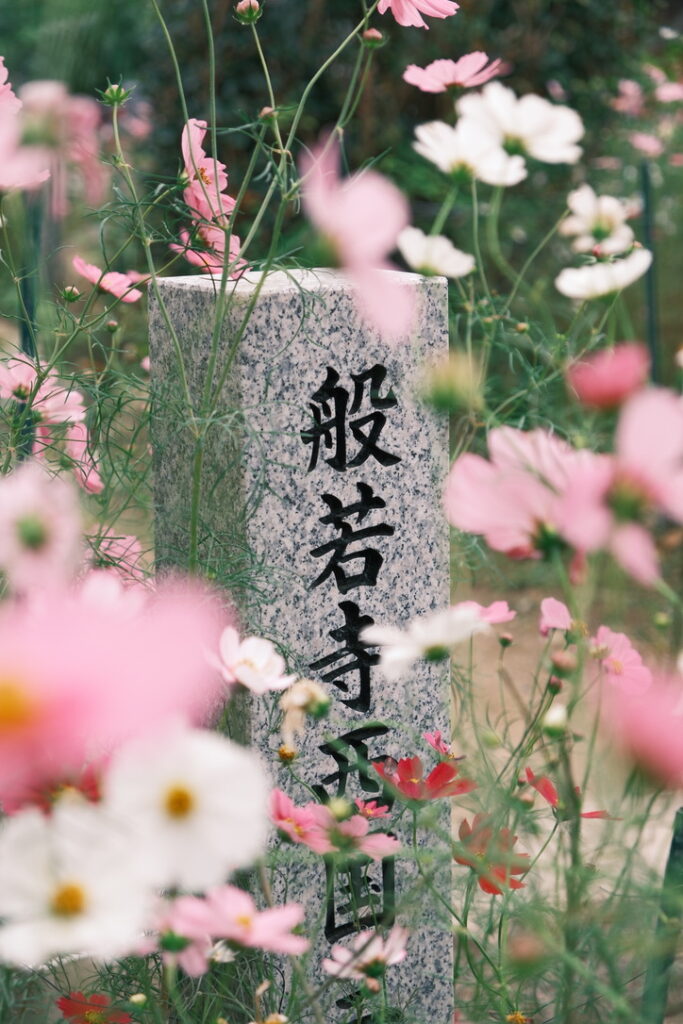
A meadow of pink and white cosmos flowers blooms around this temple on the outskirts of Nara city every year in early autumn. This is the origin of the temple’s nickname, the Cosmos Temple, but Hannya-ji’s traditional name means “wisdom temple”, as “Hannya” is a transliteration of the Sanskrit word for wisdom.
According to legend, the monk Ekan, who came to Japan from one of the three kingdoms of ancient Korea, founded the temple in 629. The temple is also mentioned in The Tale of the Heike as one of the places that many defenders, including monks, took up post to defend themselves in the attack on Nara. Many of the buildings and artifacts at the temple have been designated Important Cultural Properties. The gate entrance in particular is a National Treasure dating to the 13th century.
When to go
Mid to late October is generally a good time for cosmos in Kansai. I took my photos at the end of October. Though best known for its cosmos blooms, Hannya-ji also has a nice display of hydrangeas in June.
How to get there
From JR Nara station or Kintetsu Nara station take bus 81, 118, or 153 and get off at the Hannya-ji bus stop, just a short walk from the temple.