Note: I originally wrote this post in 2017 for my old blog. I have edited and updated it for posting here.
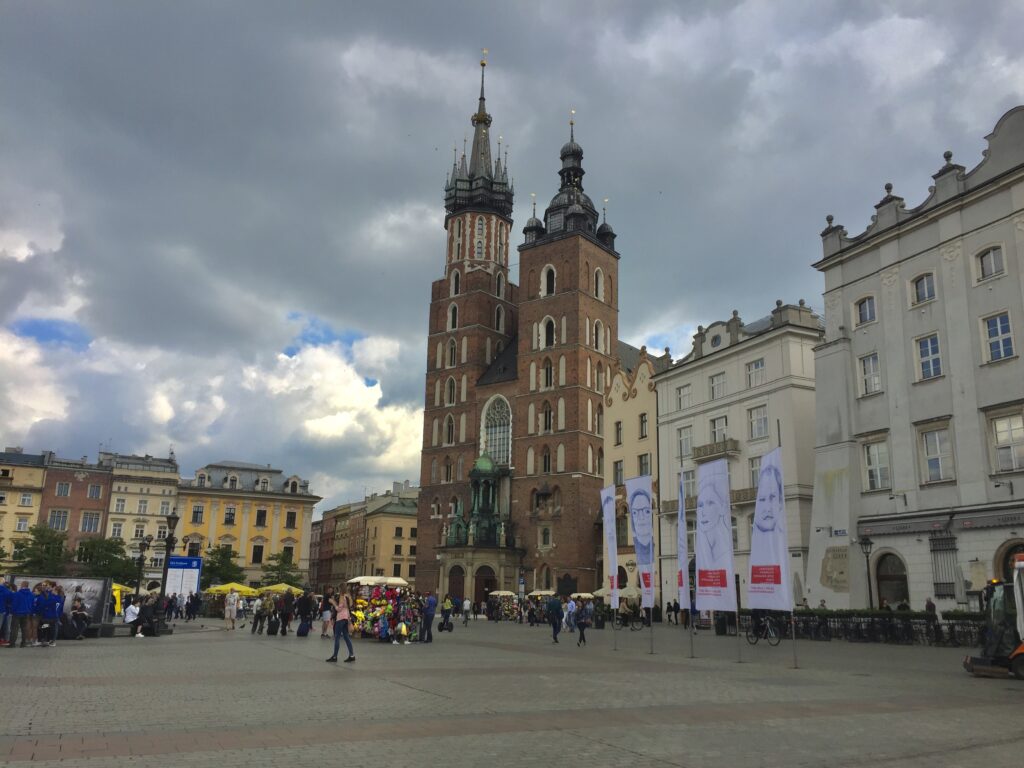
Among Polish cities, Warsaw holds more fame as Poland’s capital and largest city, but its second largest city, Kraków, is the country’s most popular tourist destination. This is likely because, while Warsaw was nearly razed to the ground during WWII, Kraków came out of the war relatively intact structurally, so its Old Town is still remarkably well-preserved. Kraków is one of the oldest cities in Poland and is the country’s original capital city, a title it held from 1038 until 1795.
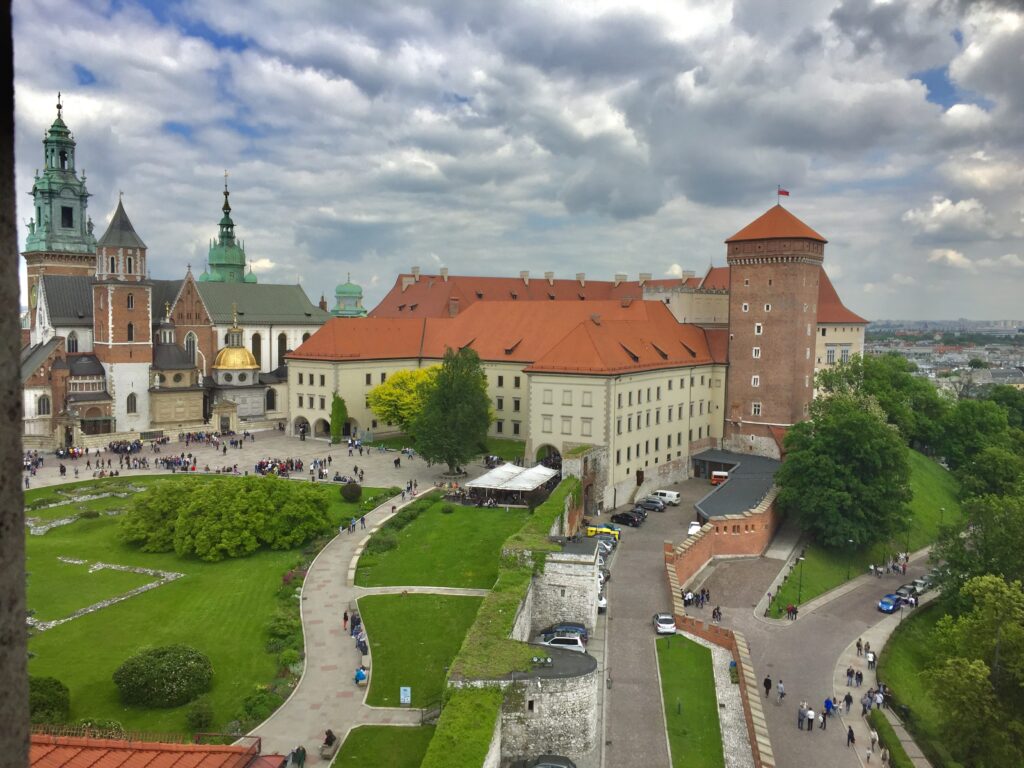
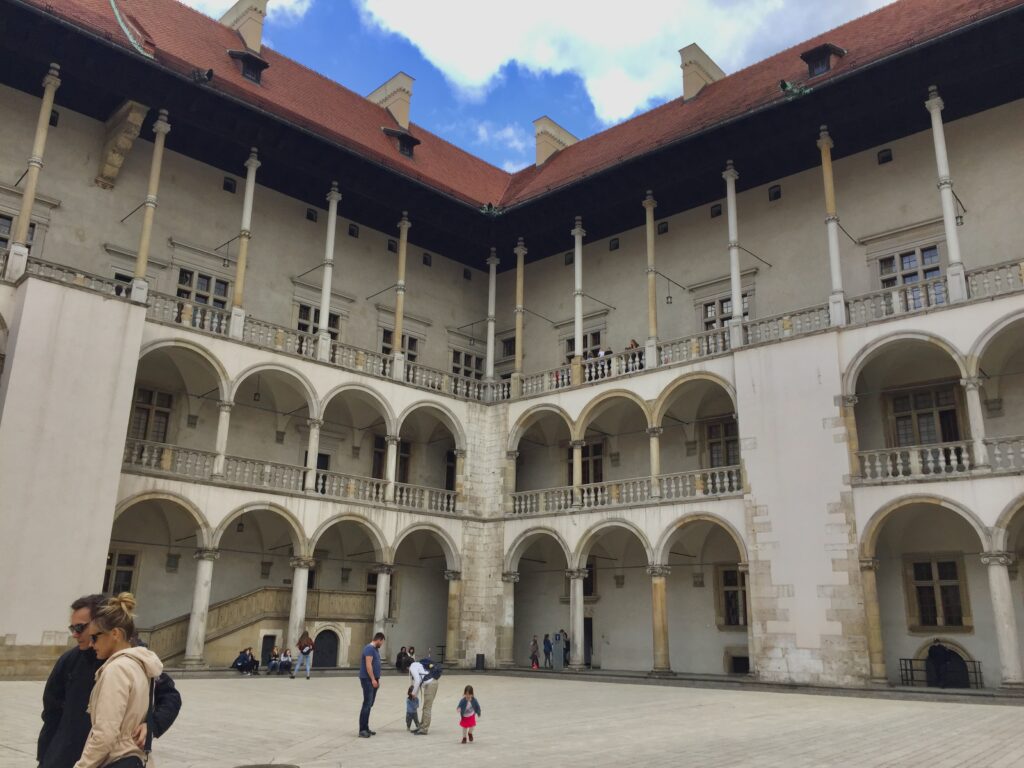
Legend has it that Kraków was founded by Krakus, who built it above a cave occupied by a dragon called Smok Wawelski. Whether or not these legends are true, Kraków’s history begins with a Stone Age settlement on Wawel Hill, which is situated above a cave that is now called the Dragon’s Den. Today you can visit both the Wawel Royal Castle on Wawel Hill and the Dragon’s Den below.
The first written record of Kraków is from 965 and it was described as a commercial center. It was held by the Moravians and then the Bohemians until Mieszko I, the first ruler of Poland, took it from the Bohemians, and in 1038 it became the capital of the Kingdom of Poland. It grew and became an important center of trade, and was rebuilt after being destroyed by the Mongols in 1241. In 1335 King Kazimierz III, also known as Kazimierz the Great in Poland, declared that two western suburbs just outside Kraków would be a city called Kazimierz. One interesting fact about Kazimierz the Great is that he had a Jewish lover named Esther who he loved very much, but she would not marry him because he was not Jewish. He also tried to bring her back to life after she died. Based on the city walking tours I took it seems that the residents of Kraków really like this story about their favorite king.
In a twist of irony, King John I Albert expelled the Jews from Kraków in 1495, so they settled in nearby Kazimierz, which is why today it is the Jewish quarter of Kraków. Despite this mistreatment of the Jewish people, the 15th and 16th centuries were a golden age for Kraków. In 1569 Poland and Lithuania united to form the Polish-Lithuanian Commonwealth, and Kraków became the capital of this entity. However, when King Sigismund II died without children the throne passed to a succession of foreign rulers. Kraków grew less and less important and eventually King Sigismund III, who was from Sweden, changed the capital to his residence in Warsaw.
In the late 1700s the Commonwealth was partitioned by Russia, Prussia, and Austria. Kraków was ruled by the Austrians, then the French once Napoleon arrived on the scene, then the Austrians again, until after WWI when the Second Polish Republic was established. In 1939 it was taken over by the Nazis, who wanted to rid the city of the Poles and Jews and make it completely German. During an operation called Sonderaktion Krakau, many university professors and academics were arrested and sent to the death camps. The Jews were confined to a ghetto within Kazimierz, and those who did not die of illness or starvation were sent to the camps, mostly either Płaszów or Auschwitz. The famous and controversial director Roman Polanski is a survivor of the Kraków Ghetto. Kraków is also where Oskar Schindler had his factory where he chose to employ many residents of the ghetto, saving them from the camps. After WWII and the establishment of the Polish People’s Republic as part of the Eastern bloc, Kraków’s intellectual community was put under political control and the city was turned into a more industrial center as opposed to the university city it was before.
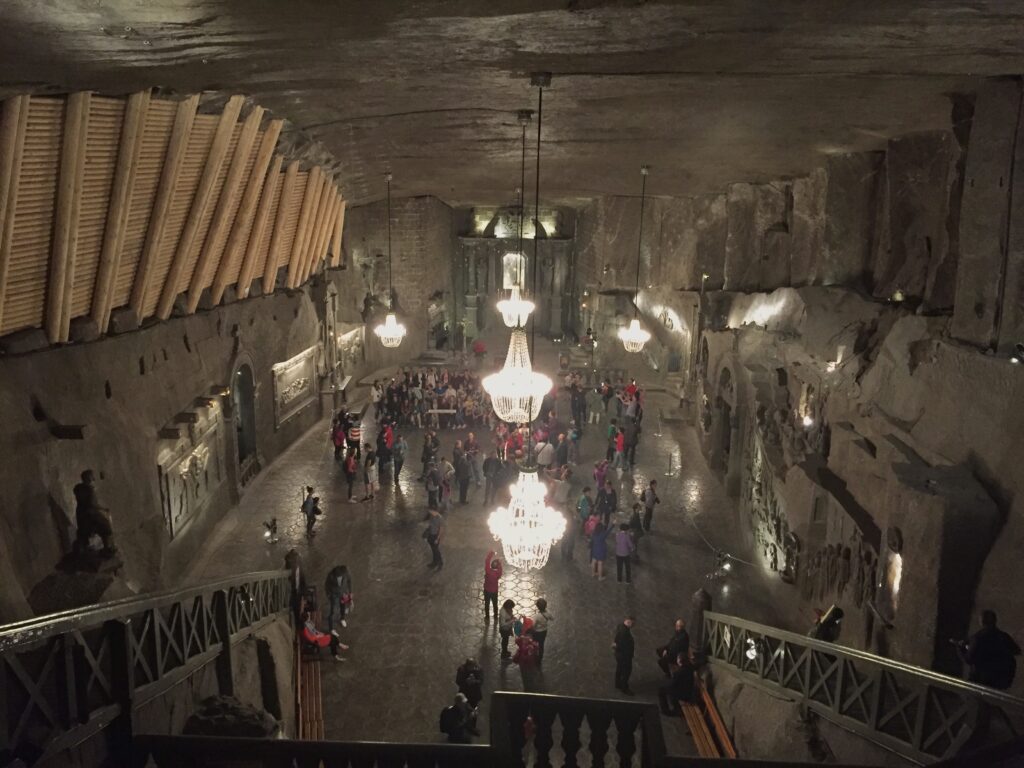

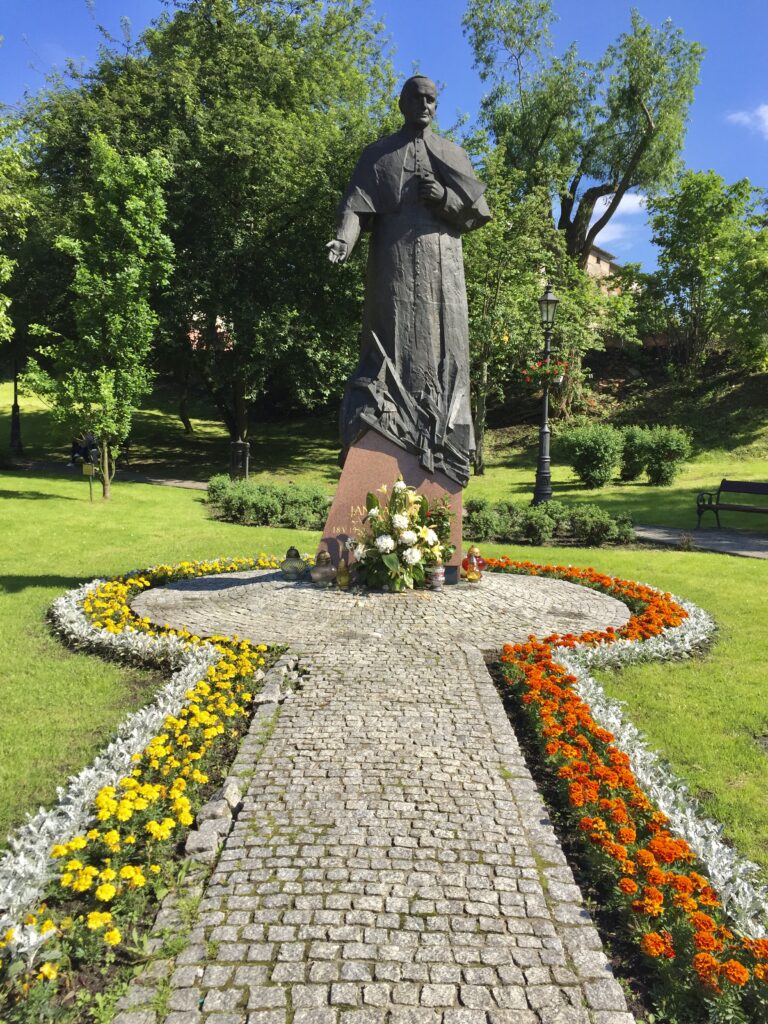
Today Kraków is once again considered a cultural and intellectual center in Europe. In 1978 it was one of the first places to ever be inscribed in the UNESCO World Heritage Sites, and its city center is the first to become a World Heritage Site. The salt mines in nearby Wieliczka were incorporated in the first year as well. Kraków is home to Jagellonian University, considered Poland’s best university. Perhaps one of Kraków’s greatest prides is its former resident Karol Józef Wojtyła, who became Pope John Paul II. He attended Jagellonian University, was Bishop of Kraków, and became the first non-Italian pope in 455 years and the first Slavic pope ever. I saw no less than three statues of him during my time in Kraków.
I have not been to Warsaw so I cannot say whether Kraków or Warsaw is the worthier destination, but I can say that Kraków’s rich and interesting history as well as its beautiful Old Town make it well worth a visit. It is also very close to a few other notable destinations that can be visited as day trips from Kraków. One is the Wieliczka Salt Mines, which I visited and enjoyed, and the other is Auschwitz, which I unfortunately did not get the chance to visit. I spent 11 hours on the train to get to Kraków from Austria where I was living at the time, but the arduous journey was worth it.