Note: I originally wrote this post in 2018 for my old blog. I have edited and updated it for posting here.
Reading Guide
- The Poetry of William Wordsworth
- The Tales of Peter Rabbit by Beatrix Potter
- Pride and Prejudice by Jane Austen
England's Lake District
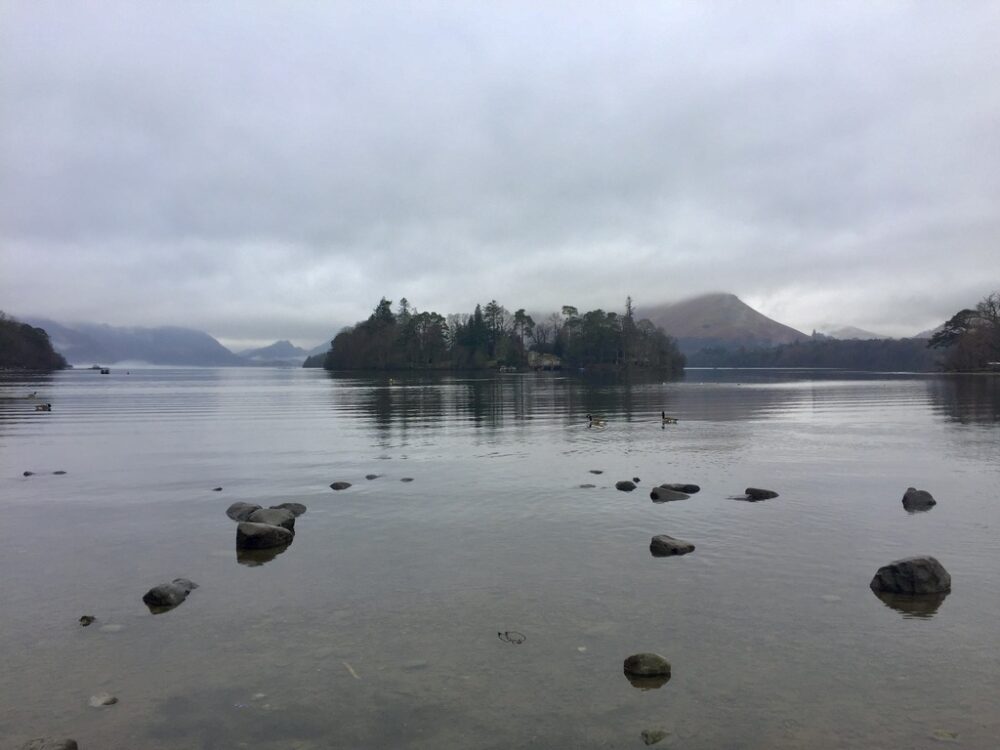
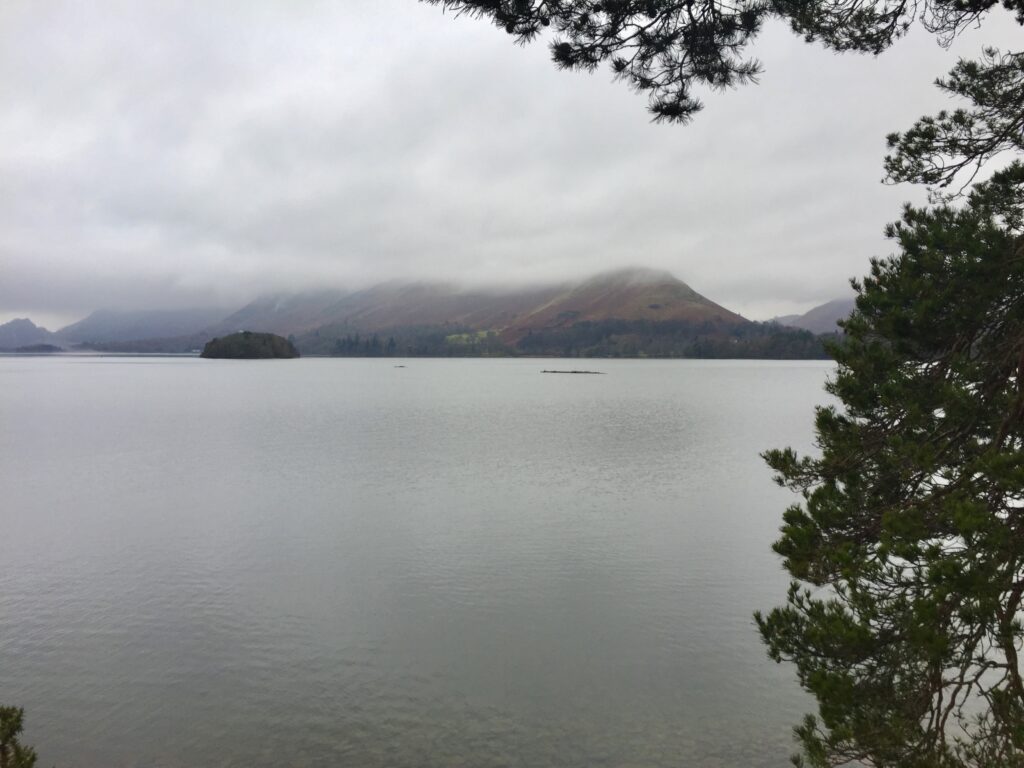
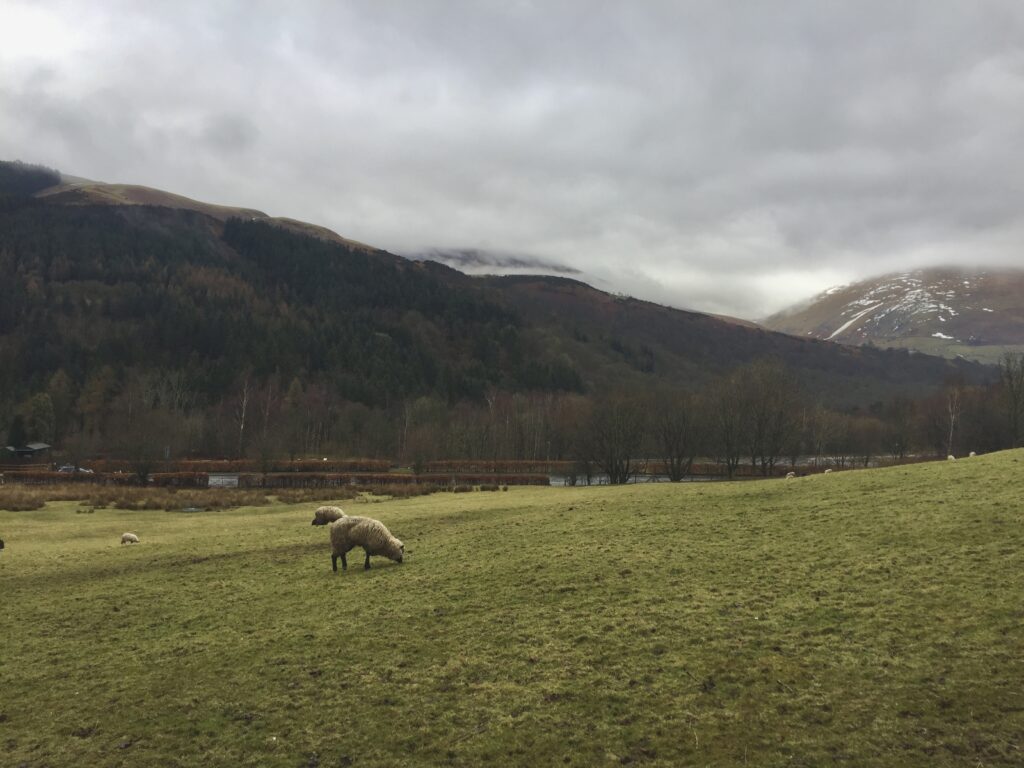
The Lake District has been a popular travel destination in England for centuries. In the late 1700s, poet William Wordsworth, who grew up near the Lake District, wrote many poems about the beauty of the area and inspired British readers to visit. Beatrix Potter spent much of her childhood in the Lake District, which influenced her Peter Rabbit books. In Jane Austen’s Pride and Prejudice, Elizabeth Bennet looks forward to visiting the Lake District with her aunt and uncle and is “excessively disappointed” upon learning that it is too far for them to travel in the time they are given. Elizabeth Bennet may not have been able to visit, but I was fortunate enough to take a trip to the Lake District, though the mere day trip I took is certainly not enough time to appreciate it. It was a foggy and at times rainy day, but the weather added to the mystical atmosphere.
Located entirely within the county of Cumbria, the Lake District covers 2,362 kilometers of land, is home to 16 bodies of water, and contains all of the land in England higher than 3,000 feet. It is the most visited National Park in the United Kingdom and has also been designated a UNESCO World Heritage Site. I spent my day in a town called Keswick which lies just north of Derwentwater, one of the main bodies of water within the National Park. Keswick is a market town with a population of just under 5,000 people. The first mention of the town comes from a charter that King Edward I granted for Keswick’s market in the 13th century, a charter that is still in existence. Since the 18th century, Keswick’s location within the Lake District has made it a popular tourist destination, and tourism has been its main industry for at least the last 150 years.
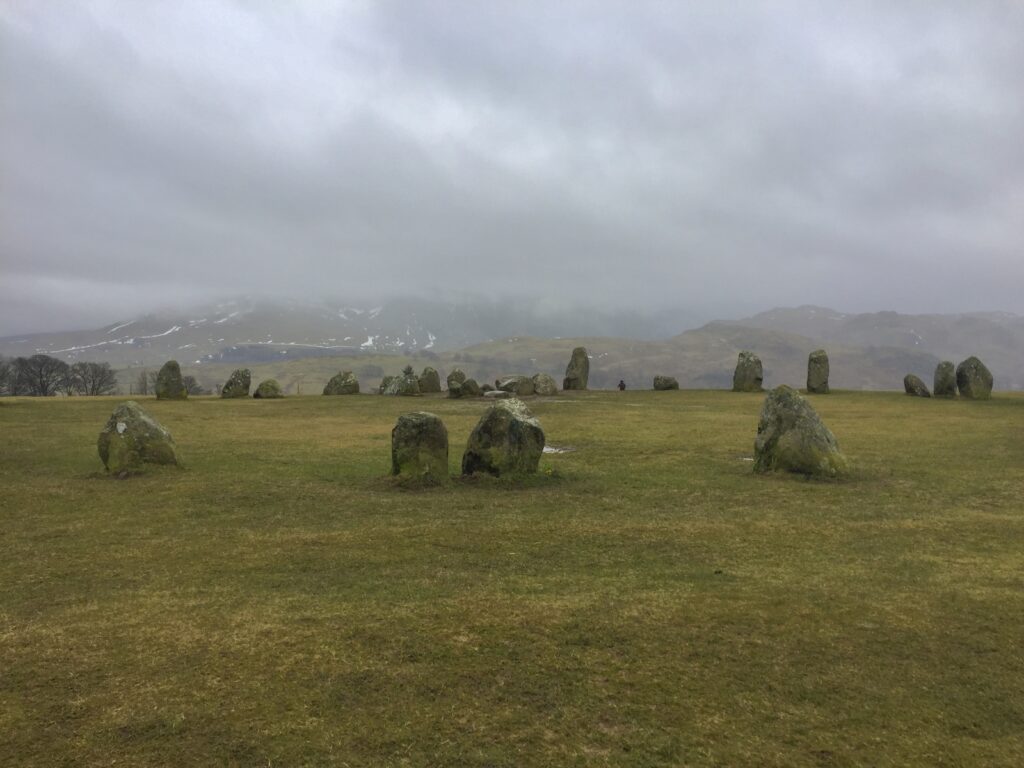
A notable place I visited is Castlerigg Stone Circle, an ancient site located near Kewsick. This stone circle was constructed some time during the Late Neolithic or Early Bronze Ages as part of a megalithic tradition in the British Isles. About 1,300 of these stone circles are located in the British Isles and Brittany, the most famous being Stonehenge. Castlerigg stone circle is the most visited stone circle in Cumbria and archaeologist John Waterhouse stated that it was “one of the most visually impressive prehistoric monuments in Britain” (The Stone Circles of Cumbria). My friends and I also found it enchanting. We visited in March and one of my friends, who is from a city in India where it stays warm, took off her shoes to walk around on the cold grass. She said her mother taught her that it’s good for your feet to walk on the grass, and after not walking barefoot on the ground throughout the winter, she wanted her feet to touch the grass. The other three of us followed suit, and despite the cold, it felt comforting to feel the grass between my toes after all that time. It was my favorite part of my trip to the Lake District. I am surprised it is not a more popular destination, though the fact that there were no crowds around the circle made it an even more mystical experience. I would highly recommend visiting, even in the rain and fog.
"Daffodils" by William Wordsworth (1804)
I wander’d lonely as a cloud
That floats on high o’er vales and hills,
When all at once I saw a crowd,
A host, of golden daffodils;
Beside the lake, beneath the trees,
Fluttering and dancing in the breeze.
Continuous as the stars that shine
And twinkle on the Milky Way,
They stretch’d in never-ending line
Along the margin of a bay:
Ten thousand saw I at a glance,
Tossing their heads in sprightly dance.
The waves beside them danced; but they
Out-did the sparkling waves in glee:
A poet could not but be gay,
In such a jocund company:
I gazed – and gazed – but little thought
What wealth the show to me had brought:
For oft, when on my couch I lie
In vacant or in pensive mood,
They flash upon that inward eye
Which is the bliss of solitude;
And then my heart with pleasure fills,
And dances with the daffodils.