Note: I originally wrote this post in 2016 for my old blog. I have edited and updated it for posting here.
Bratislava, Slovakia has the distinction of being the only national capital that itself borders two other countries, Austria and Hungary. Austria’s capital Vienna also happens to be on the edge of the country, and the two capitals are only an hour’s train ride from each other, making them the two closest national capitals in the world. Many people who visit Bratislava take a day trip from Vienna but I decided to stay a night there, and wish I’d had more time to explore.
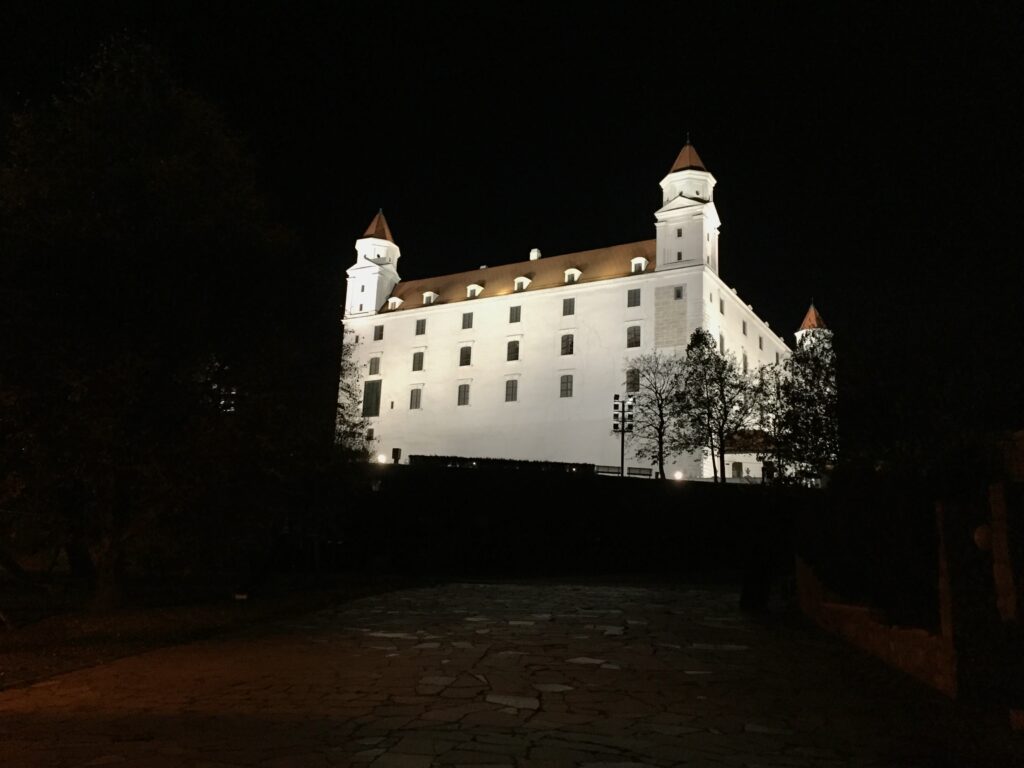
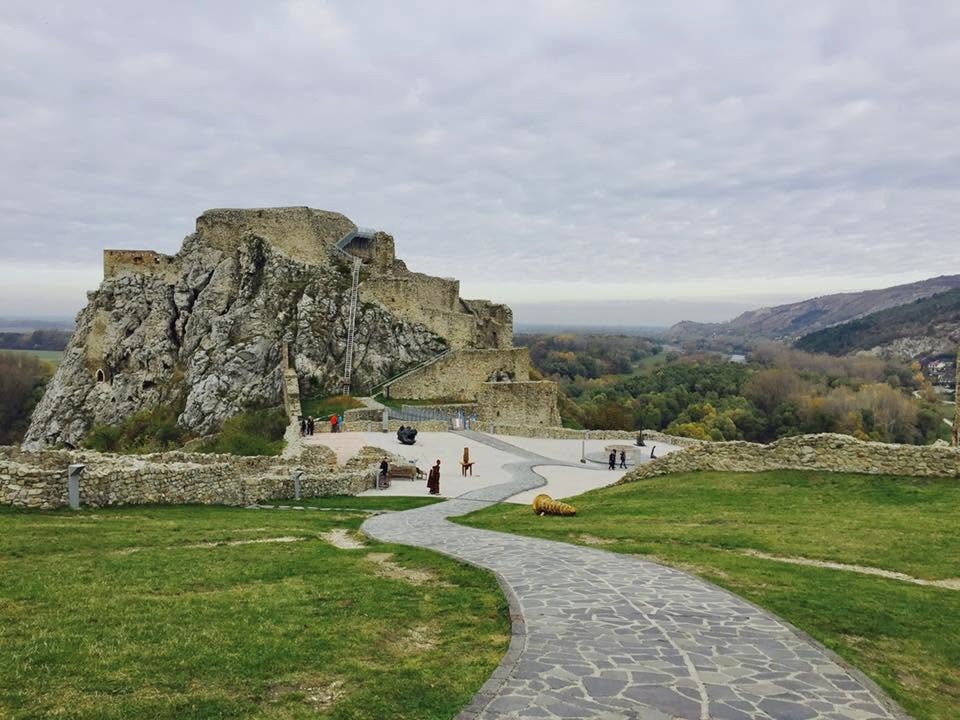
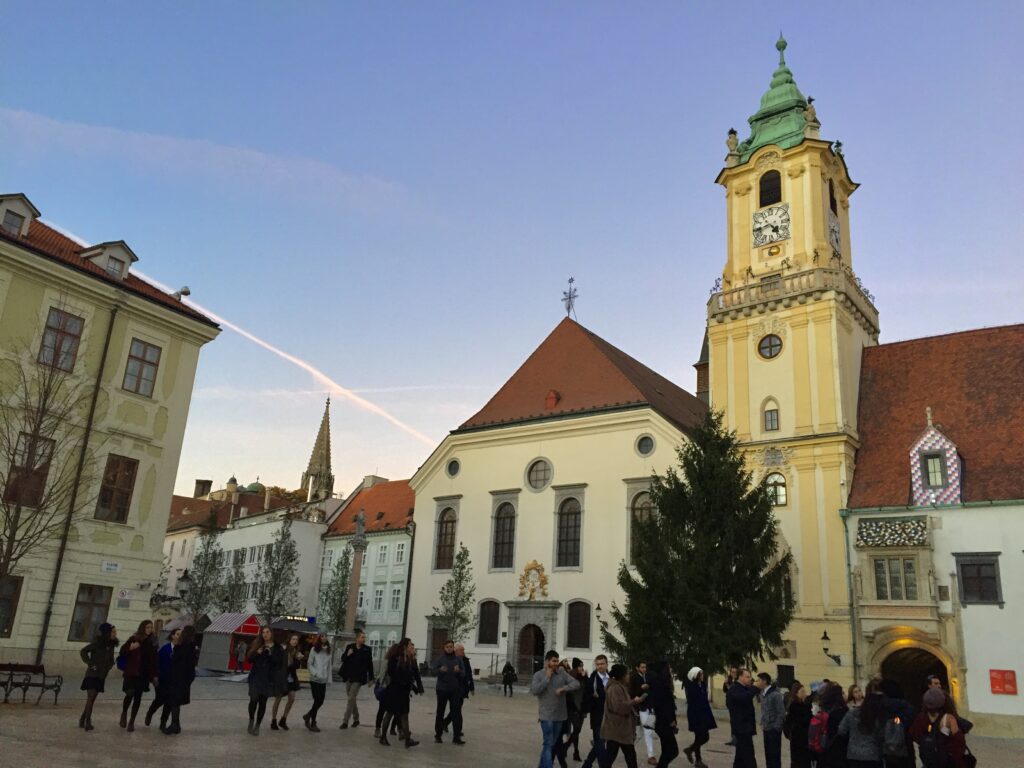
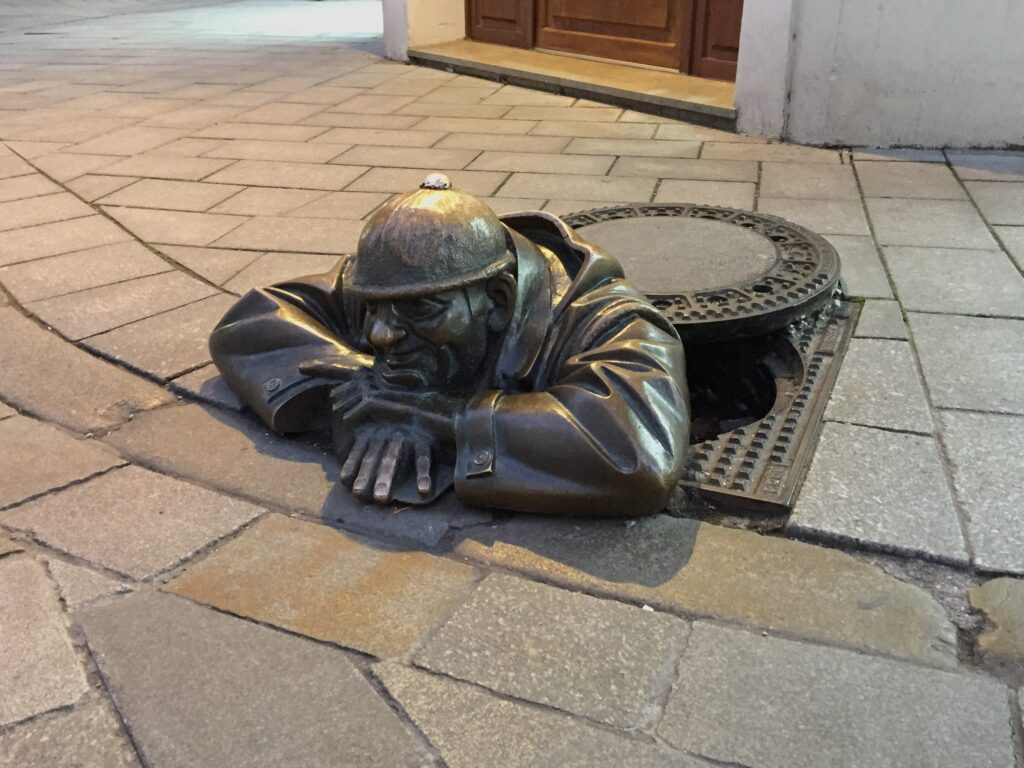
I visited Bratislava at the end of October. The leaves were orange and red and the crisp weather was perfect. In a little under 24 hours I was able to sample the highlights of this lovely little city, and even head a bit outside of it. Walking around the cobblestone streets of Bratislava’s old town I saw the Town Hall and the Blue Church, and dropped by the Oldest Shop in Town. I also made sure to visit Čumil, the bronze Man At Work statue of a sewer worker in the city center. As it was getting dark, I climbed up to Bratislava Castle, a beautiful white fortress with cinnabar roofing which gazes down on the city from a hill. Before turning in for the night, I had a cozy dinner of Slovakian pierogies with a beer. Before heading back to Austria the next morning I ventured out of the city center to Devín Castle, one of the oldest castles in Slovakia. The castle’s stone ruins sit on a cliff overlooking the Danube River, within sight of Austria on the other side.

At about 480,000 people, Bratislava is not exactly large, but it is still the largest city and cultural center of the small central European country of Slovakia, which is home to 5.4 million Slovakians. At the time I visited, Bratislava was actually the sixth richest region in the EU, with the GDP being almost three times higher than other regions in the country.
Slovakia was first occupied by the Slavs in the 5th century, and in the 10th century the territory became part of the Kingdom of Hungary, during which time Bratislava was actually the capital city for a spell. Centuries later it became part of the Austro-Hungarian empire, and after WWI and the fall of this empire the Slovaks and Czechs created Czechoslovakia. During WWII, a Slovak Republic existed as a client state to Nazi Germany, but after the war it once again formed part of Czechoslovakia, this time under Soviet rule as a satellite state. Then, of course, in 1993 Czechoslovakia split peacefully into the two sovereign nations that exist today.
The Slovakians, like the Czechs and Slovenes I am told, consider themselves Central European despite their history as part of the Eastern bloc. Slovakia has significantly distanced itself from the successors of its former overlord, but in Bratislava you can still sense whispers of this Soviet past, and that is part of what makes it interesting.